
Content
A process engineer once asked me why a new 3/8-inch needle valve could not hold downstream pressure. The valve was not defective; it was oversized. Every small turn of the stem moved more flow than the process needed, and the Cv formula would have exposed that before installation. Cv stands for valve flow coefficient, and it is the bridge between process requirements and valve internals. In statistics, CV also means coefficient of variation, but in flow control the two ideas are unrelated.
The valve flow coefficient, written as Cv, is a capacity rating measured under a standard set of conditions. For a valve in the fully open position, Cv equals the number of U.S. gallons per minute of water at 60 °F that passes through it with a 1 psi pressure drop. A valve with Cv = 4 will pass 4 gallons of water per minute in that reference state. In real service, actual flow depends on the square root of the available pressure drop divided by the fluid's specific gravity. That relationship is exactly what the Cv formula describes.
Start with the liquid version of the Cv formula because it is clean and easy to interpret:
Cv = Q × √(SG / ΔP)
Where Q is flow rate in U.S. gallons per minute, SG is specific gravity relative to water, and ΔP is pressure drop across the valve in psi.
Read the formula in practical terms. If you want to double the flow through the same valve, the pressure drop must increase four times. If you cut the available pressure drop in half, flow drops to about 71% of the original value because √0.5 = 0.707. This square-root relationship is why small changes in pressure drop have a smaller effect than many people expect.
Gases change the calculation because they are compressible. Never use the liquid formula for gas service. A standard subcritical gas equation is:
Cv = Q / (1360 × √((P1² − P2²) / (G × T)))
Where Q is flow rate in standard cubic feet per hour, P1 is inlet pressure in psia, P2 is outlet pressure in psia, G is specific gravity relative to air, and T is absolute temperature in degrees Rankine. Remember that 0 psig is 14.7 psia, and 0 °F is 459.67 °R.
When P2 drops below roughly half of P1, the gas reaches choked or critical flow. At that point, lowering downstream pressure no longer increases flow, and a different critical-flow equation is required. For accurate gas sizing, use a validated gas sizing calculator or the published capacity data for the specific pressure regulator or needle valve.
| Variable | Meaning | Common unit | Common error |
|---|---|---|---|
| Q | Flow rate through the valve | gpm for liquids, scfh for gas | Using the wrong flow unit without converting |
| SG | Specific gravity | Water = 1.0, air = 1.0 at standard conditions | Using density instead of specific gravity |
| ΔP | Pressure difference across the valve | psi | Treating supply pressure as the pressure drop |
| P1/P2 | Absolute inlet and outlet pressures | psia | Using gauge pressure without adding atmospheric pressure |
| T | Gas temperature | degrees Rankine | Using °F instead of °R in gas formulas |
These variables seem simple, but in a B2B plant environment they are the most common source of valve sizing errors.
Here is a simple liquid example. Process water has SG = 1.0, maximum flow is 8 gpm, and the line can tolerate a 10 psi drop. Required Cv = 8 × √(1/10) = 2.53. A small 316L needle valve with a full-open Cv near 3.5 to 4.0 gives a reasonable margin while still allowing stable throttling.
A calculated Cv is not just a number to compare against a datasheet. It also tells you which valve type will actually control flow well.
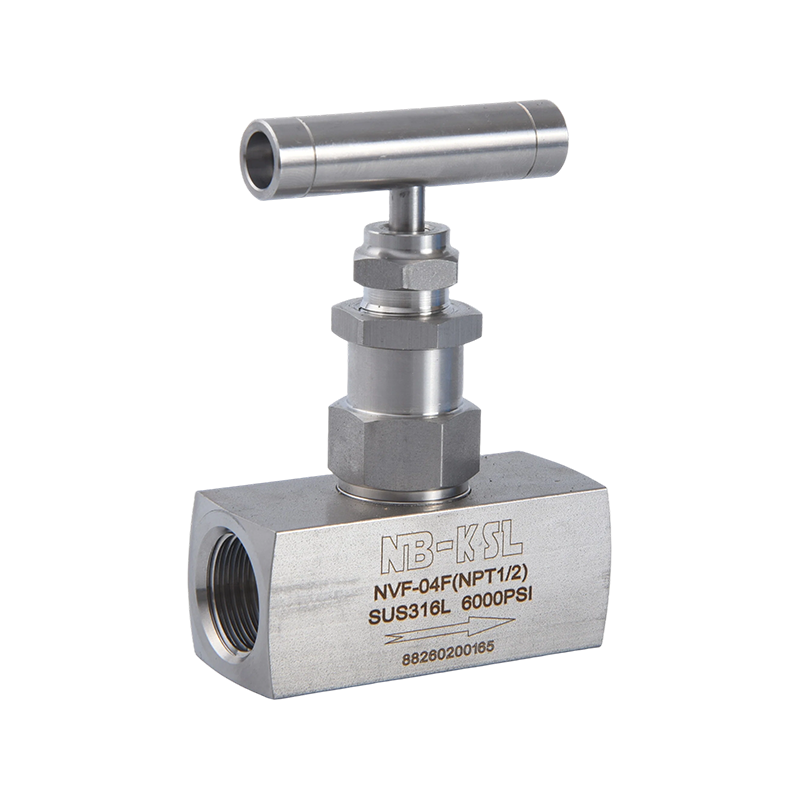
Needle valves work best when the required Cv is low and the adjustment needs to be repeatable. A long tapered stem creates a gradual change in flow area, so small turns of the handle produce small changes in flow. That is exactly what an instrument loop or sampling system needs.
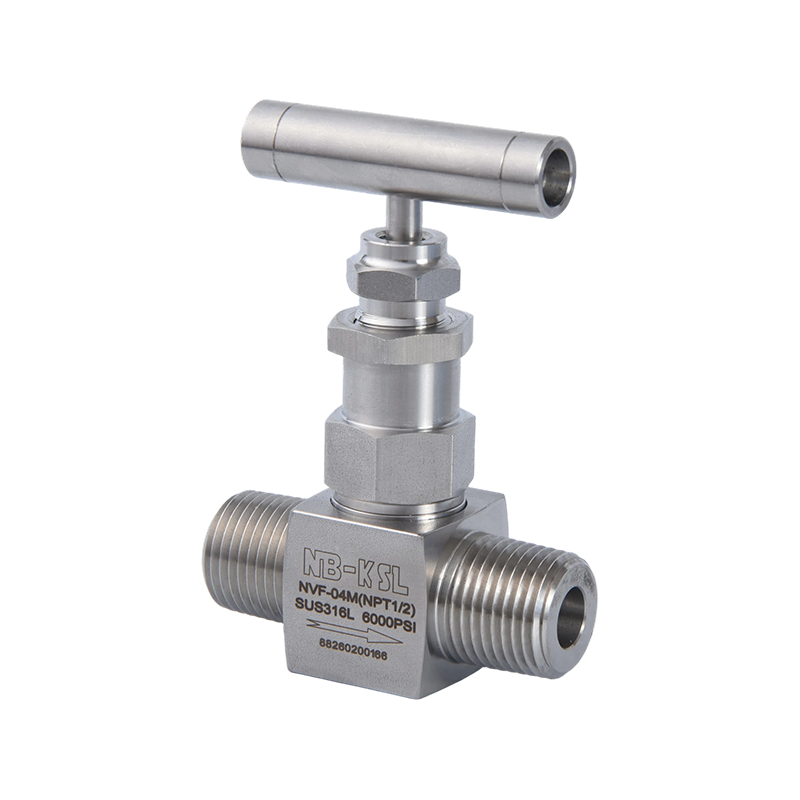 External Thread Needle Valve for Low-Cv ApplicationsThis stainless steel instrument needle valve provides gradual flow adjustment through a long tapered stem, making it well suited for repeatable control in sampling and instrument loops where low Cv is required.View Product →
For more on the internal geometry and throttling behavior, read how stainless steel needle valves work and why their flow control pattern matters in small-bore piping.
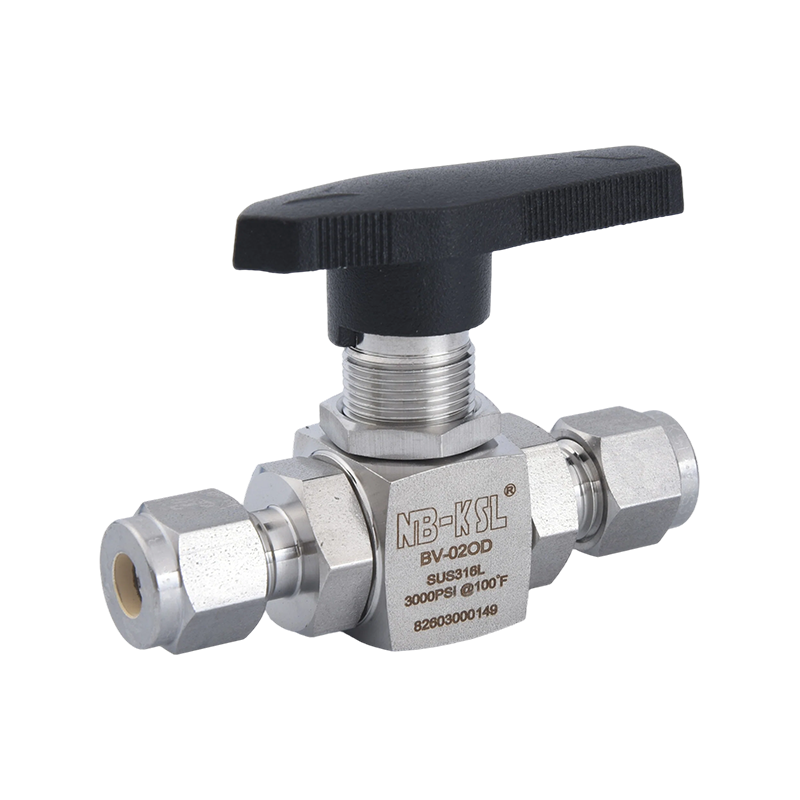
Ball valves have a higher Cv for a given connection size because the open bore follows the pipe diameter closely. Use them when you need low pressure drop in the open position and fast shutoff, not when you want fine throttling.
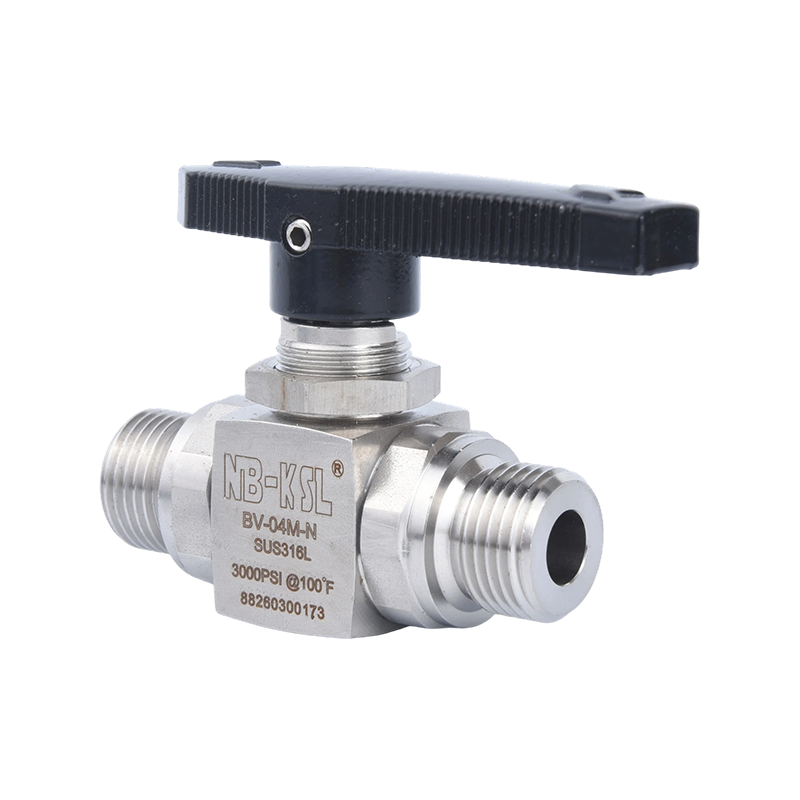 External Thread Straight Ball Valve for Full-Bore FlowFeaturing a straight-through bore that closely matches pipe diameter, this stainless steel ball valve offers high Cv, minimal pressure drop in the open position, and fast shutoff for applications needing quick isolation.View Product →
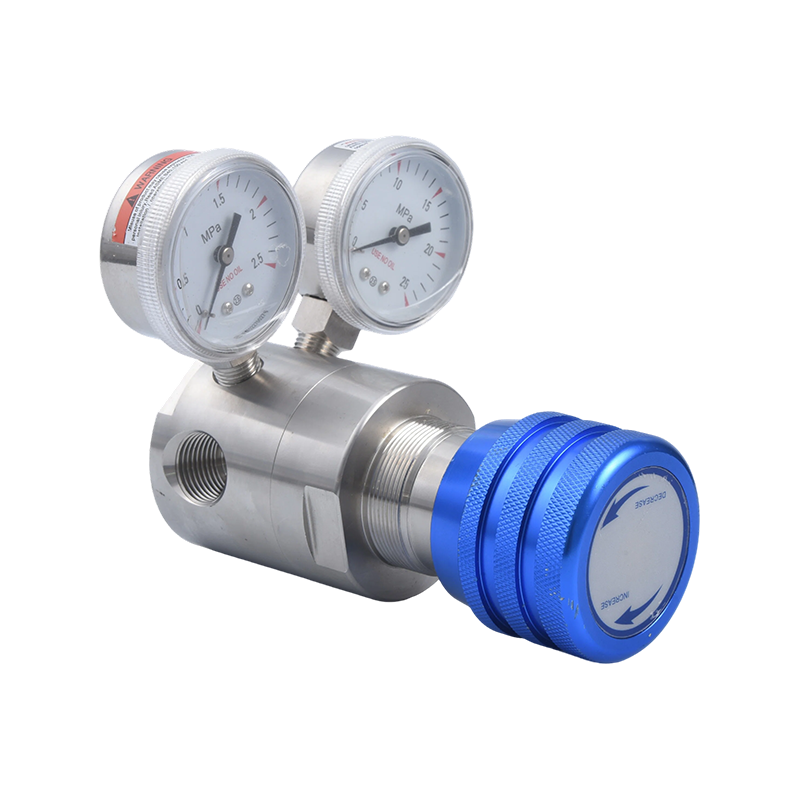
Pressure regulators follow the same Cv logic, but the available ΔP changes as inlet pressure drops. A regulator capacity curve helps you confirm that the chosen model still delivers the required flow at the minimum inlet pressure for the set outlet pressure.
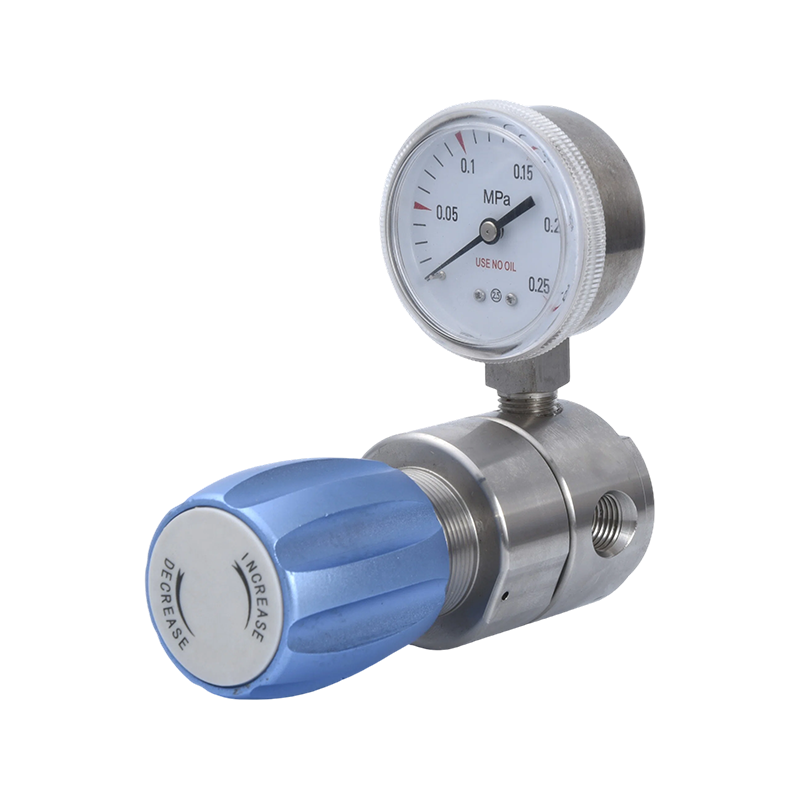 R57 Series Single-Stage Medium-Flow Pressure RegulatorThe R57 series regulator handles medium gas flows with a robust body, 2-inch gauge, external safety valve, and sintered bronze filter, making it dependable for oxygen, acetylene, propane, and argon in industrial and lab settings.View Product →
If the regulator is too small, flow falls below process demand and outlet pressure sags. If it is too large, the valve can hunt or oscillate. Cv helps you find the middle ground.
Use the Cv formula at the beginning of every valve selection, not at the end. Write down the flow rate, available pressure drop, and fluid properties before you focus on connection size or handle style. That discipline prevents both oversized valves that are hard to control and undersized valves that restrict production. For stainless steel process lines, the right Cv is just as important as the right thread or weld end.


If you need a quick answer: for most industrial piping systems handling water, steam, air, oil, or mild chemicals below 1000 psi, a 316 stainless steel 2-piece or 3-piece full-port ball valve with PTFE seats is the right default choice. Onl...
What Stainless Steel Needle Valves Are and How They Work A needle valve controls flow through a small-bore orifice by advancing or retracting a tapered needle-shaped stem into and out of a precision-machined seat. As the handwheel or actua...
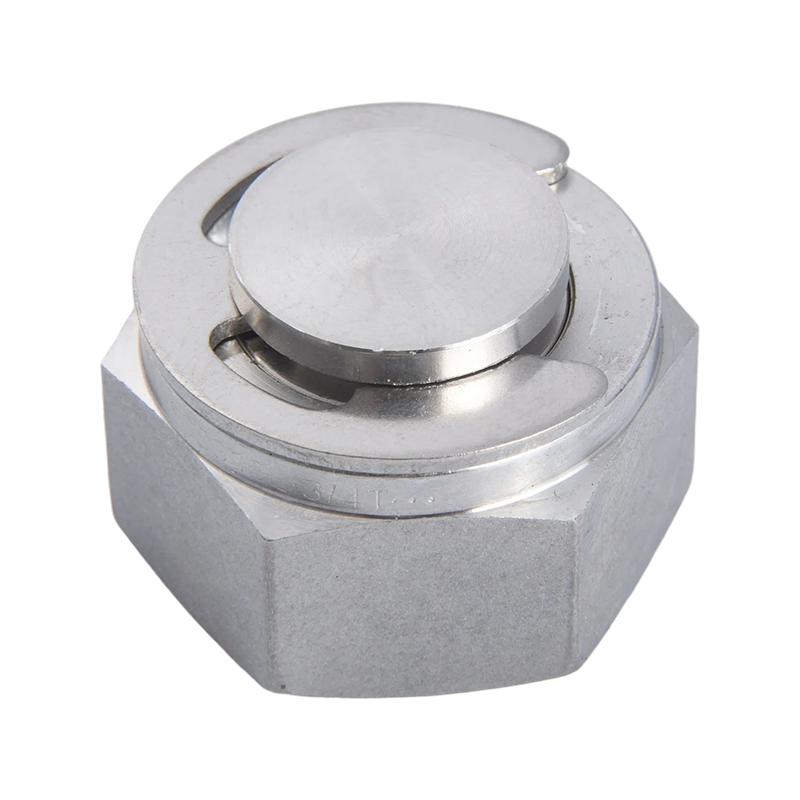
The right stainless steel tube fitting is determined by five factors, in order of priority: material grade (304 vs. 316), connection type (compression, flared, or welded), working pressure and temperature rating, tube outer diameter and wa...
Stainless Steel Pressure Regulators Deliver Superior Safety and Precision in Gas Control Stainless steel pressure regulators are the industry standard for controlling gas flow safely and accurately across critical applications, from semico...
 1 Zhongxin Yungu Zone D Building 1, Jiangkou Street, Fenghua District, Ningbo City, Zhejiang Province, China
 +86-574-88561893 / +86-15057497901
 Copyright © Ningbo Keshengli Stainless Steel Valve Co., Ltd. Rights Reserved.
Wholesale Stainless Steel Fittings & Valves Manufacturers
Copyright © Ningbo Keshengli Stainless Steel Valve Co., Ltd. Rights Reserved.
Wholesale Stainless Steel Fittings & Valves Manufacturers



 English
 中文简体
中文简体