1. Overview
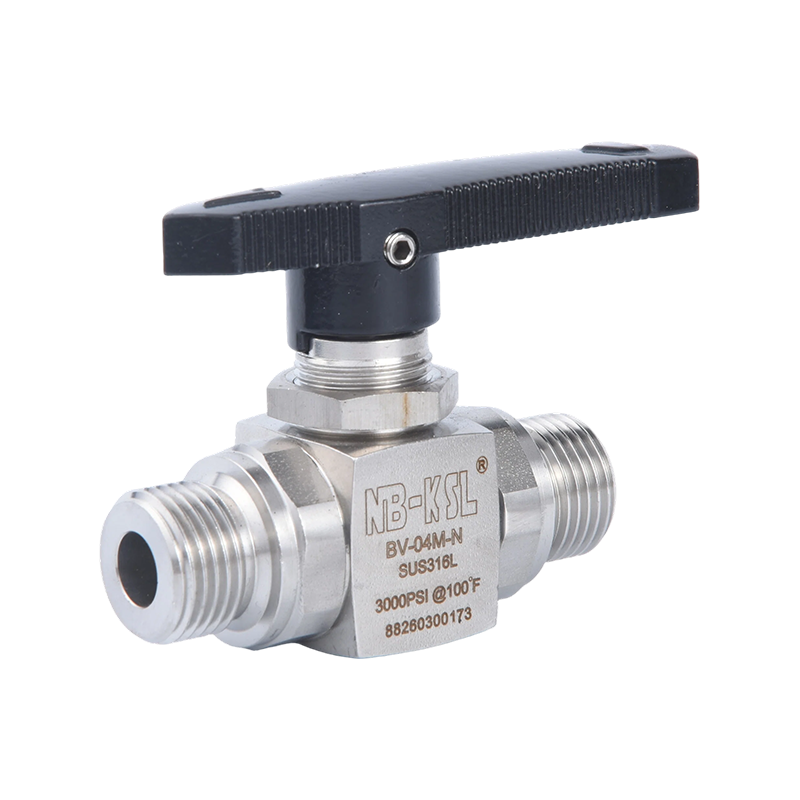
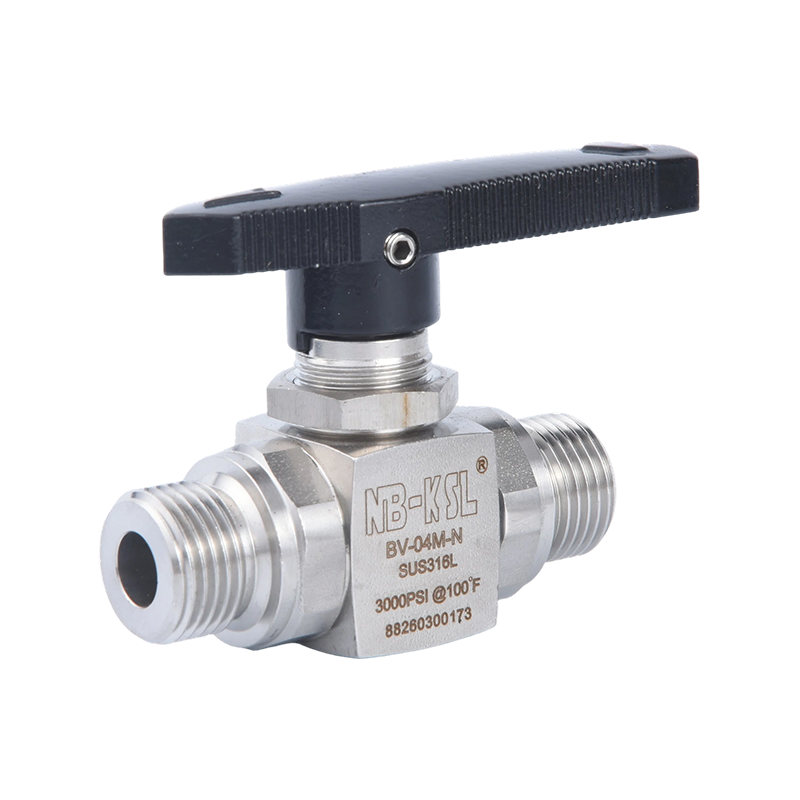
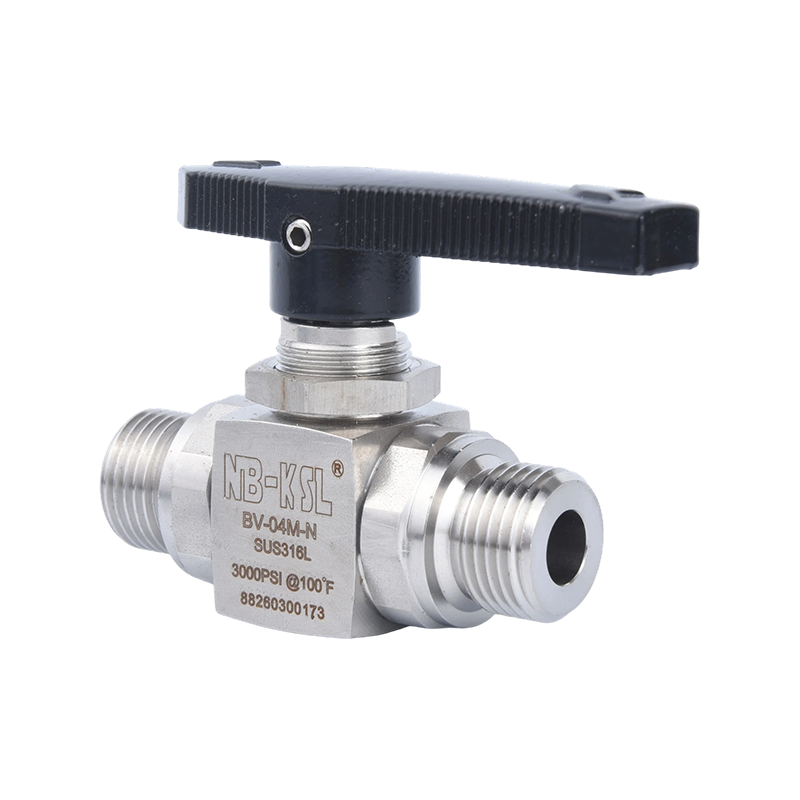
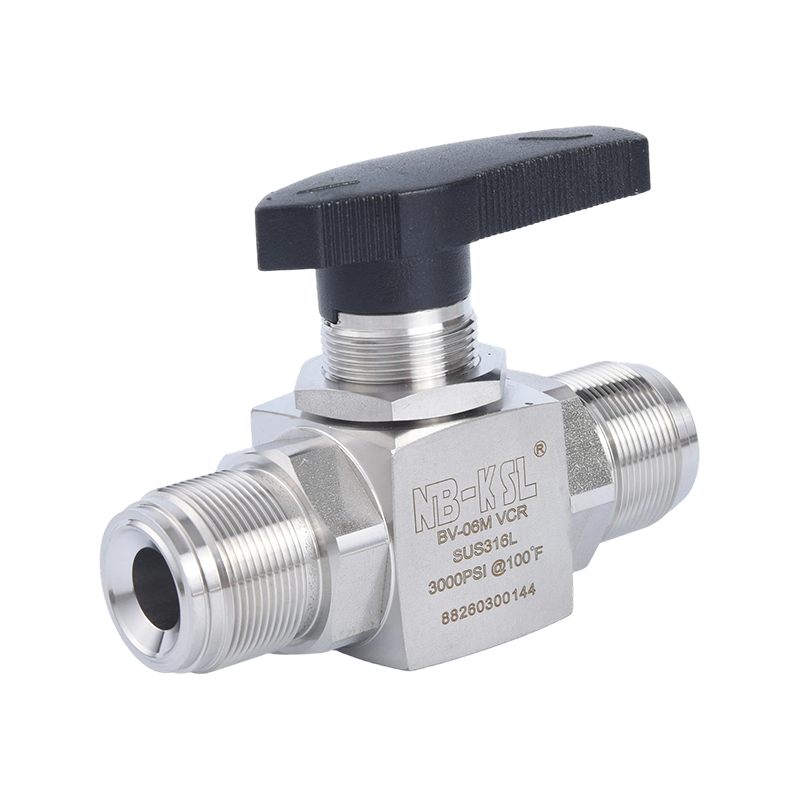
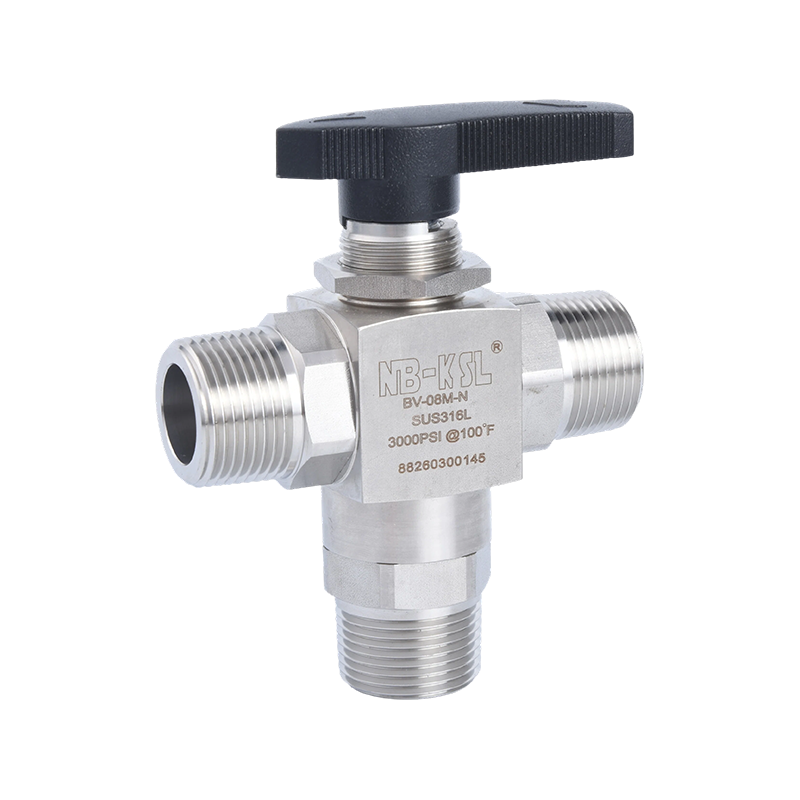
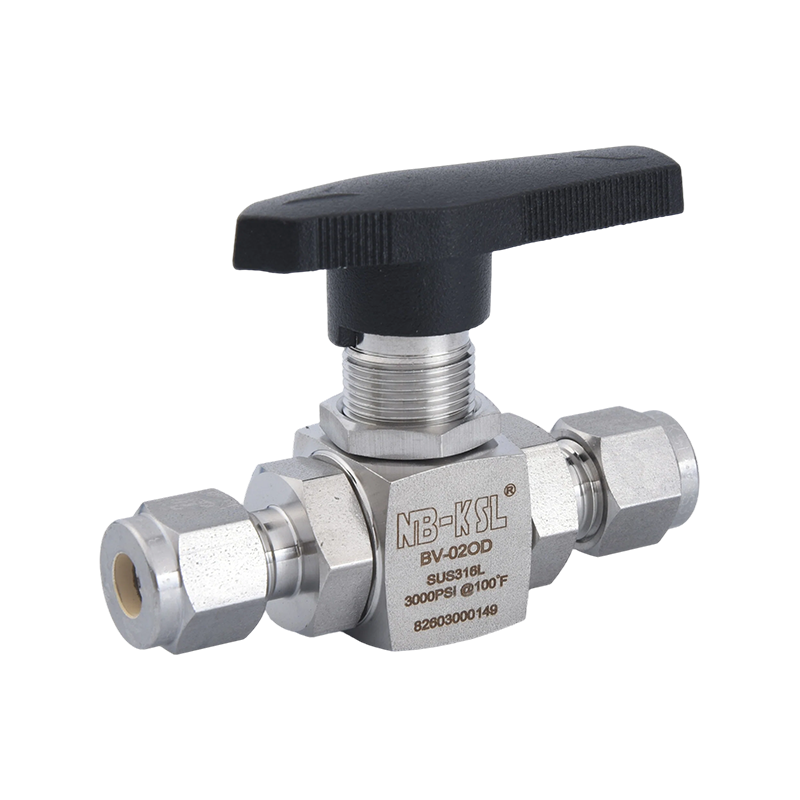
The external thread straight ball valve is a two-way shut-off valve that uses a spherical closure member and threaded male connections at both ends. A 90° turn of the handle moves the ball between the fully open and fully closed positions. In the open position, the bore through the ball aligns with the pipeline, allowing media to pass in a straight line with minimal resistance.
Because both ends are male threaded — typically NPT, BSPT, BSPP or metric — the valve connects directly to female fittings, hoses and instrument tubing without welding or flange hardware. This makes it one of the most widely used isolation valves in small and medium bore piping.
2. Construction and Operating Principle
The valve body is machined from brass, stainless steel 304/316, or carbon steel, and forms the pressure-containing shell with male threads at each end. Inside, a chrome-plated brass or stainless steel ball serves as the closure member, supported and sealed by PTFE, reinforced PTFE (RPTFE) or PPL seats. The stem transmits torque from the handle to the ball and is sealed by PTFE packing together with NBR, EPDM or FKM O-rings. The handle is usually a vinyl-coated steel lever, though aluminium alloy and stainless steel versions are available.
Operation is straightforward. When the handle is parallel to the pipe, the ball bore lines up with the flow path and the valve is fully open. Turning the handle 90° rotates the solid face of the ball across the bore, closing the valve. Handle orientation therefore acts as a built-in position indicator, allowing operators to confirm valve status at a glance.
3. Technical Specifications
Typical values are given below; exact figures depend on the model selected.
Nominal size: DN8 to DN50 (1/4″ to 2″)
Pressure rating: PN16, PN25, PN40; stainless steel versions up to 1000 PSI (approx. 6.9 MPa)
Temperature range: -20 °C to +180 °C with PTFE seats; above 200 °C with PPL seats
Thread standards: NPT, BSPT (ZG), BSPP (G), metric — customizable on request
Actuation: manual lever as standard; butterfly handle, lockable handle, pneumatic or electric actuator optional
Leakage class: bubble-tight soft seal, ISO 5208 Rate A
Suitable media: water, oil, steam, compressed air, natural gas, mild acids and alkalis, and selected chemical media
4. Key Features
Fast operation. A quarter turn takes the valve from fully closed to fully open, with low operating torque, making it well suited to frequent cycling.
Low flow resistance. In full-port configurations the bore matches the pipe inside diameter, giving a high flow coefficient and negligible pressure drop.
Reliable sealing. PTFE soft seats are pressed against the ball by line pressure, compensating for wear and delivering bi-directional, zero-leakage shut-off.
Easy installation. Male threads screw directly into matching fittings. No welding, no gaskets, no flange bolting — and removal for service is equally simple.
Compact and lightweight. The reduced envelope suits confined spaces inside equipment and skid-mounted assemblies.
Blowout-proof stem and antistatic option. The stem is fitted from inside the body so internal pressure cannot eject it. An antistatic spring can be added to maintain electrical continuity between ball, stem and body.
Corrosion resistance. Stainless steel versions perform well in chemical, food-grade and outdoor or humid environments over long service periods.
5. Typical Applications
The valve is used throughout industrial piping for isolating compressed air, hydraulic oil and cooling water lines. In chemical and pharmaceutical plants, 316 stainless steel bodies with RPTFE seats handle corrosive media. Instrument lines rely on it as a root valve ahead of pressure gauges and transmitters.
Other common uses include gas and heating systems — natural gas, steam and manifold branches for underfloor heating — as well as sanitary stainless steel lines in food and beverage production, small-bore branches in fire protection and water supply networks, and internal piping in OEM equipment such as air compressors, cleaning machines and boilers.


 English
 中文简体
中文简体