What Stainless Steel Needle Valves Are and How They Work
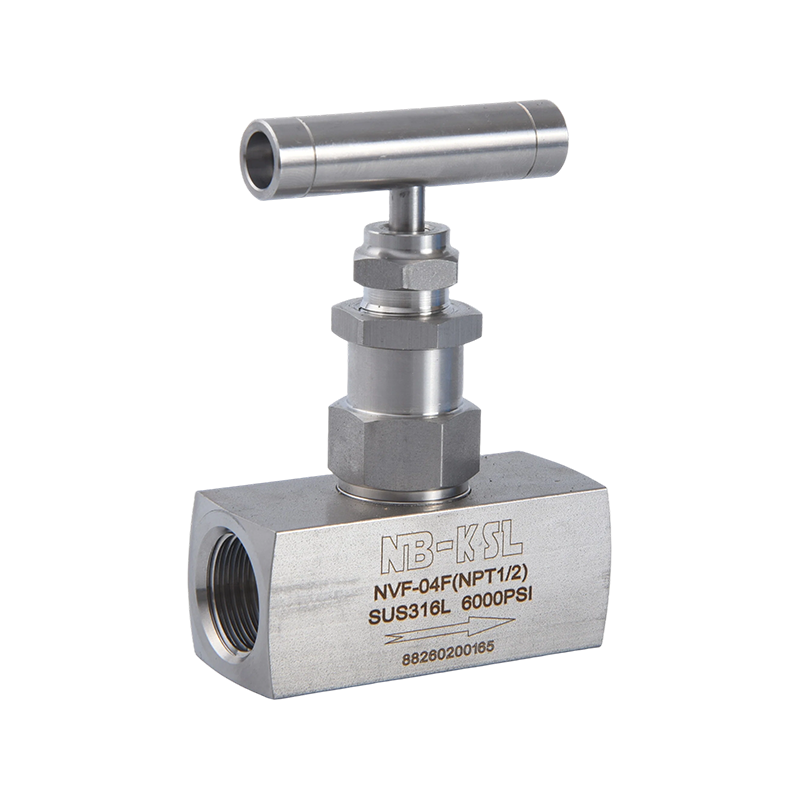
A needle valve controls flow through a small-bore orifice by advancing or retracting a tapered needle-shaped stem into and out of a precision-machined seat. As the handwheel or actuator rotates, the stem threads move it linearly, opening or closing the gap between the needle tip and the seat with very fine resolution. One full turn of a typical needle valve handwheel changes the stem position by only 0.5 to 1.5 mm, giving the operator extremely precise control over small flow rates.
Why Stainless Steel Is the Material of Choice for Most Applications
Stainless Steel Needle Valves dominate the market for needle valves used in instrumentation, process control, oil and gas, chemical, pharmaceutical, and marine applications because stainless steel delivers a combination of properties that no other common valve material matches:
- Corrosion resistance: Grade 316 stainless steel (the most common grade for needle valves) contains 16 to 18% chromium, 10 to 14% nickel, and 2 to 3% molybdenum, providing excellent resistance to chlorides, mild acids, and most process chemicals encountered in industrial instrumentation lines.
- Pressure capability: Forged 316 stainless needle valve bodies rated to 6,000 psi (414 bar) are standard in instrumentation service. High-pressure variants reach 10,000 to 20,000 psi (690 to 1,380 bar) for hydraulic and gas testing applications.
- Temperature range: Stainless steel needle valves function reliably from cryogenic temperatures down to minus 196°C (minus 321°F) with appropriate seat materials, up to 600°C (1,112°F) in all-metal seat configurations.
- Cleanability: The smooth, non-porous 316 stainless surface resists bacterial adhesion and can be sterilized with steam, making stainless needle valves acceptable under FDA and 3A sanitary standards in pharmaceutical and food production.
- Compatibility with oxygen service: After appropriate degreasing and cleaning procedures, stainless steel needle valves are approved for oxygen and oxidizing gas service where carbon steel and brass are prohibited.
Stainless Steel Grades Used in Needle Valves: 304, 316, and 316L
Not all stainless needle valves use the same alloy. The grade affects corrosion performance, weldability, and cost:
Stainless steel grades used in needle valves compared by composition, corrosion resistance, and recommended service
| Grade |
Cr % |
Ni % |
Mo % |
Key Advantage |
Recommended Service |
| 304 |
18 to 20 |
8 to 10.5 |
None |
Low cost, general corrosion resistance |
Non-chloride inland process, water, air |
| 316 |
16 to 18 |
10 to 14 |
2 to 3 |
Chloride and acid resistance |
Oil and gas, marine, chemical, instrumentation |
| 316L |
16 to 18 |
10 to 14 |
2 to 3 |
Low carbon, weld-decay resistant |
Pharmaceutical, sanitary, welded assemblies |
Needle Valve Seat Materials and Their Effect on Sealing and Temperature
The seat is the sealing surface that the needle tip contacts when the valve is closed. Seat material determines the valve's shutoff quality, temperature limit, and compatibility with the process fluid:
- PTFE (polytetrafluoroethylene): The most common seat material. Provides bubble-tight shutoff at low seating forces, excellent chemical resistance to most fluids, and a temperature range of minus 200°C to plus 200°C. Soft enough to conform to minor needle surface imperfections, giving reliable shutoff even after moderate wear.
- Nylon (polyamide): Lower cost than PTFE, good sealing properties, but temperature-limited to approximately plus 120°C and incompatible with strong acids and many solvents. Common in low-cost hydraulic needle valves and water service.
- Metal-to-metal (stainless steel or Stellite on stainless): Used when temperature exceeds PTFE limits or when the process fluid is incompatible with polymer seats. Metal seats require higher seating forces and do not achieve the bubble-tight shutoff of soft seats at low pressure, but operate reliably up to 600°C and at very high pressures above 10,000 psi. Stellite-faced metal seats provide significantly better erosion and galling resistance than bare stainless-on-stainless contact.
- PEEK (polyetheretherketone): High-performance polymer seat offering superior chemical resistance to PTFE alternatives, dimensional stability at temperatures up to 250°C, and mechanical strength that resists extrusion at high seating pressures. Used in gas sampling valves, chromatography systems, and high-pressure analytical instrumentation.
What Is the Difference Between a Gauge Valve and a Needle Valve?
A gauge valve is a specific type of needle valve purpose-designed to connect and isolate a pressure gauge (or pressure transmitter) from a process line. A standard needle valve is a general-purpose flow control and shutoff device. The confusion arises because gauge valves use needle valve internals, but they differ in body geometry, port configuration, and intended function. Understanding the distinction prevents both under-specification (installing a standard needle valve where a gauge valve is required) and over-specification (purchasing a gauge valve for a flow control application where it provides no benefit).
Gauge Valves: Purpose, Design, and Key Features
A gauge valve serves three functions: it isolates the pressure gauge from the process for safe gauge removal and replacement; it provides a bleed or vent port to depressurize the gauge side before disconnecting the instrument; and it acts as a calibration port for connecting a reference standard during calibration checks. Standard features of a gauge valve that are not found on a general needle valve:
- Bottom process connection: Gauge valves have their process inlet at the bottom of the body, connecting directly to the process pipe or a tapping point. The gauge or transmitter connects to the top port. This vertical arrangement ensures condensate drainage and self-purging of the measurement line.
- Bleed port: A small bleed screw or auxiliary needle valve on the gauge valve body allows the instrument side to be vented to atmosphere or a safe drain before the gauge connection is broken. This prevents technicians from being exposed to process pressure or hazardous fluid when removing the gauge.
- Compact body with gauge-standard connections: Gauge valves are manufactured with standardized connections for direct mounting to pressure gauges, transmitters, and manifold blocks — typically 1/4 inch NPT female on the instrument port and 1/2 inch NPT male or female on the process connection.
- Integral bonnet and stem: The bonnet housing and stem mechanism in gauge valves are designed for frequent operation (opening and closing to isolate the gauge during maintenance) with minimal wear, using a rising handwheel that gives a clear visual indication of open or closed position.
Standard Needle Valves: General-Purpose Flow Control Function
A standard needle valve is designed primarily for throttling and precise flow control of liquids and gases in instrument tubing, analytical equipment, hydraulic circuits, and process lines. Its key design priorities are:
- Fine flow adjustment: The long needle travel (many turns from fully closed to fully open) and small orifice diameter (typically 1 to 6 mm bore in instrumentation sizes) allow extremely precise throttling of small flow rates that would be impossible with a ball or gate valve.
- Inline installation: Standard needle valves have a straight-through or angle body designed to be installed in a process line, with identical end connections on both the inlet and outlet ports.
- Flow direction sensitivity: Many needle valves specify a preferred flow direction (under the seat or over the seat). Flow under the seat (from below the needle tip) provides better shutoff at low pressures and protects the packing from process pressure. Flow over the seat (from above the needle tip) is preferred in some high-pressure applications to assist shutoff by using process pressure to help seat the needle.
Side-by-Side Comparison: Gauge Valve vs. Needle Valve
Key differences between gauge valves and standard needle valves across function, design, and application
| Feature |
Gauge Valve |
Standard Needle Valve |
| Primary function |
Isolate and protect pressure instruments |
Throttle and control flow rate |
| Bleed port |
Yes, standard feature |
Not standard |
| Port orientation |
Bottom process, top instrument |
Inline or angle (both ends equal) |
| Connection standardization |
Gauge-standard ports (1/4 NPT instrument side) |
Process-standard ports (NPT, compression, SW) |
| Flow control capability |
On/off isolation only |
Full range throttling and shutoff |
| Typical pressure rating |
Up to 6,000 psi (414 bar) |
Up to 20,000 psi (1,380 bar) |
| Visual open/close indication |
Rising handwheel or stem indicator |
Turn count only |
| Typical installation |
Directly below pressure gauge or transmitter |
In process or instrument tubing runs |
How to Choose a Needle Valve: A Complete Selection Framework
Selecting the wrong needle valve for an application is one of the most common causes of premature valve failure, system leaks, and process control problems. The correct approach works through six parameters in sequence, and none can be skipped without risking a mismatch.
Step 1: Define the Process Fluid and Its Properties
The fluid in contact with the valve body, needle tip, seat, and packing determines every material choice in the selection:
- Fluid phase: Is the fluid a liquid, gas, or steam? Gas service requires the valve to maintain shutoff against very low viscosity media that finds the smallest leak path more easily than liquids. Steam service above 180°C eliminates PTFE seats and requires metal-to-metal seating.
- Chemical compatibility: Verify that every wetted material (body, needle, seat, packing, stem packing, seals) is compatible with the fluid. For corrosive fluids, 316 stainless is the standard. For concentrated acids, chlorinated solvents, or halogenated fluids, consult a chemical compatibility chart and consider Hastelloy C-276 body material or PTFE-lined bodies for extreme cases.
- Viscosity: High-viscosity fluids (above 500 cSt) create high pressure drops across the small valve orifice and may require a larger orifice size to achieve the needed flow rate. Very high-viscosity fluids above 5,000 cSt may not flow through standard instrumentation needle valve orifices and require process-grade valves with larger flow passages.
- Abrasion content: Slurries, sand-laden fluids, and fluids carrying hard particulates erode needle tips and seats. For abrasive service, select valves with hardened Stellite-faced needles and seats, rated for erosion-resistant service, or consider relocating needle valves to points in the system where the fluid is clean.
Step 2: Confirm the Pressure and Temperature Requirements
The pressure and temperature rating must exceed the maximum operating conditions with an adequate safety margin. The critical rule: both the maximum operating pressure and the maximum operating temperature must be within the valve's simultaneous rating, because pressure ratings are typically temperature-derated for elevated temperatures:
- A needle valve rated 6,000 psi at 38°C (100°F) may be derated to 4,500 psi at 200°C. Always verify the manufacturer's pressure-temperature (P-T) curve at the actual operating temperature.
- For hydraulic and pressure testing applications with water or oil at ambient temperature, high-pressure needle valves rated to 10,000 psi (690 bar) are commonly required and readily available in 316 stainless.
- For cryogenic service (liquid nitrogen, LNG, liquid oxygen), verify that both the body and stem materials have documented impact toughness at the minimum operating temperature. Austenitic stainless steels (304 and 316) retain adequate toughness to minus 196°C; carbon steel valves are not acceptable for cryogenic service.
Step 3: Determine the Required Flow Coefficient (Cv)
The flow coefficient Cv (or Kv in metric units) defines how much flow passes through the fully open valve at a defined pressure drop. For needle valves used in throttling service, the required Cv is calculated from the flow rate and pressure drop requirement:
For liquids: Cv = Q × √(SG / ΔP)
Where Q is flow in US gallons per minute, SG is the fluid specific gravity relative to water, and ΔP is the pressure drop in psi. For the controlled flow rate to fall in the sensitive middle portion of the needle valve travel (not at the extreme tip of the needle where control resolution is poor), select a valve whose maximum Cv is approximately 3 to 5 times the required Cv at normal flow. This places the operating point at roughly 20 to 30% of full open, where needle valve controllability is best. Needle valves have very low Cv values by design: a typical 1/4 inch NPT instrumentation needle valve has a maximum Cv of approximately 0.3 to 0.8, making them appropriate for precise low-flow control rather than high-volume throttling.
Step 4: Select End Connections
Needle valves are available with several end connection types, and the choice must match both the adjacent tubing or piping and the pressure class:
- NPT threaded (National Pipe Thread Taper): The most common connection for instrumentation needle valves in North America. Sizes from 1/8 inch to 1 inch NPT. Requires PTFE tape or pipe sealant on the threads. Maximum pressure capability up to 6,000 psi for small NPT connections in stainless valve bodies.
- Compression fitting (Swagelok-type or Parker A-Lok): For instrument tubing connections in stainless or other tube materials. The compression fitting ferrules bite into the tube OD, creating a leak-free connection without threading. Rated to 3,000 to 10,000 psi depending on tube size and material. Standard for analytical instruments, gas chromatography lines, and laboratory equipment.
- Socket weld (SW): The valve body is slipped over the pipe end and the joint is fillet-welded. Required in high-pressure high-temperature process piping where threaded connections are prohibited by code. ASME B31.3 process piping commonly uses socket weld needle valves in Class 1500 and Class 2500 pressure class service.
- Butt weld (BW): The valve body has plain pipe ends that are butt-welded into the pipeline. Used for the highest-pressure and highest-temperature piping where no mechanical joint is acceptable. Common in power plant instrument root valve installations.
- BSPP or metric threads: Standard in Europe and Asia Pacific markets. BSPP (British Standard Parallel Pipe) is a parallel thread that seals on a face or bonded washer rather than on the thread taper, providing a reusable leakproof connection without sealant when used with appropriate sealing washers.
Step 5: Choose the Correct Packing Type
The stem packing seals the annular gap between the rotating stem and the valve body bonnet, preventing process fluid from leaking to atmosphere along the stem. Packing choice affects the operating temperature range, chemical compatibility, and packing friction (which determines the handwheel torque needed to operate the valve):
- PTFE packing: Standard for most applications. Temperature range minus 200°C to plus 200°C. Excellent chemical resistance, low friction (easy to operate), but creeps over time at elevated temperatures, requiring periodic re-tightening of the packing nut.
- Grafoil (flexible graphite) packing: Used for high-temperature service above 200°C and for steam, heat transfer fluids, and applications where PTFE would be unsuitable. Temperature rating up to 550°C in non-oxidizing service. Higher friction than PTFE, requiring more force to operate the valve handwheel.
- Metal bellows seal: A welded metal bellows replaces the traditional packing entirely, providing a hermetically sealed stem that has zero fugitive emissions. Required by EPA Method 21 regulations for highly volatile organic compound (VOC) service. Bellows-sealed needle valves are significantly more expensive but eliminate packing leakage as a failure mode entirely.
Step 6: Verify Body Type and Special Service Requirements
Beyond the core parameters, several application-specific requirements must be confirmed:
- Angle vs. straight body: Angle needle valves have a 90-degree flow path through the body and are preferred where the process piping approaches the valve from one direction and exits perpendicular (eliminating one pipe elbow). Straight-through bodies minimize pressure drop and are standard for inline throttling service.
- Rising vs. non-rising stem: A rising stem moves upward as the valve opens, giving a clear visual position indication and preventing wear on the stem threads from rotation under packing load. Non-rising stems rotate in place, which is preferred where headroom is limited.
- Lockable handwheel: In safety-critical applications where the valve position must be secured against unauthorized adjustment, locking handwheels or wire-seal provisions prevent tampering without a key or breaking the wire seal.
- NACE MR0175 / ISO 15156 compliance: Oil and gas applications in sour service (hydrogen sulfide containing environments) require materials that resist sulfide stress cracking. NACE-compliant stainless needle valves use controlled chemistry and hardness of all wetted components to meet the standard. Verify NACE compliance explicitly when purchasing valves for sour service.
How to Stop a Needle Valve from Leaking: Diagnosing and Fixing Every Leak Type
A leaking needle valve fails in one of three locations: through the stem (external packing leak), through the seat (internal or process-side leak past the closed needle), or through the body connections (thread or fitting leak). Each type has a distinct diagnosis and repair approach, and confusing them wastes time and risks making the leak worse.
Leak Type 1: Stem Packing Leak (External Fugitive Emission)
A stem packing leak appears as fluid weeping or misting around the valve stem where it exits the bonnet, directly above the handwheel. This is the most common needle valve leak in field service and in most cases can be stopped without removing the valve from service.
Causes:
- PTFE packing has cold-flowed (crept) over time under compression and temperature cycling, reducing the contact stress on the stem
- Packing has been degraded by chemical attack from the process fluid
- The packing nut was never tightened to the correct specification during initial installation
- The valve stem has developed a wear groove where it contacts the packing, providing a leak path even when the packing itself is intact
How to stop a stem packing leak:
- First attempt: Tighten the packing nut. Most needle valves have a packing nut (also called a gland nut) that compresses the packing against the stem. Using the appropriate open-end wrench, tighten the packing nut one-quarter turn (90 degrees) clockwise while the valve is in service under normal operating pressure. Check for leaks after each increment. Do not exceed one full turn (360 degrees) total tightening without checking the valve's operating torque, as over-tightened packing makes the handwheel difficult to turn and accelerates stem wear.
- If tightening stops the leak: Record the number of packing nut turns applied. If more than one full turn was required to stop the leak, the packing has compressed significantly and will need replacement in the near future. Schedule packing replacement at the next maintenance opportunity.
- If tightening does not stop the leak or the valve becomes too stiff to operate: The packing must be replaced. This requires depressurizing the valve, isolating it from both upstream and downstream pressure, and removing the packing nut and old packing using a packing pick or extractor. Install new packing of the same type and size as specified by the valve manufacturer, lubricate the stem lightly with the valve manufacturer's recommended lubricant (often PTFE grease), reassemble, and re-tighten the packing nut to the manufacturer's specified torque.
- If the stem itself is scored or grooved: The stem must be replaced along with the packing, as a damaged stem surface will cause the new packing to leak immediately. In severe cases of stem corrosion or scoring, the entire valve body may need replacement.
Leak Type 2: Seat Leak (Flow Through Closed Valve)
A seat leak allows flow to pass through the valve even when the handwheel is fully tightened closed. It is detected by observing flow on the downstream side of an otherwise closed valve, or by measuring downstream pressure rise in a closed system. Seat leaks in stainless steel needle valves have three main causes:
- Seat erosion or damage: The soft PTFE or nylon seat has been eroded by abrasive particles, cavitation, or repeated closing against a contaminated seat. Even microscopic scoring of the seat surface creates a leak path that bypasses the needle-to-seat contact line.
- Needle tip damage: The hardened stainless needle tip has been chipped, corroded, or plastically deformed by over-closing (slamming the valve shut at high velocity or applying excessive closing torque). A damaged needle tip cannot form a full 360-degree seal line with the seat.
- Foreign material on the seat: A particle trapped between the needle and seat during closing prevents full seating. This is often temporary and resolved by cycling the valve open briefly to flush the particle, then re-closing carefully.
How to stop a seat leak:
- Flush the seat: Open the valve fully for a brief period to clear any particles from the seat area, then re-close slowly with steady hand pressure only. Do not use a wrench on the handwheel to force the valve closed, as this crushes and damages soft seats permanently.
- Replace the seat: Most needle valves with replaceable PTFE seats can be re-seated by depressurizing the valve, removing the stem and needle assembly, extracting the old seat insert, and pressing in a new seat. Manufacturer seat replacement kits include the correct seat dimensions and instructions. After seat replacement, close the valve by hand until resistance is felt and verify bubble-tight shutoff with a leak test.
- Replace the valve: If the valve body seat taper or the needle tip is damaged (corroded, pitted, or chipped in a metal-seat valve), re-seating by lapping the needle and seat with valve grinding compound is possible for metal-seated valves. However, for soft-seated instrumentation needle valves, a damaged body seat typically requires full valve replacement, as precision re-machining of the seat taper in the field is not practical.
Leak Type 3: Connection Leak (Thread or Fitting Leak)
A connection leak appears at the junction between the valve body and the adjacent pipe fitting or tube fitting, not at the stem or through the seat. This is a leaking joint, not a leaking valve. Causes and remedies:
- NPT thread leak: Insufficient sealant on the thread, cross-threaded connection, or insufficient thread engagement (fewer than four to five engaged threads in NPT). Remedy: depressurize, disconnect, apply fresh PTFE tape (minimum 3 to 4 wraps in the direction of thread rotation) or apply pipe thread sealant paste, and reconnect with correct torque. A 1/4 inch NPT male thread should be tightened to 12 to 15 Nm (9 to 11 ft-lb) after hand-tight, typically 2 to 3 turns past hand-tight engagement.
- Compression fitting leak: The ferrule was not fully swaged on initial installation, or the tubing was not fully inserted to the valve body stop before tightening. Remedy for a new installation: re-make the fitting by tightening the nut an additional one-quarter turn past the point of firm resistance. For a previously made and retightened connection, replace the ferrule and repeat the installation procedure with new tube cut squarely and fully seated before tightening.
- Weld connection leak: A pinhole or crack in the fillet weld at a socket-weld connection indicates inadequate weld penetration or weld porosity. This requires rewelding after grinding out the defective area and is a job for a certified welder following ASME B31.3 or applicable piping code requirements.
Preventive Practices That Eliminate Most Needle Valve Leaks Before They Start
- Never use a wrench on the handwheel to force the valve closed. Needle valves are designed to be closed by hand pressure only. Wrench-tightening crushes soft seats and scores needle tips, guaranteeing seat leaks within a short period of use.
- Back off one-quarter turn after fully closing. In some designs, this relieves excessive stem load and prevents the soft seat from cold-flowing under prolonged compressive load, making it easier to re-open the valve and extending seat life.
- Install the valve with the correct flow direction. Operating a flow-direction-sensitive needle valve backwards (flow over the seat when the design requires flow under the seat) can cause the packing to be pressurized directly, accelerating packing leakage. Check the manufacturer's flow arrow marking on the body.
- Do not use needle valves for on-off service at high frequency. Needle valves are designed for infrequent adjustment or throttling, not as isolation valves cycled many times per day. Frequent operation accelerates seat and packing wear. For high-cycle on-off service, use a ball valve and install the needle valve only for final flow trimming.
- Tighten packing nuts to specification during installation. A significant proportion of packing leaks occur because the packing was not tightened sufficiently at the initial installation stage. After installing a new needle valve, tighten the packing nut to the manufacturer's specified torque, then re-check after the first operational pressure cycle, as thermal expansion during initial pressurization causes initial packing compression that may require a small additional tightening increment.
Stainless Steel Needle Valve Applications by Industry and Service Type
Understanding where and why stainless steel needle valves are specified across different industries helps both buyers and engineers make more confident selection decisions and recognize when a needle valve is and is not the appropriate technology.
Oil and Gas: Wellhead, Instrument, and Sample System Applications
The oil and gas industry is the largest single market for stainless steel needle valves. Applications include:
- Instrument root valves: The first isolation valve between the process pipe and instrument tapping point. These valves must isolate reliably under full process pressure and temperature while being operable by one technician during routine instrument maintenance. 316 stainless needle valves with socket weld or NPT connections are standard for pressures up to Class 1500 (2,575 psi at 38°C).
- Sample conditioning panels: Gas and liquid sample streams from process lines are conditioned (filtered, pressure-reduced, temperature-controlled) through panels containing multiple needle valves for flow adjustment, block and bleed isolation, and purge connections. The needle valves must handle a wide range of sample fluids including hydrocarbons, H₂S-containing gases, and sour condensate.
- Metering skid calibration connections: Needle valves provide precise flow control for calibration fluid injection into fiscal metering skids, where ±0.1% volumetric accuracy is required for hydrocarbon custody transfer.
Chemical and Pharmaceutical: Precision Dosing and Sanitary Requirements
- Catalyst dosing: Precise addition of liquid or gaseous catalysts to reactors at controlled very low flow rates requires needle valves that can maintain stable throttle positions over days or weeks. 316L stainless with PEEK seats handles most catalyst streams including organometallic compounds and acidic catalyst solutions.
- Bioreactor media addition: Pharmaceutical bioreactors require sterile addition of nutrients, pH adjustment chemicals, and antifoam agents through needle valves that can be steam-sterilized in-place (SIP) without disassembly. 316L stainless with electropolished internal surfaces and PTFE packing is the standard specification for bioprocess needle valves.
- Laboratory and analytical equipment: HPLC (high-performance liquid chromatography) systems, gas chromatographs, and mass spectrometers use miniature stainless needle valves with compression tube fittings to control mobile phase and carrier gas flows at flow rates from 0.01 to 10 mL per minute.
Power Generation and HVAC: Steam and High-Temperature Applications
- Boiler chemical dosing: Corrosion inhibitors, oxygen scavengers, and descaling chemicals are injected into boiler feedwater systems through stainless needle valves that throttle small chemical flow rates against boiler system pressures of 10 to 150 bar.
- Steam trap bypass: Needle valves installed as bypass paths around steam traps allow manual drainage and venting of steam trap circuits during commissioning and maintenance, without removing the trap from service.
- Cooling water treatment: HVAC chilled water and condenser water systems use stainless needle valves in chemical treatment dosing panels for biocide, scale inhibitor, and corrosion inhibitor injection into the closed-loop systems.
Stainless Steel Needle Valve Maintenance Schedule and Best Practices
Stainless needle valves in critical instrumentation and process control service require a structured maintenance program to ensure continued leak-free operation and reliable shutoff performance. The following schedule represents best practice for valves in continuous process service.
Routine Inspection: Monthly or During Normal Process Rounds
- Visually inspect all stem areas for weeping or staining that indicates packing leakage. Gas leaks can be detected with an appropriate leak detection solution (soapy water or commercial leak detector spray) applied around the packing area.
- Verify that handwheels are properly positioned (open valves should be at the position established during commissioning; closed valves should be fully seated without excessive force).
- Check packing nuts for loosening due to vibration. In high-vibration environments, lock washers or anti-vibration packing nut designs prevent self-loosening of the packing gland.
Annual Maintenance: Packing Inspection and Replacement
- Measure packing nut position against reference marks made at installation commissioning. If the packing nut has advanced more than half a turn from its original position, the packing has compressed significantly and replacement during the next planned shutdown is recommended.
- Inspect accessible stem surfaces for corrosion, pitting, or scoring using an illuminated magnifier. Pitting depth greater than 0.1 mm on the stem sealing surface warrants stem replacement.
- Verify valve shutoff by closing fully and checking for leakage past the seat using downstream pressure monitoring or bubble test methods appropriate to the service.
Shutdown Maintenance: Full Disassembly and Reconditioning
- Disassemble the valve completely. Inspect the needle tip, seat, stem, packing, packing nut threads, and body bore for wear, corrosion, and dimensional conformance.
- Replace all soft goods (seat, packing, any O-rings or bonnet gaskets) regardless of apparent condition. Soft goods that have been in service are work-hardened and compressed from their original dimensions, and are close to the end of their reliable service life even if not visibly degraded.
- Perform a seat and packing leak test at 1.5 times the maximum allowable operating pressure (MAWP) with the test fluid specified in ASME B16.34 or the applicable valve testing standard before returning the valve to service.
Frequently Asked Questions About Stainless Steel Needle Valves
1. What is the difference between a gauge valve and a needle valve?
A gauge valve is a specialized needle valve designed specifically to isolate a pressure gauge or pressure transmitter from a process line. It has a bottom process port, a top instrument port, and a bleed port for safe depressurization before removing the gauge. A standard needle valve is a general-purpose flow control and throttling device installed in a process line, with identical inlet and outlet ports for inline installation. Both use a tapered needle stem mechanism, but their body geometry, port configuration, and intended service are different. A gauge valve is not a substitute for a needle valve in flow throttling service, and a standard needle valve lacks the bleed port needed for safe gauge removal.
2. How do I choose the right needle valve for my application?
Choose a needle valve by working through six parameters in order: first, identify the process fluid and verify chemical compatibility with all wetted materials (body, needle, seat, packing); second, confirm the pressure and temperature rating at actual operating conditions using the manufacturer's P-T curve; third, calculate the required flow coefficient Cv and select a valve whose maximum Cv is 3 to 5 times the required Cv to ensure operating in the controllable mid-range of needle travel; fourth, select the correct end connection type (NPT, compression, socket weld, butt weld) for the adjacent piping; fifth, choose the packing type (PTFE for general service, graphite for high temperature, metal bellows for zero-emissions service); sixth, verify any special requirements such as NACE compliance for sour service, sanitary standards for food and pharmaceutical service, or locking provisions for safety-critical applications.
3. How do I stop a needle valve from leaking at the stem?
To stop a stem packing leak in a needle valve: first, attempt to tighten the packing nut by one-quarter turn (90 degrees) while the valve is under normal operating pressure, and check if the leak stops. If it stops, monitor for recurrence and plan packing replacement at the next maintenance opportunity. If tightening does not stop the leak, or if the valve becomes difficult to operate, depressurize and isolate the valve, remove the packing nut and extract the old packing, inspect the stem surface for scoring or corrosion (replace the stem if damaged), install new packing of the correct type and size from the manufacturer's repair kit, and reassemble to the specified packing nut torque. Never use a wrench on the handwheel to force the valve closed, as this accelerates both seat and packing damage.
4. Why is 316 stainless steel the most common material for needle valves?
316 stainless steel is the dominant needle valve material because its composition (16 to 18% chromium, 10 to 14% nickel, 2 to 3% molybdenum) provides excellent resistance to chloride pitting, mild acids, and most industrial chemicals that would corrode carbon steel or brass valves. It retains adequate mechanical strength from cryogenic temperatures to approximately 450°C in sustained service, making it suitable for the overwhelming majority of industrial instrumentation and process applications. 304 stainless (without molybdenum) is used in non-chloride environments where cost is a priority, but 316 is the default specification for oil and gas, marine, chemical, and pharmaceutical service.
5. What causes a needle valve seat to leak, and can it be repaired?
Needle valve seat leaks are caused by three main factors: erosion of the soft PTFE or nylon seat by abrasive particles or cavitation; damage to the needle tip from over-closing the valve with excessive torque; or foreign material trapped between the needle and seat preventing full contact. For soft-seated needle valves, the seat can often be replaced using a manufacturer's seat replacement kit (available for most instrumentation-grade valves) without replacing the entire valve. If the needle tip is damaged, the stem and needle assembly must be replaced. If the valve body seat taper is damaged in a metal-seated valve, lapping the seat with valve grinding compound can restore shutoff; for soft-seated valves with a damaged body seat, valve replacement is required. Always close needle valves by hand only to prevent seat damage.
6. What is the typical pressure rating of a stainless steel needle valve?
Stainless Steel Needle Valves span a wide range of pressure ratings depending on body construction and size. Standard instrumentation needle valves with NPT or compression tube connections are typically rated at 3,000 to 6,000 psi (207 to 414 bar) at ambient temperature. High-pressure forged body needle valves for hydraulic test, gas testing, and subsea applications reach 10,000 to 20,000 psi (690 to 1,380 bar). Pressure ratings are temperature-derated for service above approximately 100°C, so always verify the manufacturer's pressure-temperature curve at the actual operating temperature, not just the maximum cold working pressure.
7. Can stainless steel needle valves be used for oxygen service?
Yes, stainless steel needle valves can be approved for oxygen service, but only after specific preparation. All hydrocarbon contamination (cutting oils, preservative coatings, thread sealants) must be removed by a certified cleaning procedure (typically solvent degreasing followed by hot alkaline wash and verification by UV or gravimetric analysis). PTFE seats and packing are acceptable for oxygen service because PTFE does not ignite easily. Lubricants used on the stem must be oxygen-compatible (silicone-free, specifically rated for oxygen, such as Krytox or Halocarbon oil). The cleaned valve must be packaged in sealed plastic bags with oxygen-compatible packaging until installation. Verify that the complete assembled instrument system is rated for oxygen service before installing any component.
8. What is the difference between angle and straight-through needle valve bodies?
In a straight-through (inline) needle valve, the flow path enters and exits the valve body on the same axis, with the needle stem perpendicular to the flow direction. These valves provide lower pressure drop than angle body valves and are the standard choice for in-line instrument tubing runs. In an angle needle valve, the inlet is at 90 degrees to the outlet, with the needle stem aligned with one of the flow ports. Angle valves are used where the piping changes direction at the valve location, replacing one pipe elbow and reducing the total number of fittings in the system. Angle body valves also drain more completely than straight-through bodies when the process line is emptied, which is important in sanitary and corrosive service where residual fluid must not remain in the valve cavity.



 1 Zhongxin Yungu Zone D Building 1, Jiangkou Street, Fenghua District, Ningbo City, Zhejiang Province, China
 +86-574-88561893 / +86-15057497901
 Copyright © Ningbo Keshengli Stainless Steel Valve Co., Ltd. Rights Reserved.
Wholesale Stainless Steel Fittings & Valves Manufacturers
Copyright © Ningbo Keshengli Stainless Steel Valve Co., Ltd. Rights Reserved.
Wholesale Stainless Steel Fittings & Valves Manufacturers



 English
 中文简体
中文简体