

 English
 中文简体
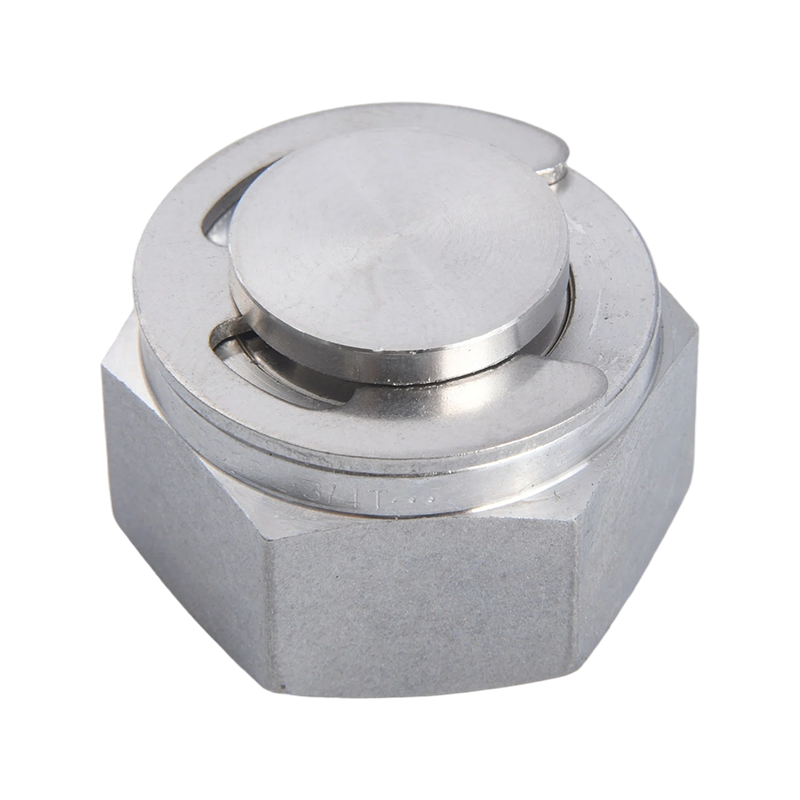


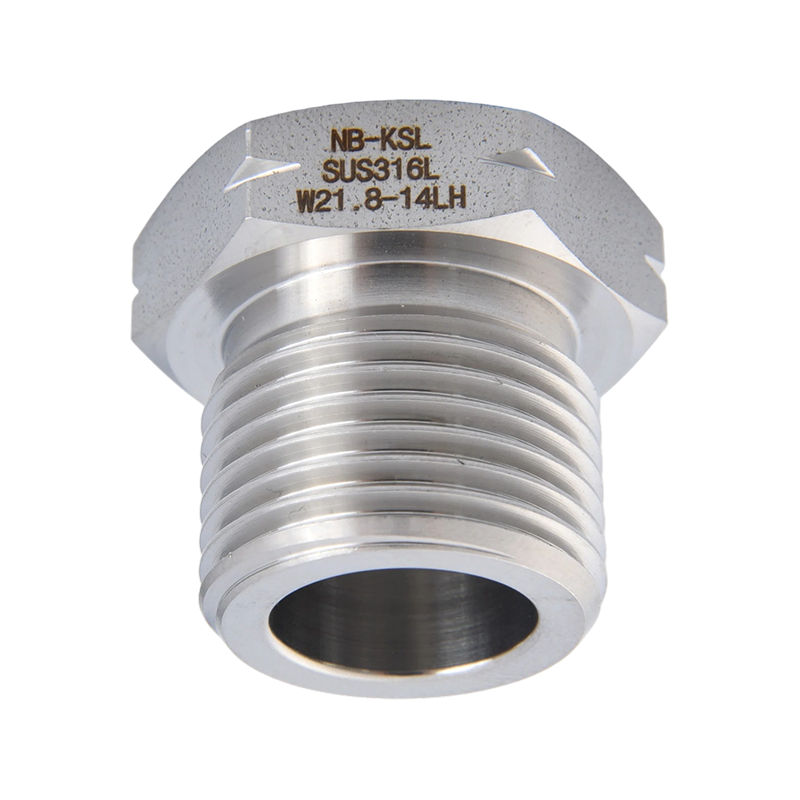
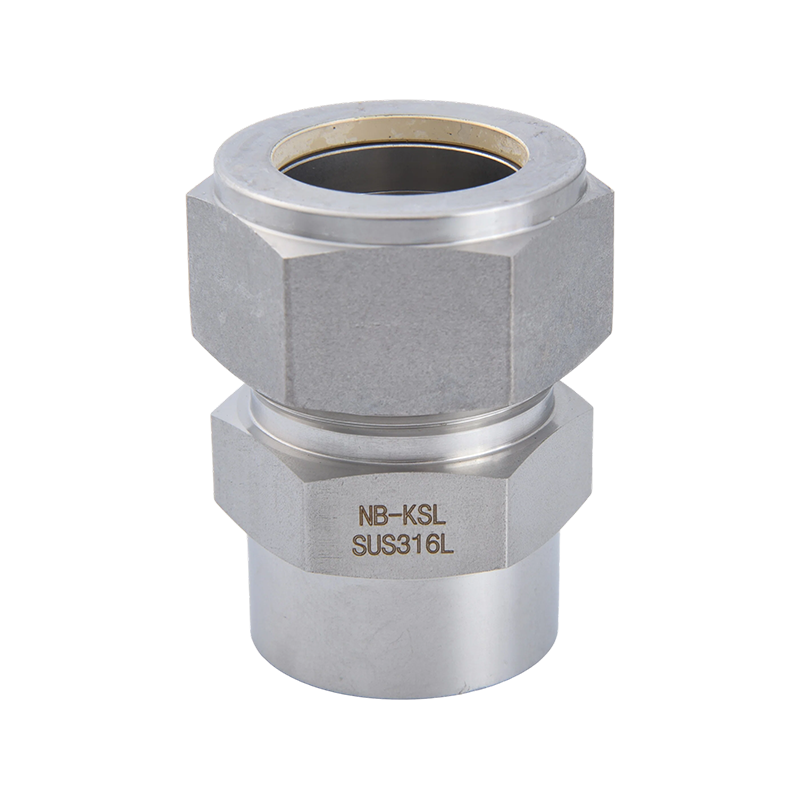
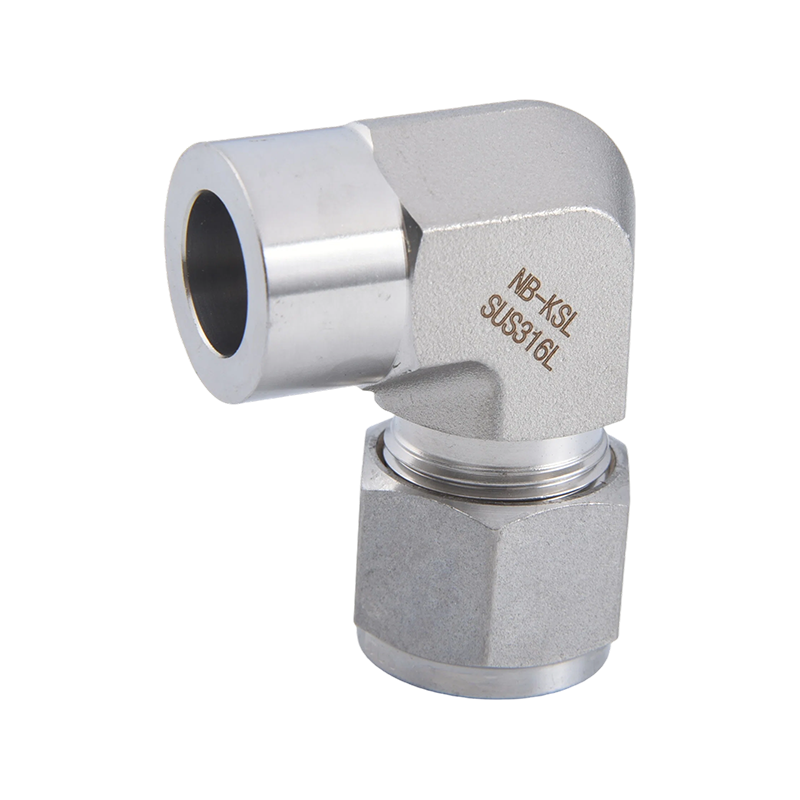
Technical Parameters of 304 Stainless Steel Valves
| Parameter | Typical Specification |
|---|---|
| Body material | CF8 (cast 304), ASTM A182 F304 (forged), ASTM A276 304 (bar) |
| Trim material | 304 stainless steel ball, stem and gland; 316 optional on request |
| Seat and seal | PTFE, reinforced PTFE (RPTFE), PEEK or graphite packing depending on temperature |
| Size range | 1/4 inch to 4 inch (DN8 to DN100) for threaded types; DN15 to DN300 for flanged types |
| Pressure rating | 1000 WOG, PN16, PN40, Class 150, Class 300 (model dependent) |
| Working temperature | -20 °C to +180 °C with PTFE seats; up to 260 °C with graphite or metal seats |
| End connection | NPT, BSPP, BSPT, ISO 7/1, flanged EN 1092-1 / ASME B16.5, BW, SW, tri-clamp |
| Operation | Lever, locking lever, gear, pneumatic or electric actuator with ISO 5211 pad |
| Surface finish | Pickled and passivated, mirror polished or electropolished on request |
| Leakage class | Bubble-tight in both directions, tested to API 598 / EN 12266-1 |
The figures above are typical values for our standard production. Pressure and temperature limits are not independent: a PTFE-seated valve rated at 1000 WOG at ambient temperature will see its allowable pressure fall as the medium warms up, so we always supply a pressure-temperature curve together with the final quotation. Please send us your working medium, maximum temperature, line pressure and connection standard, and we will confirm the exact configuration, including whether a full-bore or reduced-bore pattern is the better choice for your flow requirement.
All dimensions can be adapted to your drawing, and non-standard thread forms or face-to-face lengths are accepted for OEM projects.
Quick selection hint: for clean water, air and food-grade liquids, a 2-piece 304 ball valve with RPTFE seats is usually the most economical choice. For lines that need frequent cleaning or disassembly, a 3-piece design or tri-clamp valve saves maintenance hours later.
Full 304 Valve Range and One-Stop Sourcing
Importers and project contractors rarely need only one valve type. They need a coordinated package: shut-off valves, check valves, strainers, fittings and actuators that share the same material grade, the same documentation and the same shipment. Our 304 program is organised for exactly that kind of consolidated purchasing, so you can cover a bill of materials with one supplier instead of splitting it across several factories.
| Product Group | Typical Sizes | Common Connections |
|---|---|---|
| Ball valves, 1-piece, 2-piece and 3-piece | 1/4 inch to 4 inch | NPT, BSP, flanged, BW, SW, clamp |
| Gate and globe valves | 1/2 inch to 8 inch | Flanged, threaded, BW |
| Swing and lift check valves | 1/2 inch to 8 inch | Threaded, flanged, wafer |
| Butterfly valves | DN40 to DN300 | Wafer, lug, flanged, clamp |
| Y-strainers and filters | 1/2 inch to 6 inch | Threaded, flanged |
| Pipe fittings and unions | 1/4 inch to 4 inch | Threaded, socket weld, butt weld |
| Actuated valve packages | Matched to valve size | Pneumatic or electric, ISO 5211 |
Why one supplier helps: mixed material lots from different sources often carry different certificates, different marking styles and different packing quality. When everything comes from one workshop, your receiving inspection becomes simpler, your documentation stays consistent and your freight is consolidated into fewer cartons and pallets.
We can also pre-assemble valves with actuators, limit switches and solenoids, calibrate them and ship them ready to install, which saves your commissioning team time on site.
Comparison for buyers: compared with carbon steel, 304 costs more but avoids rust, coating and contamination. Compared with 316L, it costs less but should stay away from heavy chloride exposure. Many projects mix grades by line to control budget.
Design and Manufacturing Standards for 304 Valves
A valve is only interchangeable on site if it follows the same published standards as the pipe it is joined to. Our 304 stainless steel valves are designed, machined and tested to widely recognised international standards, and the relevant references are printed in the product data sheet that accompanies every quotation.
| Area | Standard Reference |
|---|---|
| Pressure-temperature ratings | ASME B16.34, EN 12516 (where applicable) |
| Ball valve design | ISO 17292, BS 5351, MSS SP-110 |
| Gate, globe and check design | API 600, API 602, BS 1873, BS 1868, EN 12334 |
| Butterfly valve design | API 609, EN 593 |
| Flange dimensions | ASME B16.5, EN 1092-1, JIS B2220, DIN 2501 |
| Pipe threads | ASME B1.20.1 (NPT), ISO 228 (BSPP), ISO 7 (BSPT) |
| Face-to-face length | ASME B16.10, EN 558 |
| Actuator mounting | ISO 5211 |
| Material specifications | ASTM A351 CF8, ASTM A182 F304, ASTM A276 304 |
| Inspection and testing | API 598, EN 12266-1, ISO 5208 |
Where a customer works to a national or company specification that is not listed here, we will compare it clause by clause with our production practice and tell you honestly whether we can comply, and at what cost or lead time.
Tip for buyers: please state the standard in your inquiry, not only the nominal size. A DN50 flange to EN 1092-1 PN16 has a different bolt circle from a 2 inch ASME Class 150 flange, and a surprising number of site problems start there.
If you need a document check before production, send us your specification sheet. We will mark which clauses we comply with, which need confirmation and which cannot be met, so that the contract is clear from the start.
Quality System and Certifications
Certificates are only useful if they can be traced to the valve in your hands. At Ningbo Keshengli, quality records are linked to production batches, so the paperwork you receive matches the products in the carton rather than being a generic copy.
- Quality management: production under a documented ISO 9001 style quality system, with incoming, in-process and final inspection records kept for each lot.
- Material test certificates: EN 10204 type 3.1 mill certificates for body and trim material, available on request with every order.
- Pressure equipment: CE marking under the Pressure Equipment Directive can be arranged for qualifying models and sizes.
- Fire safe and low emission options: available for selected designs, with the relevant test reports shared before order confirmation.
- Food contact: seat and seal materials compliant with FDA and EU 1935/2004 food contact requirements can be supplied for hygienic service.
- Drinking water: NSF 61 or WRAS approved seal materials on request for potable water projects.
- Third-party inspection: SGS, BV, TUV or your own appointed inspector are welcome to witness testing and final inspection.
Please note: some certifications apply to specific models rather than the entire range. Tell us which approvals your project requires at the inquiry stage, and we will confirm exactly which products can be supplied with them, so there are no surprises when the documents are due.
Copies of our factory certificates, test report samples and a typical documentation pack can be sent to you by email before you commit to a purchase order.
Questions about a specific approval, for example food contact or potable water, are best sent with the intended valve model. We will answer with the relevant material declarations and test reports instead of general statements.
Material Traceability from Heat Number to Finished Valve
For stainless steel, the grade stamped on the body is only a claim until chemistry has been verified. Our traceability procedure is designed so that every valve can be linked back to the heat of steel it was made from, and so that a doubtful piece can be isolated quickly if a question ever arises.
- Incoming material: bar, forging or casting arrives with its mill certificate. We check the heat number against the certificate and record it in the batch file.
- Positive material identification (PMI): a handheld XRF analyser confirms the chromium and nickel content of incoming material and, on request, of finished valves.
- Marking: body castings and forgings carry the heat number, grade and size, so the identification remains visible after machining and polishing.
- Batch control: parts from different heats are not mixed within one assembly lot unless the customer permits it.
- Documentation: an EN 10204 3.1 certificate showing chemical composition and mechanical properties is issued with the shipment when ordered.
- Record retention: inspection and test records are archived, normally for several years, so reorders and warranty questions can be answered with facts.
| Element | 304 Typical Range (%) | What We Verify |
|---|---|---|
| Chromium (Cr) | 18.0 to 20.0 | Corrosion resistance |
| Nickel (Ni) | 8.0 to 10.5 | Austenitic structure and toughness |
| Carbon (C) | 0.08 max | Weldability and sensitisation risk |
| Manganese (Mn) | 2.0 max | Mechanical strength |
Buyers who supply into regulated industries, such as food processing or power, often ask for full traceability. We are glad to align our records with your quality plan.
Practical advice: keep our certificate and the heat number photo together with your goods received record. If an audit or a customer complaint arises years later, this single record is usually enough to resolve it in minutes instead of weeks.
In-House Testing Capability
Testing is where a valve proves it can do the job. Every 304 valve leaving our factory goes through pressure testing, and additional checks can be added to suit your inspection plan. The table below summarises what is performed routinely and what can be arranged on request.
| Test | Method | Frequency |
|---|---|---|
| Shell test | Hydrostatic pressure at 1.5 times rated pressure, hold time per API 598 | 100% of valves |
| Seat test (liquid) | Hydrostatic pressure at 1.1 times rated pressure | 100% of valves |
| Low-pressure air seat test | Compressed air at about 6 bar under water, checking for bubbles | 100% of soft-seated valves |
| Dimensional inspection | Calipers, thread gauges, flange gauges | Sampling plus first article |
| PMI test | Handheld XRF analyser | Incoming material and on request |
| Operating torque check | Torque tester on lever or actuator interface | Sampling, 100% for actuated valves |
| Surface and visual check | Visual inspection, surface roughness measurement | 100% of valves |
| Special tests | Fire safe, cryogenic, fugitive emission, cycle life | On request, with third-party report |
Witness testing is welcome. If you or your inspection agent would like to see the pressure test for your own order, we can schedule it ahead of shipment and provide photos or video if travel is not possible. Test pressure, duration and result are recorded on the test report supplied with the order.
After testing, valves are drained, dried and cleaned, because trapped water in a closed-body valve can cause staining or ice damage during shipment. For oxygen service or high-purity applications we can supply valves cleaned and bagged separately.
Reading the results: a pass on the shell test and seat test means the valve is leak-tight at the moment of testing. Long-term performance also depends on correct installation, clean pipelines and suitable operating torque, so we include handling notes in our product manual.
Frequently Asked Questions about 304 Stainless Steel Valves
Q: Is 304 stainless steel suitable for seawater?
Generally not for continuous seawater exposure. 304 lacks molybdenum, so chlorides can cause pitting and crevice corrosion. For marine and coastal installations we recommend 316L or a duplex grade instead.
Q: What is the difference between 304 and CF8?
They are essentially the same alloy family. 304 is the wrought designation used for forgings and bar, while CF8 is the cast equivalent under ASTM A351. Mechanical performance is comparable for most valve applications.
Q: Are your 304 valves magnetic?
Fully annealed 304 is non-magnetic, but cast CF8 bodies contain a small amount of ferrite and can show a slight magnetic response. This is normal and does not indicate a wrong material.
Q: Can I use a 304 valve for hot water or steam?
Yes, within the pressure-temperature rating. PTFE seats are normally limited to about 180 °C, so for higher-temperature steam we advise graphite or metal-seated designs. Please give us your operating conditions.
Q: Do you supply material certificates?
Yes. An EN 10204 3.1 certificate can be provided for each batch, together with the test report. Please request it when ordering so it can be prepared with your shipment.
Q: Can you mark my brand name on the valves?
Yes. Laser marking, casting marks and printed cartons are all possible for OEM orders. Artwork approval is done before production starts.
Q: How do I choose between full bore and reduced bore?
Full bore keeps pressure drop low and allows pigging or rodding. Reduced bore is lighter and more economical where a small flow restriction is acceptable. We can advise based on your flow rate.
If your question is not listed here, write to us with the medium, temperature, pressure and connection type. Our engineers usually reply within one working day with a recommended model and a drawing for your confirmation.
MOQ and Pricing Structure
We work with distributors, contractors and OEM brands, so our commercial terms are flexible. The numbers below are typical starting points and can be adjusted depending on valve type, size and finish.
| Item | Typical Terms |
|---|---|
| Sample order | 1 to 5 pieces per model for evaluation, sample fee refundable after a bulk order |
| Standard MOQ | 100 pieces per size for stocked models; 300 to 500 pieces for customised items |
| Mixed sizes | Accepted within the same model series to help you reach the minimum |
| Pricing basis | Ex-works, FOB Ningbo or CIF, quoted in USD |
| Quote validity | 30 days, adjusted if nickel or stainless steel prices move sharply |
| Payment terms | 30% T/T deposit, balance before shipment; L/C at sight for qualified accounts |
What drives the price
- Raw material cost: nickel and stainless steel prices move with the market, and body weight matters more than most buyers expect.
- Valve pattern: full bore, 3-piece and actuated designs cost more than compact reduced-bore types.
- Seat and seal material: PTFE, RPTFE and PEEK have different price levels.
- Finish and marking: polishing, electropolishing and special packaging add cost.
- Documentation: third-party inspection and extra certificates are charged at cost.
Volume discounts are available on annual frame agreements. If you can share a forecast, we can hold price for several months and schedule shipments to match your sales rhythm.
Tip: an order mixing several sizes and valve types is usually priced better than many small separate orders, because machine set-up and packing costs are shared. Ask us for a consolidated quotation covering the whole project.
Lead Time, Stock, Customisation, Packaging and Trade Terms
Lead time and stock
Popular sizes of 304 ball valves, check valves and strainers are kept in semi-finished stock, which allows standard orders to ship in 10 to 20 days. Customised or large-diameter orders normally need 25 to 40 days, including pattern preparation, machining, testing and packing. Rush orders can be discussed once we know quantity and specification.
Customisation
OEM and ODM work is a normal part of our business. We can adapt handle colour, body marking, thread type, face-to-face length, seat material, polishing grade and actuator interface. Drawings, samples or detailed written specifications are all acceptable starting points, and a prototype can usually be produced in two to three weeks.
Packaging
- Individual polybag or foam protection for each valve
- Inner carton with partition, outer export carton, and wooden pallet
- Wooden cases for large flanged valves and actuated assemblies
- Neutral packing or customer-branded cartons with barcode labels
Shipping and trade terms
| Term | Details |
|---|---|
| Incoterms | EXW, FOB Ningbo, CFR, CIF, DAP |
| Port of loading | Ningbo-Zhoushan Port, with Shanghai also easily reached |
| Transport | Sea freight FCL or LCL, air freight for urgent samples, express courier for small parcels |
| Documents | Commercial invoice, packing list, bill of lading, certificate of origin, test report |
We can arrange consolidated shipments with other items from our range, which reduces freight cost per piece for mixed orders.
Planning tip: placing orders four to six weeks before you need the goods on site gives enough buffer for production, inspection and sea freight. For urgent needs, we can split the shipment and send critical sizes by air while the rest follows by sea.