Content
A gas line backfire is not a slow-moving event. In a fraction of a second, a flame passes back through the intake or vent line, and if it reaches fuel vapor or accumulated gas, the system can be damaged or destroyed. A backfire flame arrestor is the component that stops this from happening. It forces the flame through a heat-dissipating matrix, lowering the temperature below the ignition point. Choosing the right arrestor comes down to three decisions: the connection type, the material, and the maintenance schedule. For industrial and marine gas systems, 316L stainless steel with a VCR positive-sealing connection is the most practical and durable answer.
In a gasoline-powered boat engine, a backfire flame can exit the carburetor air intake and ignite gasoline vapors inside the engine compartment. This is why boating regulations require an approved backfire flame control device, usually with a flame-tight connection to the air intake. The principle is identical in industrial gas skids, compressor packages, and hydrogen systems: the flame must be extinguished before it leaves the controlled zone.
A flame arrestor works by expanding the hot gas through narrow passages or wire mesh. The metal absorbs the heat, causing the flame temperature to drop below the auto-ignition temperature of the gas mixture. The result is a flame that dies out inside the arrestor rather than propagating downstream. This is why the arrestor body, the internal matrix, and the sealing surfaces all matter equally. A leak at the connection point defeats the safety function, even if the matrix itself is sound.
Flame propagation speed changes with fuel-air ratio, pressure, and temperature. A design intended for a gasoline carburetor at low pressure may not behave the same in a high-pressure hydrogen line. Therefore, the selection process must account for the actual medium and the maximum pressure the arrestor will see in service.
The most common selection mistake is treating a flame arrestor as a generic pipe fitting. Several specific factors determine whether it will perform correctly in a real system.
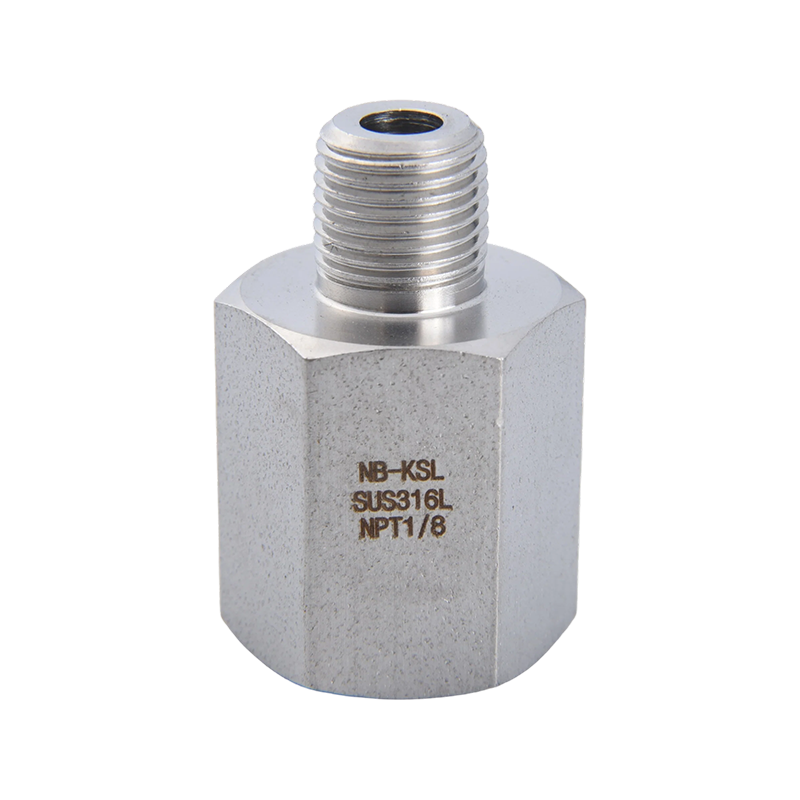
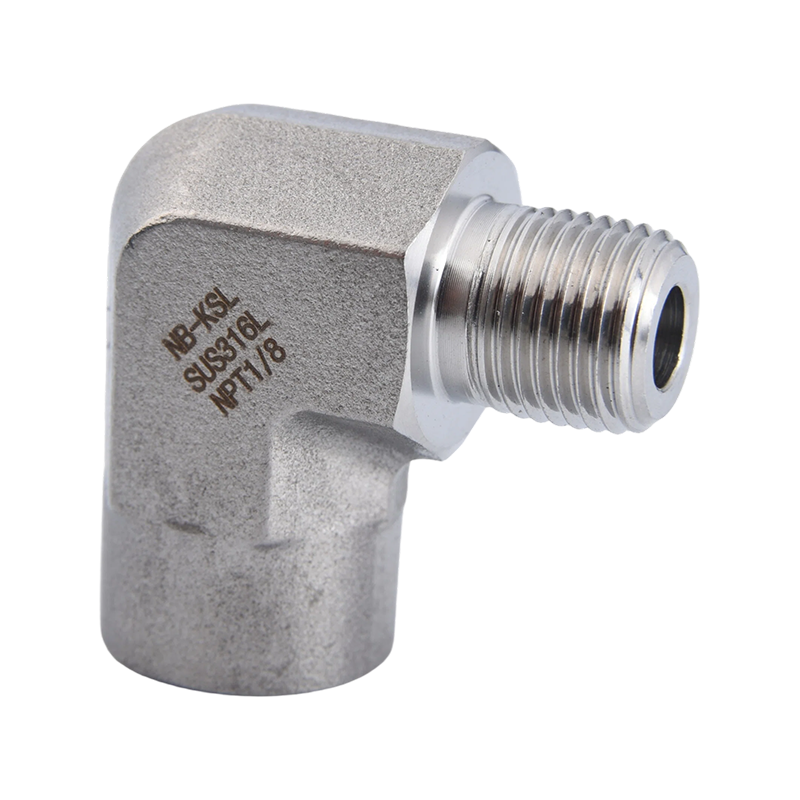
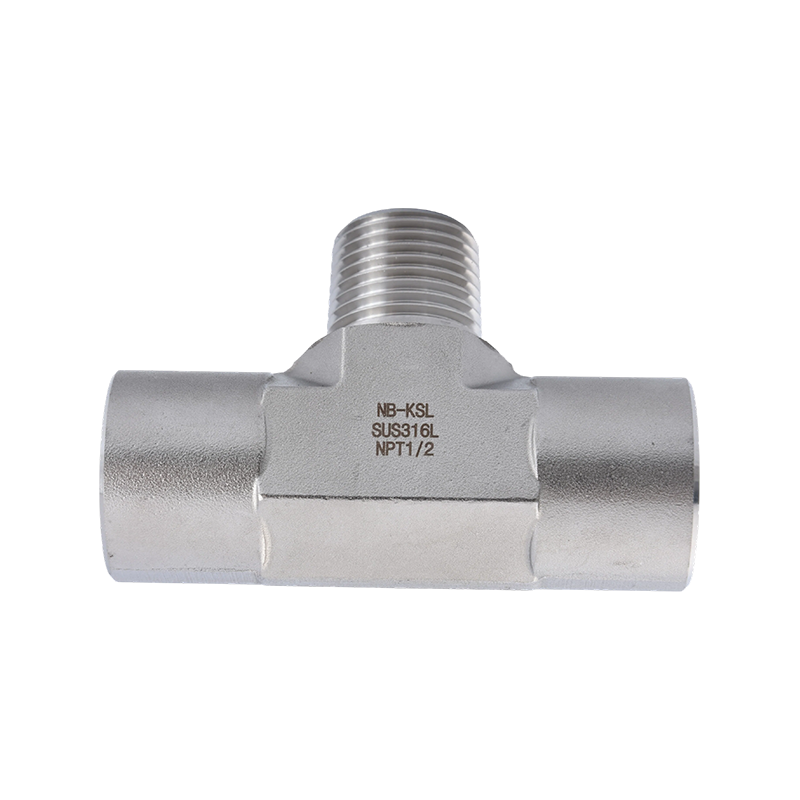
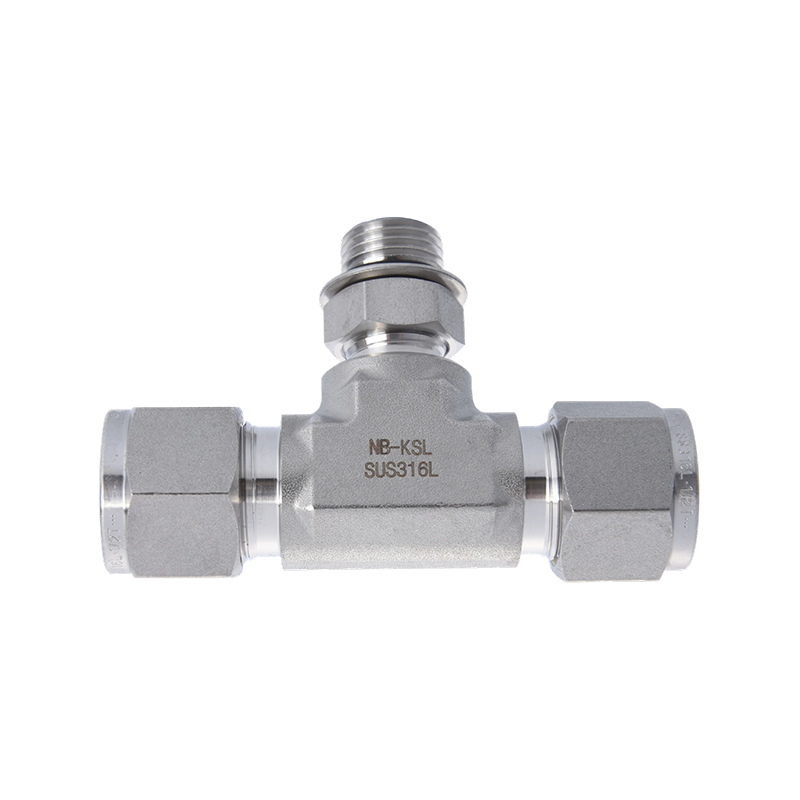
When the application calls for a compact, cleanable flame arrestor in a gas line, the stainless steel tube fittings category at NB-KSL provides the connection adapters, reducers, and tees needed to route the arrestor into the system. The arrestor itself is a machined 316L component, not a generic stamped screen.
| Material | Corrosion resistance | Typical connection | Best suited for |
|---|---|---|---|
| 316L stainless steel | Excellent in marine, chloride, and medium-sulfur environments | VCR face seal or NPT | Marine engine vents, chemical plant gas lines, hydrogen equipment |
| Brass or bronze | Good for fresh water or dry gas | Threaded | Older boat carburetors, low-risk shop air lines |
| Carbon steel | Requires coatings; not suitable for wet or marine service | Welded flanges | Dry utility gas systems with mild conditions |
The comparison shows why 316L is the default for any system that can see moisture, salt spray, or trace contaminants. Carbon steel may look fine at first, but surface rust can shed particles into the matrix and eventually block the heat-dissipation passages. Repairing a blocked flame arrestor costs more than choosing 316L in the first place.
For a typical marine backfire application, the arrestor body needs to withstand the vibration and thermal cycling of an engine compartment. A 316L housing with a machined internal matrix holds its geometry better than a pressed screen, which keeps the flow path honest over hundreds of operating hours.
If the installation is on a recreational boat with gasoline inboards, the device generally needs to be an approved backfire flame control unit. U.S. regulations under 46 CFR 25.35 describe the requirement for the air intake system to be fitted with a backfire flame arrestor or a similarly approved air and fuel induction system. The approval number is part of the safety chain, so a replacement part must carry the correct basic approval number for the boat engine.
For industrial gas handling, the design intent is the same, but the approval framework is different. European installations often reference EN ISO 16852 for flame arrestors, while other jurisdictions may rely on factory mutual or ATEX type approvals. A responsible supplier should be able to tell you the maximum operating pressure and the rate at which the arrestor can reject flame. Do not settle for a vague “it will stop a flame” statement.
An installed backfire flame arrestor is only as good as its last inspection. The most common cause of performance loss is contamination: oil mist, dust, or polymerized fuel forms a barrier on the mesh or matrix, reducing heat transfer. Over time, the arrestor stops being a flame stop and becomes a restriction that raises backpressure.
Inspect the flame arrestor whenever the engine or gas system is serviced. Look for visible clogging, corrosion pitting, and loose connections. For marine and industrial applications, a quick visual check during routine maintenance is usually enough to catch early problems. The team at NB-KSL publishes specific installation instructions to help you avoid misalignment, over-torquing, or incompatible thread sealing.
If the arrestor is upstream of a regulator or valve, adding a gas filter in the same line reduces the amount of particulate reaching the matrix. A gas filter does not replace the flame arrestor, but it significantly extends the service interval and keeps the pressure drop predictable.
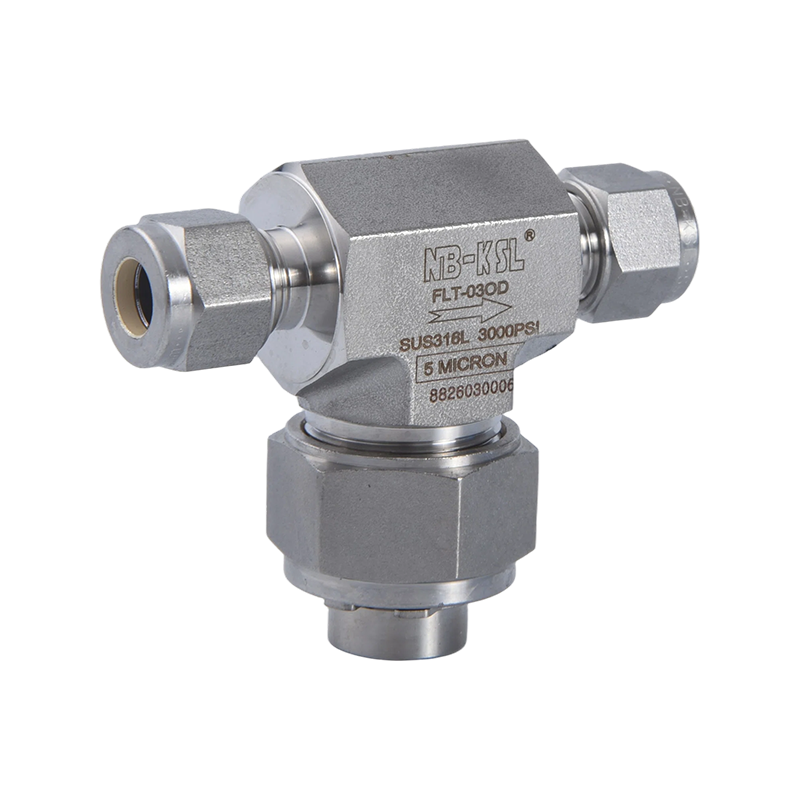
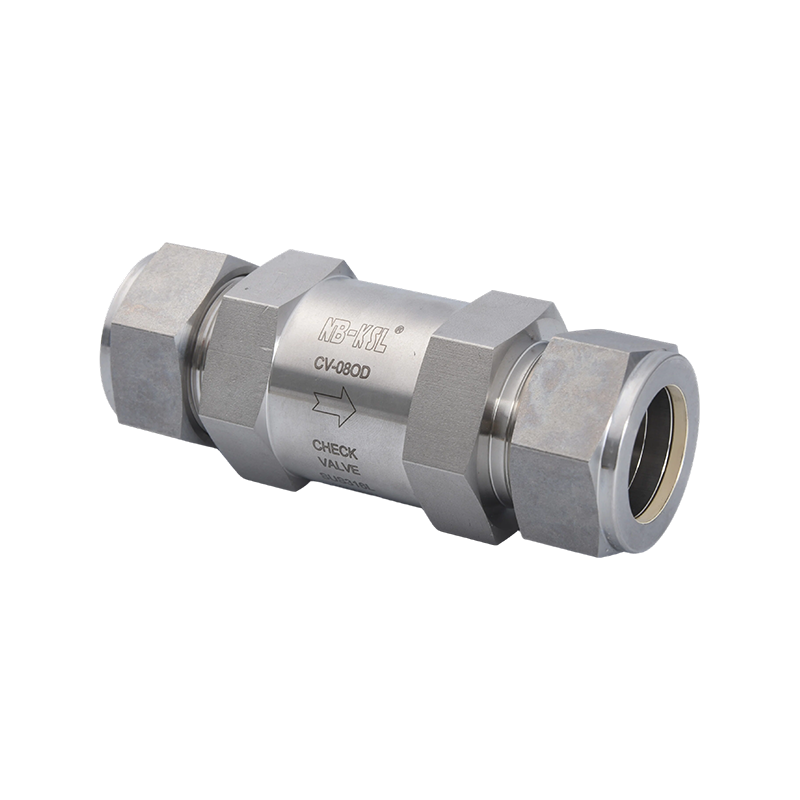 316L Stainless Steel Straight-Through Gas Filter for Industrial SystemsThis 316L stainless steel gas filter uses a sintered or folded microporous element to capture particulates before they reach downstream regulators or valves, helping maintain predictable pressure drop and extend service intervals in gas lines.View Product →
A short checklist for each inspection interval includes: removing the arrestor for cleaning, inspecting the matrix for bowed or compressed sections, checking that the flame-tight seals are intact, and confirming that the pressure drop across the component remains within the original design limit. If any of these checks fail, replace the arrestor before putting the system back into service.
In a backfire flame arrestor, the housing material must be machined precisely enough to hold the flame matrix without gaps, and the sealing surfaces need to be reproducible across repeated disassembly. This is exactly where VCR fittings and 316L stainless steel work together. VCR face seals use a metal gasket between two machined faces, which provides a leak-tight, high-pressure connection that can be taken apart and reassembled without replacing the whole fitting.
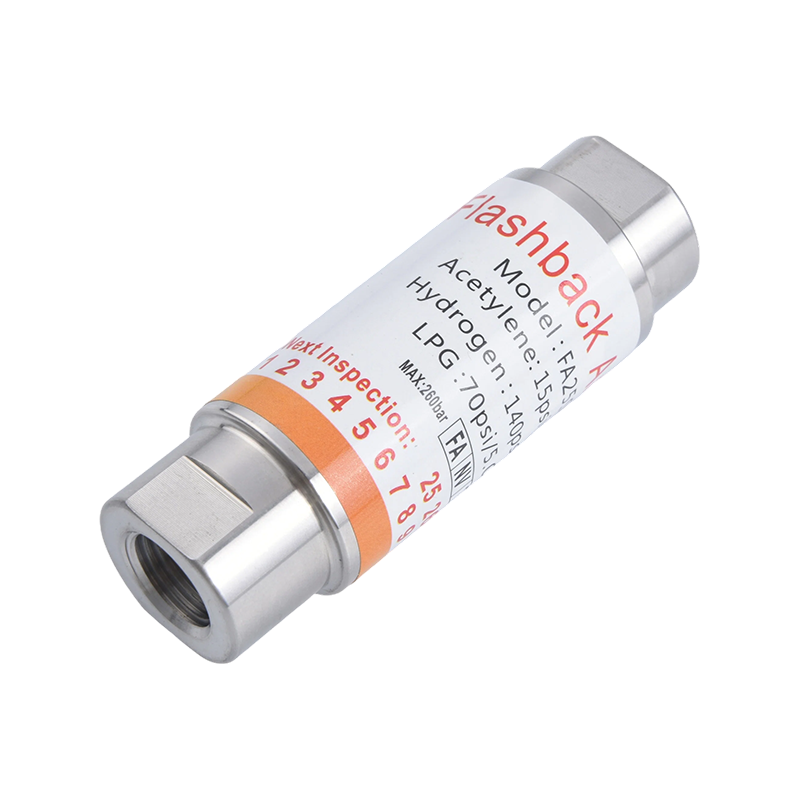 Stainless Steel Pipe Fittings Flame Arrestor with VCR Face-SealManufactured as a complete VCR pipe fitting, this flame arrestor integrates the body, gasket pocket, and flame matrix into one unit, ensuring a leak-tight, high-pressure connection that withstands repeated disassembly.View Product →
For a flame arrestor installed in a VCR line, the arrestor itself must match the VCR face-seal geometry. NB-KSL manufactures the flame arrester as a complete VCR pipe fitting, so the body, gasket pocket, and flame matrix are engineered as one unit instead of being cobbled together with hybrid adapters.
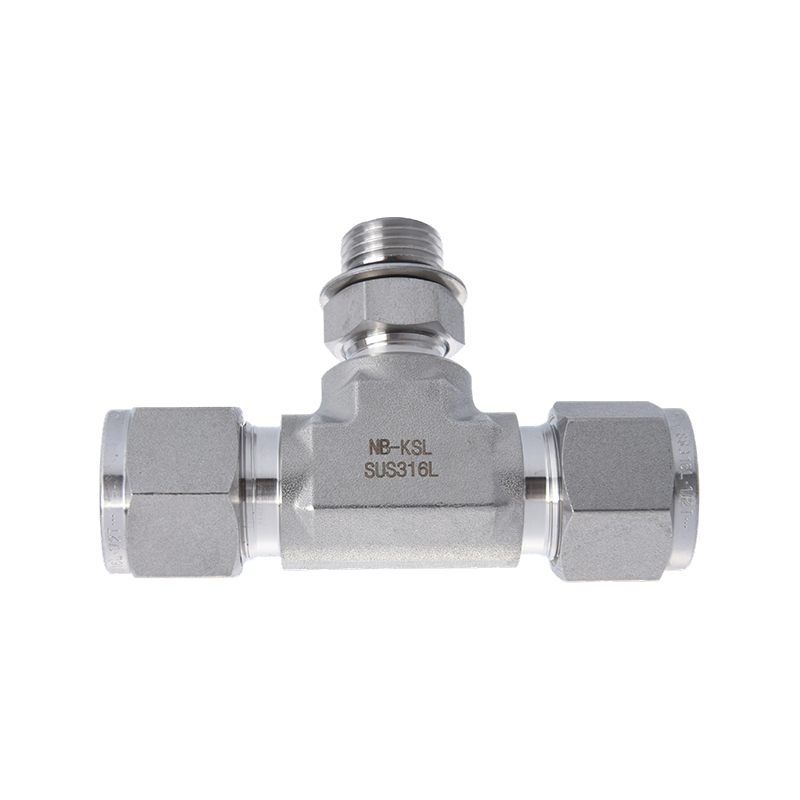
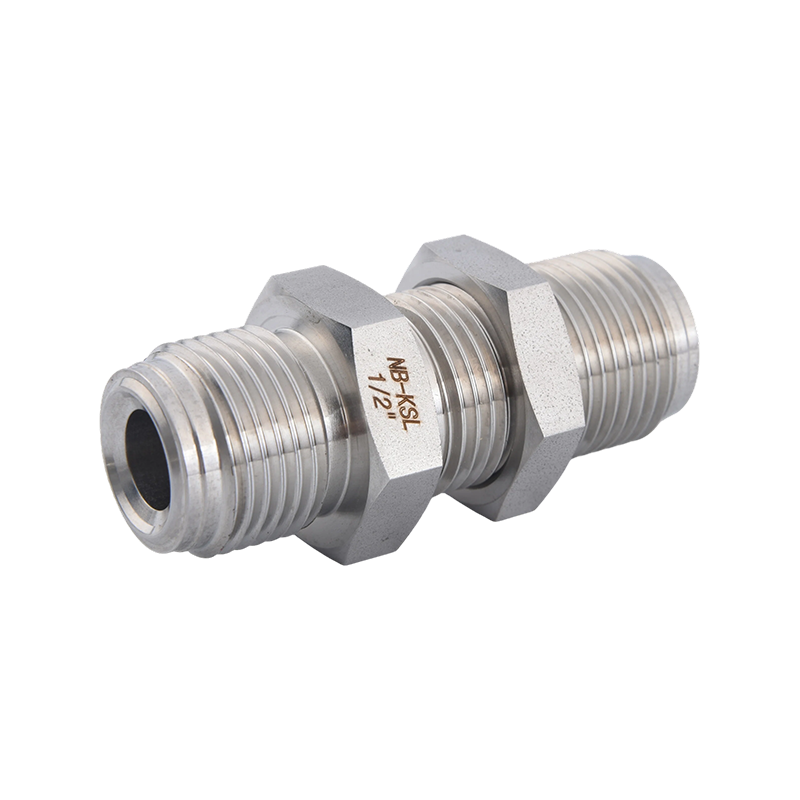 VCR Series Stainless Steel Pipe Fittings for Instrument PanelsThis VCR series includes connectors, elbows, tees, through-plate fittings, and micro-welded joints, simplifying installation in tight panels or existing tube systems while reducing potential leak paths.View Product →
The wider VCR range covers connectors, elbows, tees, through-plate fittings, and micro-welded joints, which helps when the arrestor needs to be placed in a tight instrument panel or tied into an existing tube system. The result is a simpler bill of materials, fewer potential leak paths, and a cleaner installation from an occupational safety perspective.
Selecting a backfire flame arrestor is a practical decision about flow, material, and sealing. If you choose a 316L stainless steel VCR-based arrestor, keep it clean, inspect it on a fixed schedule, and use upstream filtration where contaminants are likely, the system will remain safe over years of service. Invest in the right component now rather than replacing a damaged gas line after a backfire event.
A fixed-roof tank stores a flammable aromatic solvent. Its vent line runs to a vapor collection manifold. An electrical spark from a nearby pump can ignite the vapor-air mixture. The flame front travels along the vent pipe. In a long, turb...
Quick Answer: Key Specs to Check Before Buying For most instrumentation and process applications, a 316 stainless steel needle valve rated for 6,000 psi with a 1/4 in. to 1/2 in. NPT or tube-fitting connection covers the majority of genera...
If you only remember one thing from this guide, remember this: for most hydrogen systems operating between 350 and 700 bar, 316/316L stainless steel fittings with metal-to-metal or PTFE-based seals are the safest and most cost-effective cho...
What Stainless Steel Needle Valves Are and How They Work A needle valve controls flow through a small-bore orifice by advancing or retracting a tapered needle-shaped stem into and out of a precision-machined seat. As the handwheel or actua...
 1 Zhongxin Yungu Zone D Building 1, Jiangkou Street, Fenghua District, Ningbo City, Zhejiang Province, China
 +86-574-88561893 / +86-15057497901
 Copyright © Ningbo Keshengli Stainless Steel Valve Co., Ltd. Rights Reserved.
Wholesale Stainless Steel Fittings & Valves Manufacturers
Copyright © Ningbo Keshengli Stainless Steel Valve Co., Ltd. Rights Reserved.
Wholesale Stainless Steel Fittings & Valves Manufacturers



 English
 中文简体
中文简体