

 English
 中文简体


Technical Parameters of Cryogenic Valves
| Medium | Approx. Boiling Point (°C) | Typical Valve Requirement |
|---|---|---|
| Refrigerant and ammonia | -33 °C | Low temperature carbon or stainless steel valves |
| Ethylene | -104 °C | Extended bonnet, stainless steel |
| LNG (methane) | -162 °C | Extended bonnet, fire safe, stainless steel |
| Liquid oxygen | -183 °C | Extended bonnet, oxygen cleaned, stainless steel |
| Liquid argon | -186 °C | Extended bonnet, stainless steel |
| Liquid nitrogen | -196 °C | Extended bonnet, stainless steel |
| Liquid hydrogen | -253 °C | Special design, vacuum jacketed, project basis |
| Liquid helium | -269 °C | Special design, project basis |
Standard design features
| Parameter | Typical Specification |
|---|---|
| Body material | CF8M, CF3M (A351), F316L (A182), 316 or 304 stem and ball |
| Bonnet | Extended bonnet, length by design temperature and insulation thickness |
| Seat | PCTFE (Kel-F) or reinforced PTFE; metal seat on request |
| Stem seal | PTFE or graphite packing located in the warm zone |
| Cavity relief | Pressure relief hole in the ball or body, with flow direction marking |
| Pressure rating | Class 150, 300, 600; PN16, PN40; up to 1000 WOG for small sizes |
| Size range | 1/2 inch to 12 inch, larger on request |
| End connection | Flanged, butt weld, socket weld, threaded in small sizes |
| Cleaning | Degreased and cleaned for oxygen service on request |
| Operation | Handwheel, extended lever, gear, pneumatic or electric actuator |
Why an extended bonnet? At -196 °C, packing around the stem would freeze and leak. The extended bonnet raises the stem seal away from the cold zone, so it works at near ambient temperature. A longer bonnet is needed with thicker insulation, because the frost line moves upward, and we choose the length from your insulation and ambient design data.
Cryogenic Valve Range and Accessories
Cryogenic systems combine tanks, pumps, vaporisers, pipelines and instruments, each with its own valve requirements. We make a range of valve types that cover these positions, and we supply matching accessories such as bonnet extensions, insulation sleeves and relief valves.
| Product | Size Range | Typical Use |
|---|---|---|
| Extended bonnet ball valve | 1/2 inch to 12 inch | On-off isolation in liquid lines |
| Extended bonnet globe valve | 1/2 inch to 12 inch | Flow control and throttling |
| Extended bonnet gate valve | 1/2 inch to 24 inch | Isolation in transfer lines |
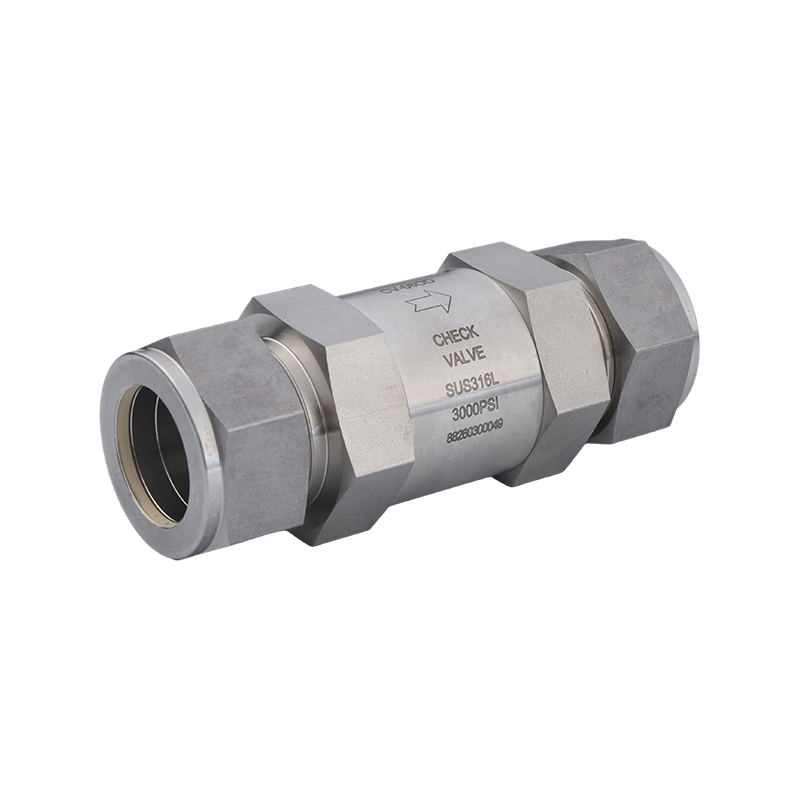
| Cryogenic check valve | 1/2 inch to 12 inch | Pump discharge, backflow prevention |
| Low temperature butterfly valve | DN50 to DN600 | Large cold gas or low temperature lines |
| Cryogenic Y-strainer | 1/2 inch to 12 inch | Pump and equipment protection |
| Relief and vent valves | 1/2 inch to 2 inch | Tank vent, line vent and thermal relief |
| Flanges, studs, nuts and gaskets | 1/2 inch to 24 inch | Low temperature bolting, B8M and B8 Class 2 stud bolts |
Typical applications
- LNG: small-scale LNG, bunkering, truck loading and regasification lines.
- Industrial gases: liquid oxygen, nitrogen and argon tanks, vaporisers and filling stations.
- Air separation: cold box piping and cryogenic pumps.
- Food and medical: liquid nitrogen freezers, cryopreservation and laboratory supply.
- Marine: LNG fuel systems and gas carriers.
For large LNG projects, we can supply pre-assembled valve skids and lines, and coordinate with specialist insulation contractors.
Buyer tip: give us the medium, the design temperature, the working pressure, the insulation thickness and the installation orientation for each valve. With these details, we can choose the bonnet extension, the seat and the relief arrangement correctly, and avoid problems such as frozen packing or a stem that is too short.
Standards for Cryogenic and Low Temperature Valves
Cryogenic valves are covered by their own group of standards, which describe design, bonnet extension, testing at low temperature and cleaning. Using the correct standards keeps your system safe and makes inspections go smoothly.
| Area | Standard Reference |
|---|---|
| Cryogenic valve design and testing | BS 6364, ISO 28921-1 (isolating valves for low temperature) |
| Bonnet extensions | MSS SP-134, BS 6364 |
| Pressure-temperature ratings | ASME B16.34 (austenitic stainless steel groups) |
| Ball valve design | ISO 17292, API 608 |
| Gate, globe and check valve design | BS 1873, BS 1868, API 600, API 602, EN 12516 |
| Material | ASTM A351 CF8M, CF3M; ASTM A182 F316L; ASTM A320 B8 Class 2 bolts |
| Cleaning for oxygen service | ASTM G93, CGA G-4.1, ISO 15001 |
| Fire safe design | API 607, ISO 10497 where applicable |
| Fugitive emission | ISO 15848-1 for low temperature classes, on request |
| Testing | API 598, ISO 5208, BS 6364 low temperature test |
Impact testing. Austenitic stainless steels keep high toughness at low temperature and are often exempt from impact testing under many codes, but the rules depend on the code, the design temperature and the product form. We follow the requirements in your specification, and can perform impact tests on request.
If your project uses an LNG or industrial gas company standard, send it to us before the quotation, so that all clauses, including cleaning and testing, are included in the price.
Reference note: BS 6364 and ISO 28921-1 describe how cryogenic valves should be tested, while MSS SP-134 focuses on bonnet and body extensions. Many projects refer to more than one. Please tell us which applies, and we will align our design and test documents with the correct reference from the start.
Certificates and Test Evidence for Cryogenic Valves
For cryogenic duty, evidence matters because the media are dangerous and the consequences of failure are high. Liquid oxygen and LNG demand clean, correctly tested valves with traceable materials. We therefore provide a more complete documentation package than for ordinary stainless valves.
- EN 10204 3.1 material certificates: for body, bonnet, extension tube, stem, ball and bolting.
- Impact test report: Charpy test results where the code or the customer requires them.
- Low temperature type test report: test at -196 °C with helium or nitrogen according to BS 6364 or ISO 28921-1 on a representative valve.
- Pressure test report: shell and seat tests per API 598 or EN 12266-1 for each valve.
- Cleaning certificate: for oxygen service, with method and inspection result according to ASTM G93 or CGA G-4.1.
- Fire safe test report: for selected designs used in LNG service.
- PMI report: alloy verification of pressure-containing parts.
- Quality management: ISO 9001 style system with batch records.
- Third-party inspection: SGS, BV, TUV, DNV, or the end user's inspector.
Type test or production test? A type test shows that a design works at low temperature, and a production test shows that each valve meets the pressure requirement at ambient temperature. 100% cold testing of every valve is possible, but takes extra time and cost, so it is done only when specified.
Sample documentation packs are available before order confirmation.
Audit tip: keep the type test report, the cleaning certificate and the material certificates together for each delivery. Gas plant inspectors usually look at these three first, and a complete matched set shows that the valve has been qualified for cold service and prepared for clean duty.
Traceability and Cleanliness Control for Cryogenic Valves
Cryogenic valves have two traceability needs: the usual material trace, and the cleanliness trace for oxygen service. A tiny amount of oil or grease on a valve in a liquid oxygen line can burn or explode, so control of cleaning and handling is as important as control of material.
- Material receiving: mill certificates, heat numbers and PMI for body, extension tube, stem, ball and bolting.
- Marking: heat number, grade, size, class and flow direction are marked on the body.
- Machining records: bonnet extension length, cavity relief hole position and critical dimensions are recorded.
- Cleaning process: degreasing in approved solvents or aqueous cleaners, followed by rinsing, drying and inspection with ultraviolet light.
- Clean assembly: assembly in a clean area with gloves, oxygen-compatible lubricants and clean tools.
- Sealed packaging: valves are bagged and sealed immediately after cleaning, with labels showing the cleaning date and method.
| Item | Record | Purpose |
|---|---|---|
| Pressure parts | Heat numbers and certificates | Proof of material |
| Extension and stem | Dimension report | Correct frost line protection |
| Cavity relief | Hole position record | Prevents trapped pressure |
| Cleaning | Method, date, inspection | Oxygen safety |
| Packaging | Sealed bag and cleaning label | Proof of cleanliness at delivery |
Please keep the sealed bag closed until the valve is installed. Opening it in a dirty area can compromise the cleaning, even though the valve looked perfect when it left our factory.
Why cleaning records matter: if a valve fails an oxygen cleanliness inspection on site, the cause could be handling after delivery or cleaning at the factory. A dated cleaning label, a sealed bag and a cleaning certificate help establish where the problem started, and protect both buyer and supplier.
Low Temperature Testing and Cleanliness Verification
A valve that seals at room temperature may leak when cold, because materials shrink at different rates. For this reason, we qualify our cryogenic designs by testing at low temperature, and we test every production valve for pressure integrity at ambient conditions.
| Test | Typical Value or Method | Frequency |
|---|---|---|
| Shell and seat test at ambient | Water or air per API 598, ISO 5208 | 100% of valves |
| Low temperature type test | Immersion in liquid nitrogen (-196 °C), pressure test with helium or nitrogen, cycles of operation per BS 6364 / ISO 28921-1 | Type test on sample of each design |
| Cold production test | Same method on production valves | On request |
| Torque at low temperature | Torque measurement during cold test | Type test |
| Cavity relief check | Verification of relief hole and flow direction | 100% of valves |
| PMI | XRF analyser | Incoming and sampling |
| Impact test | Charpy at specified temperature | On request |
| Cleanliness inspection | Visual inspection with white light and UV light; wipe or rinse test | 100% for oxygen service valves |
| Fire safe test | API 607 or ISO 10497 | Type test on selected designs |
Why helium? Helium has very small molecules and finds leaks that nitrogen or air would miss, which is useful when a valve must be tight at very low temperature. We use helium for type tests and, when requested, for production tests, with a mass spectrometer or bubble method depending on the leakage requirement.
Witnessed low temperature tests can be arranged with advance notice, since they need extra preparation and cooling time.
Frequently Asked Questions about Cryogenic and Low Temperature Valves
Q: Why is stainless steel used for cryogenic valves?
Austenitic stainless steels such as 304 and 316L stay tough at very low temperatures, while carbon steel becomes brittle. They also resist corrosion from condensation and frost.
Q: What is an extended bonnet?
It is a longer neck between the valve body and the stem seal. It lifts the packing away from the cold liquid, so it stays warm enough to seal and operate.
Q: What is the cavity relief hole in a cryogenic ball valve?
When the ball is closed, liquid can be trapped in the body cavity and expand as it warms, producing high pressure. A small relief hole lets the liquid vent to the upstream side, and the valve is marked with the flow direction.
Q: Can I install a cryogenic valve in any orientation?
Extended bonnet valves are normally installed vertically or at a limited angle from vertical, so that liquid does not reach the packing and gas can form a warm insulating cap in the extension. We supply installation guidance.
Q: Is a standard valve suitable for liquid nitrogen?
Usually not. Standard seats and packing can leak or crack, and a body cavity can trap pressure. Use a valve designed and tested for cryogenic service.
Q: What cleaning is needed for oxygen service?
Valves must be free of oil, grease and particles. We clean to the standard you specify, such as ASTM G93 or CGA G-4.1, and supply them sealed in bags, with a cleaning certificate.
Q: Can you supply valves below -196 °C?
For liquid hydrogen and helium, special designs are needed, including vacuum insulated lines. These are project items that we can discuss on request.
MOQ and Pricing for Cryogenic Valves
Cryogenic valves are special-purpose products, usually ordered for specific projects or for stocking by gas equipment suppliers. Our minimum quantities are small, but the price per valve is higher than for ordinary stainless valves, because of the extension, the design features and the added testing.
| Item | Typical Terms |
|---|---|
| Sample order | 1 to 3 pieces, subject to design availability |
| Standard MOQ | 10 to 30 pieces per size for stocked designs |
| Project orders | From 1 piece for larger sizes and special designs |
| Oxygen cleaning | Quoted per valve or per batch |
| Pricing basis | EXW, FOB Ningbo, CFR or CIF in USD |
| Quote validity | 30 days, adjusted for stainless steel and nickel price changes |
| Payment | 30% T/T deposit, 70% before shipment; L/C at sight for approved accounts |
Price guide
As a rough guide, an extended bonnet cryogenic valve costs about 50 to 150% more than the equivalent standard stainless valve, depending on size, bonnet length and testing level. Longer extensions and cold testing of each valve increase the price.
- Bonnet length: depends on the temperature and insulation thickness.
- Seat material: PCTFE costs more than PTFE.
- Cleaning: oxygen cleaning and sealed packing add cost.
- Testing: cold testing of each valve and impact testing are priced separately.
- Documentation: type test reports, third-party inspection and extended dossiers are extra.
Please tell us the design temperature, the medium and the insulation thickness, so that we can propose a bonnet length and a price that fit your system.
Ordering advice: for a tank farm or gas plant, order a few spare valves and seat kits together with the main supply. Cold service wears seats faster than ambient service, and having spares on site shortens shutdowns, particularly when delivery from China would take several weeks.
Lead Time, Customisation, Packaging and Trade Terms
Lead time and stock
Standard extended bonnet ball valves in popular sizes ship in 30 to 45 days. Special bonnet lengths, large sizes, oxygen-cleaned valves and orders with cold testing normally need 45 to 75 days. Please confirm the delivery date early, since cleaning and testing slots must be planned.
Customisation
We can customise bonnet extension length, pressure class, end connections, seat material, packing, actuator interface, handle extension, cleaning level, marking and documentation. We can also match the face-to-face length of an existing valve for retrofit projects.
Packaging
- Oxygen-cleaned valves in sealed clean bags, with cleaning label and date
- Protective end caps on all connections
- Extended bonnet valves in wooden cases, supported to avoid bending the stem
- Foam protection, moisture barrier and desiccant for sea freight
- Marking with tag number and flow direction arrows
Shipping and trade terms
| Term | Details |
|---|---|
| Incoterms | EXW, FOB Ningbo, CFR, CIF, DAP |
| Port | Ningbo-Zhoushan; Shanghai as an alternative |
| Transport | Sea freight, air freight for urgent items, express courier for samples |
| Documents | Invoice, packing list, bill of lading, origin certificate, material and test certificates |
Because extended bonnet valves are long and fragile in transport, we pack them with extra support, and we advise customers to keep them in their cases until installation.
Installation advice: install extended bonnet valves in the orientation shown on the data sheet, keep the stem and bonnet free of insulation inside the warm zone, and avoid knocks on the bonnet extension during handling. A short installation guide is included on request with each delivery.