


 English
 中文简体


Technical Parameters of CF8 and CF8M Cast Valves
| Parameter | CF8 | CF8M |
|---|---|---|
| Equivalent wrought grade | 304 | 316 |
| Specification | ASTM A351 CF8 | ASTM A351 CF8M |
| Chromium (%) | 18.0 to 21.0 | 18.0 to 21.0 |
| Nickel (%) | 8.0 to 11.0 | 9.0 to 12.0 |
| Molybdenum (%) | Not required | 2.0 to 3.0 |
| Carbon (%) | 0.08 max | 0.08 max |
| Tensile strength | Min. 485 MPa | Min. 485 MPa |
| Yield strength | Min. 205 MPa | Min. 205 MPa |
| Heat treatment | Solution annealed and quenched | Solution annealed and quenched |
| Typical pressure classes | PN16, PN40, Class 150, Class 300, 1000 WOG | PN16, PN40, Class 150, Class 300, 1000 WOG |
| Typical working temperature | -29 °C to +425 °C (body, seat dependent) | -29 °C to +454 °C (body, seat dependent) |
Important note on ferrite: cast austenitic grades normally contain 5 to 20% ferrite, which improves strength and resistance to hot cracking during casting. It also means CF8 and CF8M bodies may react slightly to a magnet. This is a property of the casting grade and not a defect or a sign of a wrong material.
Final pressure and temperature limits depend on the complete valve design, including seat, packing and flange standard. We provide the exact pressure-temperature chart with every quotation, and we are happy to check your operating cycle before you confirm the order.
Reading the grade table: the main practical difference between the two columns is molybdenum. If your medium or environment contains chlorides, that single element is what separates a long service life from early pitting, so the grade selection deserves a short conversation before purchase.
Cast Valve Range Available in CF8 and CF8M
Casting gives us a convenient way to supply a broad range of products from a single material family. Below is an overview of the products most often requested in CF8 or CF8M, together with the typical applications each one serves.
| Valve Type | Size Range | Typical Application |
|---|---|---|
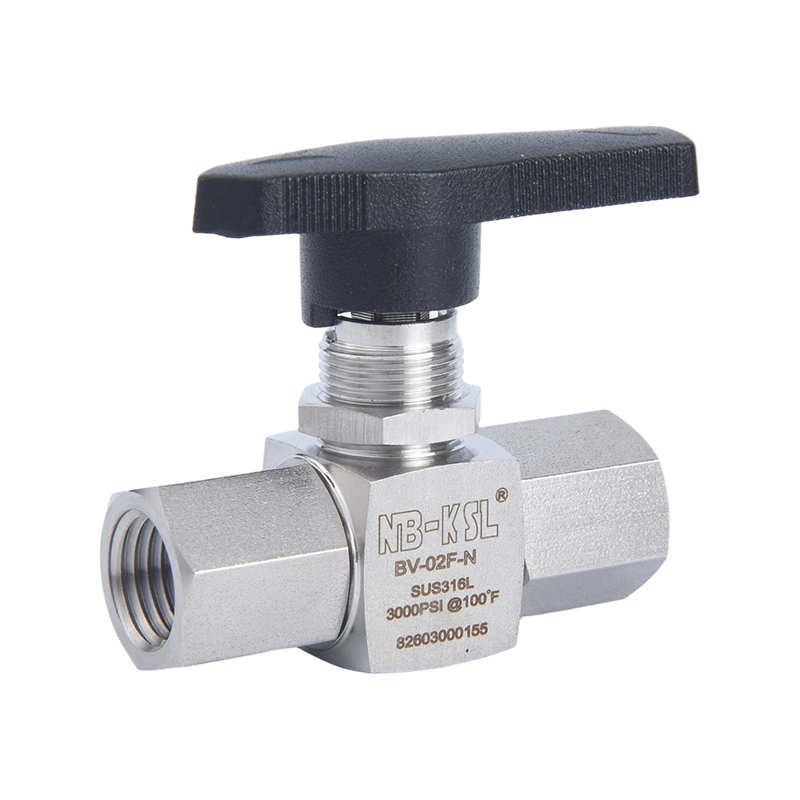
| Floating ball valve, 2-piece, 3-piece | 1/4 inch to 6 inch | Water, air, oil, chemical and food lines |
| Flanged ball valve | DN15 to DN300 | Process piping and pumping stations |
| Gate valve, bolted bonnet | 1/2 inch to 24 inch | On-off isolation of liquids and steam |
| Globe valve | 1/2 inch to 12 inch | Flow regulation and throttling |
| Swing check valve | 1/2 inch to 24 inch | Pump discharge, prevention of backflow |
| Wafer and lug butterfly valve | DN40 to DN600 | Cooling water, HVAC, general fluids |
| Y-strainer | 1/2 inch to 12 inch | Protection of pumps and instruments |
| Sanitary clamp valve | 1/2 inch to 4 inch | Food, dairy and cosmetics |
Why buyers choose cast stainless valves
- Cost efficiency: cast bodies reduce machining time and material waste compared with machined bar for complex shapes.
- Design freedom: streamlined flow paths, integrated mounting pads and ribs are easy to produce.
- Size coverage: casting extends easily to large diameters that would be uneconomical from bar.
- Supply consistency: once patterns are made, repeat orders are reliable and fast.
We can supply all of these together in a combined shipment, with consistent marking and documentation across the entire order.
Buyer tip: when comparing quotations from different suppliers, check that the same casting standard, pressure class and seat material are specified. Two valves with the same name can differ in wall thickness, trim quality and testing, and this explains most price gaps.
Casting and Valve Standards We Follow
For cast valves, there are two layers of standards: the material and casting standard for the body, and the valve design standard for the finished product. We follow both, and we list them so your engineers can check compliance with your specification.
| Area | Standard Reference |
|---|---|
| Casting material | ASTM A351 (CF8, CF8M, CF3, CF3M), EN 10213 (1.4308, 1.4408) |
| Casting inspection | MSS SP-55 visual quality standard for steel castings |
| Casting tolerances | ISO 8062 CT grades |
| Valve pressure ratings | ASME B16.34, EN 12516 |
| Ball valve design | ISO 17292, BS 5351, MSS SP-72 |
| Gate, globe and check design | API 600, BS 1873, BS 1868, EN 12334 |
| Butterfly valve design | API 609, EN 593 |
| Flange ends | ASME B16.5, EN 1092-1, JIS B2220 |
| Threads | ASME B1.20.1, ISO 228, ISO 7 |
| Testing | API 598, EN 12266-1, ISO 5208 |
CF8 or 1.4308? Buyers from Europe will often see the EN designation 1.4308 for CF8 and 1.4408 for CF8M. They are close but not identical, and small differences in composition limits exist. If your project requires EN material, tell us in advance and we will certify the casting to the EN specification.
When a customer supplies a drawing with specific tolerance or surface requirements, we compare them with our casting capability and propose realistic limits at the quotation stage.
If your project requires a specific edition of a standard, or a customer specification with additional tests, please tell us in your inquiry. We will state clearly which items are standard practice and which are extras, with their price and lead time effect.
Quality Certificates for Cast Stainless Valves
Castings carry more quality risk than wrought material, because internal defects such as porosity, shrinkage or inclusions may not be visible from the outside. That is why documentation for cast valves needs to cover both the chemistry of the alloy and the soundness of the casting. We therefore prepare the following documents depending on your requirement.
- Material test certificate: EN 10204 3.1 certificate with chemical analysis and mechanical test results for each heat.
- Heat treatment record: confirmation of solution annealing temperature and quench.
- Casting inspection: visual inspection records to MSS SP-55, with dye penetrant testing on request.
- Radiographic report: available for critical castings when specified by the buyer.
- Pressure test report: shell and seat test values for each batch.
- Quality management system: production under an ISO 9001 style system with documented procedures.
- CE and PED: available for qualifying models, subject to confirmation.
- Third-party inspection: SGS, BV, TUV or your inspector can witness tests and perform pre-shipment inspection.
Not every certificate is included by default. Test certificates, radiography and witness inspection increase cost, so we only include them when requested, which keeps pricing competitive for standard commercial orders.
For regular customers, we can agree a standard documentation package once, and then supply it automatically with each shipment.
Practical advice: for critical lines, such as steam or toxic media, specify dye penetrant or radiographic testing on the order. The extra cost is small compared with the cost of a leak, and we can arrange the examination through a qualified third-party laboratory.
Heat Number Traceability for Castings
For cast valves, the heat number is the most useful single piece of information. It links the body to the molten batch that produced it, to the chemical analysis taken at pouring, and to the heat treatment lot. We preserve that link through the entire production process.
- Casting stage: each pouring batch is given a heat number and a chemical analysis by spectrometer, recorded in the foundry log.
- Marking: the heat number, material grade and size are cast into the body or stamped before machining.
- Heat treatment: bodies are heat treated in identified batches, with temperature records retained.
- Machining: the marking is protected during machining and re-applied if it is removed.
- Assembly: the heat number of the body is recorded against the valve serial number or batch.
- Documentation: certificates are issued per heat number and listed in the packing documents.
| Stage | Record Kept | Purpose |
|---|---|---|
| Melting | Spectrometer chemistry | Proof of grade |
| Casting | Heat and pattern number | Link to molten batch |
| Heat treatment | Furnace temperature chart | Proof of solution annealing |
| Machining | Dimensional and visual report | Proof of conformity |
| Final test | Pressure test report | Proof of leak tightness |
With this chain of records, a questionable valve can be traced and the affected batch identified quickly, instead of forcing a broad recall or leaving doubts about unrelated shipments.
For auditors: keep the certificate, the heat number photo and the pressure test report in one folder for each delivery. This simple habit lets you answer customer questions quickly and shows a clear chain of evidence for each valve.
Testing and Inspection for Cast Valves
Our testing programme is built around the specific risks of castings: hidden porosity, wrong chemistry and incomplete heat treatment. The table below lists the test types and their purpose.
| Test | Purpose | Availability |
|---|---|---|
| Spectrometer analysis | Check alloy composition of each heat | Every heat |
| PMI by XRF | Verify grade on finished bodies | Sampling, 100% on request |
| Visual inspection to MSS SP-55 | Detect surface defects, cracks and inclusions | 100% of bodies |
| Dye penetrant test | Reveal surface-breaking cracks and porosity | On request |
| Radiographic test | Detect internal shrinkage and gas holes | On request, third party |
| Mechanical test | Tensile and yield strength of test bars | Per heat or on request |
| Ferrite content measurement | Check delta ferrite content with a ferrite scope | On request |
| Hydrostatic shell test | Verify casting integrity at 1.5 times rated pressure | 100% of valves |
| Seat leakage test | Check sealing performance at 1.1 times rated pressure and low-pressure air | 100% of valves |
Why shell testing is crucial for castings: a casting with hidden porosity may pass visual inspection but leak under pressure. The shell test at 1.5 times rated pressure is the final proof that the body wall is sound, and it is performed on every valve and not only on samples.
Any body that shows leakage, even a weep, is scrapped and not repaired by welding unless the customer's specification permits it and the repair is documented.
Repair policy: we do not hide casting defects with filler or unapproved welding. If a body fails inspection, it is replaced. This policy protects both of us, because a hidden defect becomes much more expensive once the valve is installed on site.
Frequently Asked Questions about CF8 and CF8M Cast Valves
Q: Is CF8 the same as 304 stainless steel?
They share nearly the same chemistry, but CF8 is the cast form and 304 is the wrought form. The cast grade has a slightly different structure with some ferrite, which is intentional and normal.
Q: When should I choose CF8M instead of CF8?
Choose CF8M when the medium contains chlorides, mild acids or when the installation is near the sea. The molybdenum in CF8M improves pitting and crevice resistance. For clean water, air and food-grade fluids, CF8 is usually enough.
Q: Why does my CF8M valve attract a magnet?
Cast austenitic grades contain some delta ferrite, which is slightly magnetic. This is normal, and it actually helps prevent casting cracks. A wrong material is checked by PMI, not by a magnet.
Q: What is the difference between investment casting and sand casting?
Investment casting gives better surface finish and tighter tolerances, so we use it for small and medium valves. Sand casting is more economical for large bodies. Both can meet the same material and pressure standards.
Q: Can CF8 or CF8M valves be welded into a pipeline?
Yes, but for welded installations CF3 or CF3M, the low-carbon versions, are better because they reduce the risk of sensitisation. We can supply them if you inform us in advance.
Q: Can you supply the EN equivalent grades?
Yes. We can supply 1.4308 and 1.4408 castings certified to EN 10213 if requested.
Q: Do you repair casting defects by welding?
We avoid it. Defective castings are normally scrapped. Weld repair is only carried out under an approved procedure and with the customer's agreement.
Have a question not covered above? Send us your drawing or application details. We usually respond within one working day with a recommended grade, valve type and a clear explanation of the reasons for the choice.
MOQ and Pricing of CF8 CF8M Valves
Casting economics depend on patterns, quantity and size. We aim to keep minimum quantities low for standard products and clearly explain additional costs for custom patterns.
| Item | Typical Terms |
|---|---|
| Sample order | 1 to 5 pieces per model from stock or short production |
| Standard MOQ | 100 pieces per size for existing patterns |
| New pattern projects | 300 to 500 pieces per size; pattern cost quoted separately and may be refunded in part after volume is reached |
| Large flanged valves | Small quantities, even single pieces, accepted for projects |
| Pricing basis | EXW, FOB Ningbo, CFR or CIF in USD |
| Payment | 30% T/T in advance, 70% before shipment; L/C at sight for approved accounts |
CF8 versus CF8M price positioning
As a general guide, CF8M costs roughly 15 to 30% more than CF8 for the same valve, depending on the nickel and molybdenum market. The difference is due to alloy content, not manufacturing effort. If you buy both grades, ordering them together can help you reach the minimum quantity and save freight.
How to lower your cost
- Use existing patterns and standard sizes instead of custom designs.
- Choose CF8 where chloride exposure is not a concern.
- Accept standard face-to-face dimensions and flange drilling.
- Place annual frame orders with scheduled call-offs.
- Order only the documents you need, since radiography and witness inspection are priced separately.
We prepare detailed quotations that show unit price, tooling and any testing surcharges clearly, so you can compare offers on equal terms.
Note on tooling: pattern cost is a one-time investment, and the pattern remains in our factory for your future orders. If you plan repeat purchases, this cost spreads over many pieces and becomes small per valve.
Lead Time, Custom Patterns, Packing and Shipping for Cast Valves
Lead time and stock
Valves made on existing patterns and in common sizes can ship in 15 to 25 days. If we need to produce a new pattern, allow 35 to 55 days for tooling, trial castings, approval, machining and testing. Large sand-cast flanged valves also fall into this range. We keep rough castings of popular sizes in stock to shorten repeat orders.
Customisation and OEM
You can specify body shape, port diameter, face-to-face length, flange drilling, marking, seat material, handle style and actuator interface. We can work from your drawings, sample valves or even a sketch, and we sign confidentiality agreements when required so your design remains protected.
Packaging
- Individual wrapping to protect machined surfaces
- Rust-preventive treatment for any carbon steel parts such as handles or bolts
- Cartons with dividers for small valves and plywood cases for heavy valves
- Pallets strapped and shrink-wrapped, with shipping marks according to your instructions
Shipping and trade terms
| Term | Details |
|---|---|
| Incoterms | EXW, FOB Ningbo, CFR, CIF, DAP |
| Port | Ningbo-Zhoushan Port; Shanghai Port as an alternative |
| Transport | Sea freight FCL or LCL; air freight or courier for urgent samples |
| Documents | Commercial invoice, packing list, bill of lading, certificate of origin, material and test certificates |
| Inspection | Pre-shipment inspection by you or a third-party agency is welcome |
Because heavy cast valves can be costly to ship, we help you plan container loading to use space and weight efficiently.
Planning tip: for new patterns, ask us for a trial casting and sample valve before the full production order. It adds a few weeks, but it lets you confirm dimensions, performance and appearance with little risk.