


 English
 中文简体


Tri-Clamp Dimensions and Technical Parameters
| Tube Size (inch) | Typical Ferrule OD (mm) | Nominal Size Reference |
|---|---|---|
| 1/2 and 3/4 | 25.0 | DN10 to DN15 range |
| 1 and 1.5 | 50.5 | DN25 to DN40 range |
| 2 | 64.0 | DN50 |
| 2.5 | 77.5 | DN65 |
| 3 | 91.0 | DN80 |
| 4 | 119.0 | DN100 |
The ferrule outside diameter is the same for several tube sizes, which is why one clamp can fit more than one valve. Always confirm tube OD and wall thickness as well as the ferrule size, because these decide the bore and the weld compatibility.
| Parameter | Typical Specification |
|---|---|
| Connection standard | ISO 2852, DIN 32676, ASME BPE (tube series) |
| Body material | 304, 316L; CF8, CF3M; forged or bar-machined bodies |
| Internal finish | Mechanically polished Ra 0.8 µm or better; electropolished Ra 0.4 to 0.5 µm on request |
| Gasket and seat materials | EPDM, silicone, PTFE, FKM; FDA and EU compliant grades |
| Working temperature | -10 °C to +150 °C, depending on seal; SIP up to about 135 °C with suitable materials |
| Joint pressure | Typically 10 to 20 bar with standard single-pin clamps; high-pressure clamps available for higher duty |
| Clamp types | Single-pin, double-pin, wing nut, high-pressure and hinged clamps |
| Operation | Lever, locking lever, pneumatic or electric actuator |
The clamp limits the pressure. A hygienic clamp joint is intentionally easy to open, so its pressure capability is lower than that of a flanged joint, and it falls as the line size increases. We state the joint rating with each quotation, and recommend high-pressure clamps or a different connection if your duty is above the standard range.
Tri-Clamp Valve and Fitting Range
A hygienic line is a system of many small parts. The valve, the ferrule, the gasket and the clamp must all match in size and in finish. We supply the full set from one factory, so the joint dimensions agree and the surface treatment is the same on every product-contact part.
| Product | Size Range | Typical Use |
|---|---|---|
| Tri-clamp 3-piece ball valve | 1/2 inch to 4 inch | Product lines, easy cleaning and inspection |
| Tri-clamp 2-piece ball valve | 1/2 inch to 4 inch | General on-off service |
| Tri-clamp butterfly valve | 1 inch to 4 inch (larger on request) | Tank outlets and larger flow lines |
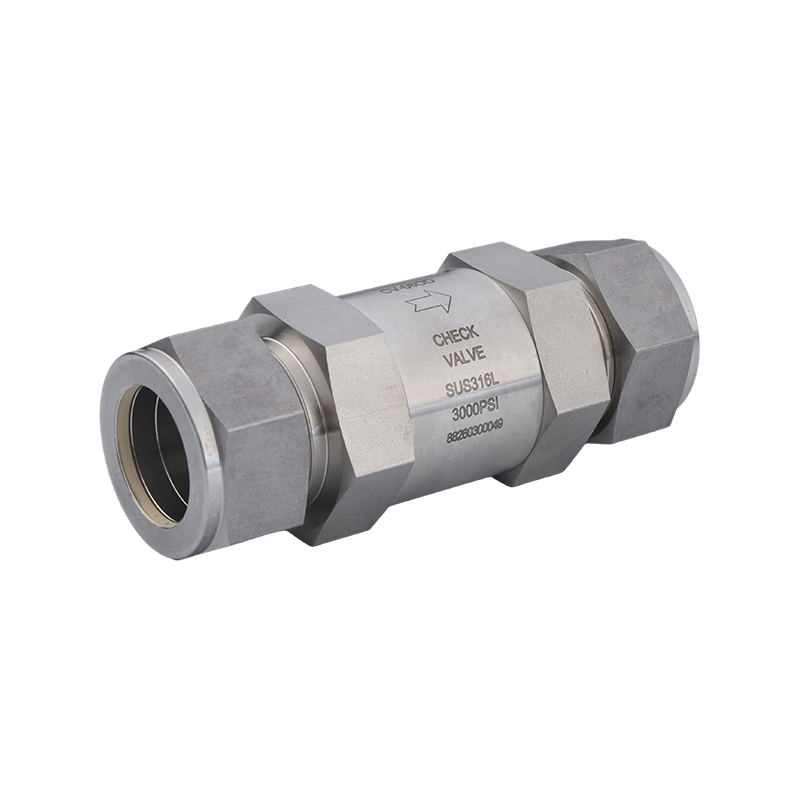
| Tri-clamp check valve | 1/2 inch to 4 inch | Pump discharge, backflow prevention |
| Tri-clamp sight glass | 1 inch to 4 inch | Flow and colour monitoring |
| Tri-clamp Y-strainer | 1/2 inch to 4 inch | Pump and filler protection |
| Sampling and relief valves | 1/2 inch to 1 inch | Hygienic sampling and safety |
| Ferrules, clamps and gaskets | 1/2 inch to 4 inch | Elbows, tees, reducers, caps, crosses |
Benefits of choosing one supplier
- Dimensional match: ferrule groove depth and gasket thickness suit each other.
- Uniform finish: product-contact surfaces share the same roughness and passivation.
- Simple documentation: one set of certificates and compliance statements.
- Spare parts support: gaskets and seal kits for every valve in the same shipment.
We also assemble valves into manifolds, tank outlets and short spools according to your drawing, which saves site time.
Buyer tip: when you list items for a hygienic line, write each one with size, standard, material, finish and seal, for example "2 inch tri-clamp 3-piece ball valve, 316L, Ra 0.8 µm, PTFE seat". A complete line description helps us quote accurately, and protects you from receiving parts that fit together but do not match your hygiene specification.
Standards for Tri-Clamp Connections and Hygienic Valves
The word "tri-clamp" is used in daily trade, but the formal standards are ISO 2852 and DIN 32676. Specifying the standard avoids small but important differences in ferrule dimensions, and makes it easier for suppliers to quote on an equal footing.
| Area | Standard Reference |
|---|---|
| Clamp ferrules and clamps | ISO 2852, DIN 32676 (Series A for inch tube, Series B for DIN / ISO tube) |
| Hygienic tube dimensions | ASME BPE, DIN 11850, DIN 11866, ISO 1127 |
| Hygienic design principles | EHEDG guidelines, 3-A Sanitary Standards principles |
| Stainless steel material | ASTM A351 CF8 / CF3M, ASTM A182 F304 / F316L, EN 10088 |
| Gasket and seal materials (US) | FDA 21 CFR 177.1550 (PTFE), 177.2600 (rubber) |
| Food contact (EU) | Regulation (EC) 1935/2004, Regulation (EU) 10/2011 for plastics |
| Surface finish and passivation | ASME BPE, ASTM A967, ISO 4287 |
| Pressure testing | API 598, EN 12266-1, ISO 5208 |
Series A or Series B? Series A follows inch tube sizes and is common in North America and many international projects. Series B follows DIN and ISO metric tube, and is more common in Europe and Asia. Their ferrules differ slightly in size for the same nominal bore, so they should not be mixed without checking.
When you send an inquiry, state the tube standard and the wall thickness. We will confirm the ferrule dimensions and propose the matching clamp and gasket.
Reference note: ISO 2852 covers the clamp joint geometry, while ASME BPE and DIN 11866 cover tube sizes, surface finish and welding practice for the system. A complete hygienic specification normally refers to all of them, and we can match our valves to the combination your plant or your customer uses.
Certificates and Compliance Documents for Sanitary Valves
Hygienic buyers are usually audited by their own customers, so documents are part of the product. We prepare compliance packages that cover the metal, the seals and the surface finish, so that supplier approval can be completed quickly and without repeated questions.
- Material certificate: EN 10204 3.1 for 304 or 316L body, ferrule and stem, with heat numbers.
- Food contact declaration: stating the compliance of stainless steel and seal materials with relevant regulations.
- Seal documents: FDA statement and EU compliance documents from the gasket and seal supplier.
- Surface roughness report: measured Ra values for sampled valves and ferrules.
- Passivation certificate: acid treatment per ASTM A967 or equivalent, with test result.
- Pressure test report: leak test results for the batch.
- Weld inspection record: for welded ferrules, visual and dye penetrant results on request.
- Quality management: ISO 9001 style procedures and batch records.
Specific certification: some customers request 3-A symbol or EHEDG certified designs. These approvals apply to individual models, so please tell us your requirement at inquiry stage, and we will confirm which valves can be supplied with the relevant certificates.
We can send a sample compliance package before your order.
Audit tip: put the material certificate, the seal compliance statement and the roughness report in one folder for each delivery, ordered by lot number. Hygienic audits often ask for these three items together, and having them ready shows control of your supply chain and shortens the audit discussion considerably. We can number our documents to match your purchase order lines, if that helps your filing system. Please send us your preferred format.
Traceability from Ferrule to Gasket
A sanitary joint has four parts that touch the product: the valve body, the ferrule, the gasket and, indirectly, the clamp. Each may be sourced separately, so traceability must cover them all. In an audit or a recall, being able to show where each part came from can save a great deal of time and cost.
- Stainless steel: mill certificates and heat numbers are recorded for body and ferrule material, with PMI check at receiving.
- Welded ferrules: weld seams are recorded by operator and date, and inspected visually, with dye penetrant on sample parts.
- Gaskets and seals: supplier batch numbers and compliance documents are stored for each lot.
- Polishing and passivation: process records link treatment batches to heat numbers.
- Marking: body carries grade and batch information in non-contact areas, and cartons are labelled with the lot number.
- Shipping records: lots are listed on packing documents, so buyers can follow them in their own systems.
| Component | Record Kept | Purpose |
|---|---|---|
| Body and ferrule | Heat number, mill certificate | Proof of grade |
| Weld seam | Operator, date, inspection result | Proof of weld quality |
| Gasket and seat | Supplier batch, compliance document | Proof of food contact compliance |
| Surface | Roughness and passivation record | Proof of cleanability |
| Carton | Lot number | Link to shipment |
These records can be adapted to your own coding system, so goods received are easy to log in your ERP or quality records.
Why this matters in a recall: if a gasket batch is later found to be unsuitable, you must know which valves and which production dates were affected. With lot-level records for gaskets, bodies and ferrules, that question can be answered within hours, and the action can be limited to the affected lot instead of the whole plant.
Testing and Hygiene Verification for Tri-Clamp Valves
For clamp valves, testing includes the usual pressure checks, and also checks on the ferrule faces, gasket grooves and internal surfaces. A tiny scratch across a gasket groove can leak, and a rough bore can harbour bacteria, so these details are inspected carefully.
| Test | Method | Frequency |
|---|---|---|
| Shell and seat test | Water or air per API 598 / EN 12266-1 | 100% of valves |
| Ferrule dimension check | Calipers and gauges per ISO 2852 / DIN 32676 | First article and sampling |
| Gasket groove inspection | Visual inspection under light for scratches, burrs and tool marks | 100% of valves |
| Surface roughness | Portable profilometer on bore and groove | Sampling |
| PMI | XRF analyser for body and ferrule material | Incoming and sampling |
| Weld seam inspection | Visual and dye penetrant on welded ferrules | 100% visual, sampling PT |
| Passivation check | Copper sulfate or ferroxyl test | Per batch |
| Assembly test | Clamp and gasket fit test on sample joints | Type test |
| Operation test | Torque check and cycle test | Sampling |
Cleanliness before shipment: every valve is cleaned after polishing, dried and sealed in a clean bag with ferrule covers. This avoids polishing residue and oil film reaching your plant, which would otherwise need to be removed before the first sterilisation.
We can provide roughness values and photos of sampled valves with your order, and welcome inspection visits.
Reading the roughness values: roughness is measured along the bore and on the ferrule face, since both touch the product or the gasket. We record the values and the measurement method, so your quality team can compare results with its own specification, or repeat the measurement on arrival with a portable instrument.
Frequently Asked Questions about Tri-Clamp Sanitary Valves
Q: Is tri-clamp the same as tri-clover?
Tri-Clover is a brand name that became a generic term. The standard connection is defined by ISO 2852 and DIN 32676, and our ferrules follow those dimensions.
Q: Are ferrules from different suppliers compatible?
Within the same standard and series, they should be. Differences between Series A and Series B, or small deviations in groove depth, can cause leaks, so we recommend specifying the standard in your order.
Q: Which gasket material should I choose?
EPDM is common for water, steam and many cleaning agents. Silicone suits neutral foods and moderate heat. PTFE resists most chemicals. FKM suits oils and fats. Tell us the product and cleaning agent and we will recommend one.
Q: What pressure can a tri-clamp joint handle?
Typically 10 to 20 bar with standard clamps, depending on size and gasket. For higher pressures, use a high-pressure clamp or a flanged or welded connection.
Q: How do I assemble a tri-clamp joint correctly?
Align the ferrules, place the gasket in the groove, close the clamp around the joint, and tighten the wing nut by hand or with the recommended torque. Do not over-tighten, as this can deform the gasket.
Q: Can I weld a tri-clamp valve into my line?
Yes, valves with weld ends and tube ends can be welded by orbital or manual TIG. Please follow hygienic welding practice, using purge gas and cleaning after welding.
Q: How often should gaskets be replaced?
It depends on temperature, cleaning chemicals and number of cycles. Many plants inspect gaskets at every maintenance and replace them annually or when they show wear, discolouration or permanent set.
MOQ and Pricing for Tri-Clamp Valves
Tri-clamp products are used in large quantities by equipment makers and distributors, so we offer practical minimums and clear price steps.
| Item | Typical Terms |
|---|---|
| Sample order | 1 to 5 pieces per model, for trial and approval |
| Standard MOQ | 50 to 100 pieces per size for standard valves; 300 pieces for custom designs |
| Fittings, ferrules and clamps | MOQ 100 to 200 pieces per item, mixed sizes accepted |
| Pricing basis | EXW, FOB Ningbo, CFR or CIF in USD |
| Quote validity | 30 days, adjusted for stainless steel price changes |
| Payment | 30% T/T deposit, 70% before shipment; L/C at sight for approved accounts |
Cost factors
- Grade: 316L costs more than 304.
- Surface: electropolished surfaces cost more than mechanically polished ones.
- Valve construction: 3-piece valves have more parts than 2-piece valves.
- Seal material: PTFE and FKM are priced differently from EPDM and silicone.
- Documentation: extended compliance packages and third-party reports are extra.
Seal and gasket kits: we suggest adding spare gaskets and seat kits to each order at low cost. They help avoid downtime, and can be shipped with the valves for convenience.
Ordering advice: standardise on a few tube sizes and one ferrule series across your plant. It reduces the number of different spare gaskets and clamps you must keep, simplifies training for maintenance staff, and gives you better prices because we can combine orders of the same item. If you plan a plant extension, tell us the expected volume for the next year, and we can quote a price that covers both the first order and later repeat orders.
Lead Time, Customisation, Hygienic Packaging and Trade Terms
Lead time and stock
Popular sizes of tri-clamp ball valves, ferrules and fittings are kept in stock or semi-finished stock, so standard orders usually ship in 10 to 20 days. Custom polishing, special ends, assemblies and actuated packages need 25 to 40 days.
Customisation
You can customise ferrule series, end combination, handle colour, laser marking, polishing grade, seat and gasket material, actuator interface and private-label packaging. Equipment manufacturers can send drawings for valves with special port positions, lengths or mounting features.
Hygienic packaging
- Each valve cleaned, dried and sealed in a clean bag
- Ferrule covers to protect the faces and keep the bore clean
- Inner cartons with dividers and export cartons on pallets
- Labels showing size, grade, seal material and batch number
- Neutral or customer-branded cartons on request
Shipping and trade terms
| Term | Details |
|---|---|
| Incoterms | EXW, FOB Ningbo, CFR, CIF, DAP |
| Port | Ningbo-Zhoushan; Shanghai as an alternative |
| Transport | Sea freight, air freight for urgent items, express courier for samples |
| Documents | Invoice, packing list, bill of lading, origin certificate, material and test certificates |
We can combine sanitary valves with fittings and industrial stainless items in the same container, which saves freight.
Handling advice: keep ferrule covers in place until installation, handle valves with clean gloves, and never use carbon steel tools on polished surfaces. We include a short assembly and cleaning guide with shipments on request, which helps keep valves in the same condition as when they left our factory. Please tell us if you need the guide in a specific language.