

 English
 中文简体


PTFE Grades and Properties
| Grade | Typical Filler | Strengths | Limits |
|---|---|---|---|
| Virgin PTFE | None | Highest chemical purity, lowest friction, food and pharma grade | Soft, cold flow under load, lower pressure limit at high temperature |
| RPTFE (glass filled) | 15 to 25% glass fibre | Better creep and wear resistance, higher pressure rating | Attacked by hydrofluoric acid and strong hot alkalis |
| RPTFE (carbon filled) | 10 to 25% carbon | Good wear resistance, thermal conductivity, anti-static | Not for strong oxidisers; may mark surfaces |
| RPTFE (graphite or stainless filled) | Graphite or stainless steel powder | Low friction, good heat resistance | Specific chemical limits, check medium |
| TFM modified PTFE | Modified resin | Denser, lower creep, smoother surface than standard PTFE | Higher cost |
| PFA | Melt-processable fluoropolymer | Better stress crack resistance, good for linings and seats | Higher cost, lower temperature limit than PTFE in some grades |
| PCTFE (Kel-F type) | Fluoropolymer | Hard, low gas permeability, excellent for cryogenic | Lower chemical resistance than PTFE in some solvents |
Typical valve parameters
| Parameter | Typical Specification |
|---|---|
| Body material | CF8, CF8M, CF3M, F304, F316L |
| Ball and stem | 316 stainless steel, polished ball |
| Seat | PTFE, RPTFE, TFM, PFA, PCTFE |
| Stem seal | PTFE packing, V-rings or O-rings, live loading on request |
| Size range | 1/4 inch to 12 inch, depending on valve type |
| Pressure rating | 1000 WOG, PN16, PN40, Class 150, Class 300 (reduces with temperature) |
| Working temperature | -50 °C to +200 °C typical, special designs -196 °C to +230 °C |
| Friction | Coefficient about 0.05 to 0.10, giving low operating torque |
| Density (typical) | About 2.14 to 2.20 g/cm3 for sintered PTFE |
Pressure falls with temperature. PTFE is soft, and gets softer when warm. A seat rated for 1000 psi at room temperature may be limited to a few hundred psi at 150 °C, since it deforms under load. We supply a pressure-temperature curve for each seat grade with the quotation.
Thermal expansion is large. PTFE expands about ten times as much as stainless steel when heated. Seat design allows for it, by providing space and by using spring or elastic preload where needed.
PTFE Seated Valve Range and Matching Components
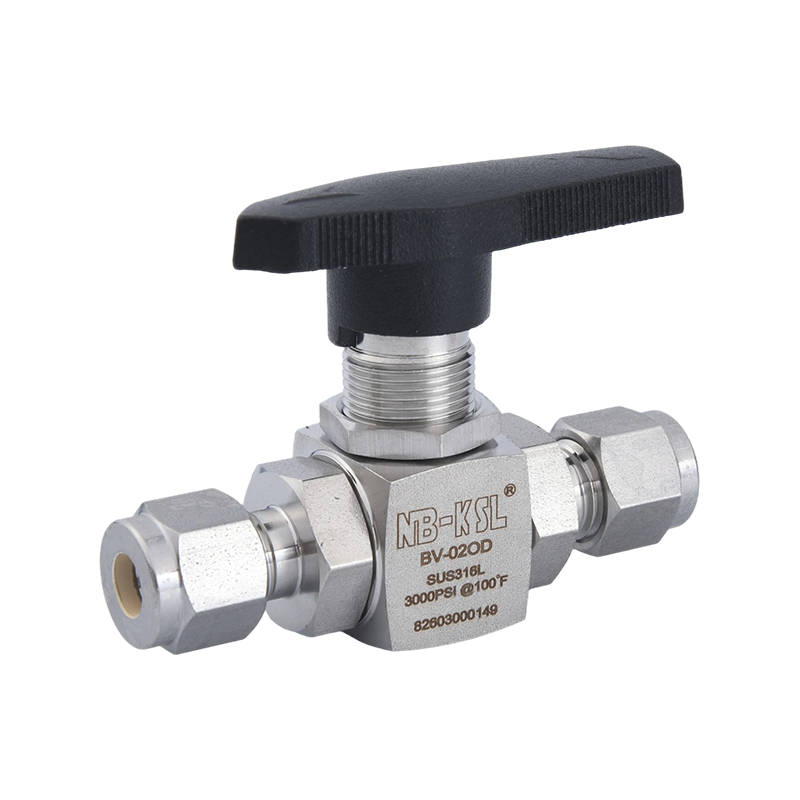
PTFE seats are used throughout our range of quarter-turn valves and in related products such as gaskets and packing. We supply them as a set, so that the whole valve, including the stem seal and the body seal, is consistent in material and chemical resistance.
| Product | Size Range | PTFE Parts |
|---|---|---|
| 2-piece and 3-piece ball valves | 1/4 inch to 4 inch | Seats, body seal, stem packing |
| Flanged ball valves | 1/2 inch to 12 inch | Seats, body seal, stem packing |
| Trunnion ball valves | 2 inch to 12 inch | Seats with springs, seat seals |
| Sanitary ball valves | 1/2 inch to 4 inch | Seats, body seals, FDA grade PTFE |
| Butterfly valves with PTFE seat | DN40 to DN600 | PTFE liner or PTFE seat ring, stem seal |
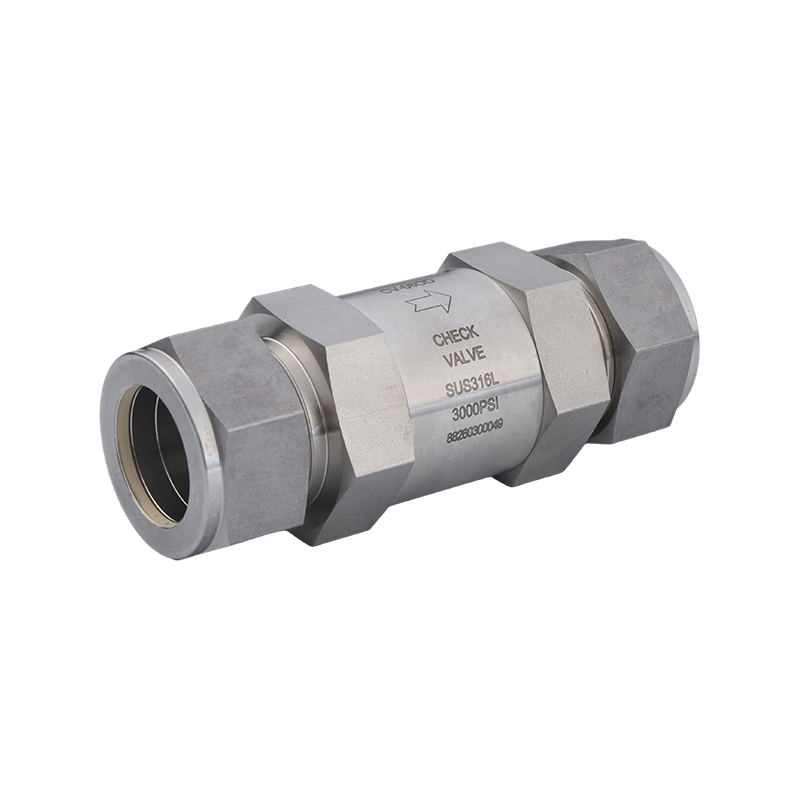
| Check valves with PTFE seat | 1/4 inch to 4 inch | PTFE seat and seal |
| Plug valves with PTFE sleeve | 1/2 inch to 8 inch | Full PTFE sleeve |
| Gaskets, packing sets and seat kits | Matched to valve | PTFE envelope gaskets, V-ring sets, seat rings |
Which PTFE for which job
- Virgin PTFE: food, pharma, high-purity water and chemicals where purity matters, at moderate pressure.
- Glass-filled RPTFE: general chemical service and higher pressure, but avoid HF and hot strong alkalis.
- Carbon-filled RPTFE: steam, hot oils, anti-static needs, wear resistance.
- TFM and PFA: demanding chemical process and semiconductor service, where density and surface quality matter.
- PCTFE: cryogenic and gas service, where low permeability and hardness are needed.
Tell us the medium, concentration, temperature and pressure. We will propose a grade and explain the reasoning.
Standards for PTFE Materials and Valves
PTFE valves rely on material standards for the resin and the fabricated parts, as well as on valve standards. The resin standards ensure consistent quality, and the food and pharma standards control purity. We work with the references below.
| Area | Standard Reference |
|---|---|
| PTFE granular resin | ASTM D4894 |
| PTFE dispersion and fine powder | ASTM D4895 |
| PFA resin | ASTM D3307 (FEP) and ASTM D3307 / D6867 for PFA, per supplier data |
| Plastic lined piping | ASTM F1545 |
| Food contact, United States | FDA 21 CFR 177.1550 (perfluorocarbon resins) |
| Food contact, European Union | Regulation (EU) 10/2011 for plastics, Regulation (EC) 1935/2004 |
| Pharmaceutical biocompatibility | USP Class VI, USP <88>, on request |
| Ball valve design | ISO 17292, API 608, MSS SP-110 |
| Butterfly valve design | API 609, EN 593 |
| Testing | API 598, ISO 5208, EN 12266-1 |
| Fire safe design | API 607, ISO 10497 |
Resin quality varies. Cheap PTFE may contain recycled material, which has lower strength and can contain contaminants. For critical duty, we use virgin resin from qualified suppliers and keep the certificates. If your specification requires 100% virgin resin, tell us in the inquiry, and we will confirm and document it.
Standards also exist for testing PTFE properties such as density, tensile strength and elongation, and we can supply test results from the resin maker or from independent laboratories on request.
Reference note: PTFE resin standards cover raw material, while the finished seat depends on molding, sintering and machining. Two seats made from the same standard resin can still behave differently. If your specification names a resin standard, add the required density, tensile strength and filler content, so that all suppliers quote on an equal technical basis.
Certificates and Compliance Documents for PTFE Seats
A PTFE seat is a small part that carries a lot of responsibility. If the resin is not what the buyer expects, the valve can fail from chemical attack, deform under pressure, or contaminate a pharmaceutical product. We therefore document the seats clearly, and supply the certificates that buyers in food, pharma and chemical industries need.
- Resin certificate: from the resin or compound maker, with grade, filler type and content, batch number and test data (density, tensile strength, elongation).
- Virgin resin declaration: stating that the seat is made from 100% virgin material with no recycled content, where required.
- FDA and EU food contact statement: for PTFE seats and seals in food and beverage valves.
- USP Class VI or similar report: for pharmaceutical use, on request.
- Material certificate: EN 10204 3.1 for body, ball and stem.
- Pressure test report: shell and seat tests per API 598 or EN 12266-1.
- Chemical compatibility statement: our assessment of the seat grade for your medium, with the sources used.
- Quality management: ISO 9001 style system and batch records.
Compatibility is advice, not a guarantee. Chemical resistance charts are a guide. Real service depends on temperature, concentration, mixtures and pressure. We give our best recommendation, and we encourage a test with a sample seat for unusual media. A small immersion test can save a large failure.
Sample certificates can be sent for review before an order is confirmed.
Audit tip: keep the resin certificate, the virgin resin declaration and the food contact statement in one folder per valve lot. Auditors in food and pharma plants ask for these three together, and a complete set supports your own approval of the supplier and speeds up the review of new valve models.
Traceability for PTFE Resin and Seat Production
PTFE seats are molded or sintered from powder, machined to size and sometimes treated by heat. Differences in resin lot, sintering cycle or machining can change density, creep and sealing. Good traceability allows us to link a seat to the powder, the process and the inspection that produced it.
- Resin receiving: each lot of PTFE or compound is received with a certificate, with batch number and filler content recorded.
- Molding and sintering: molding pressure, sintering temperature and time are recorded for each batch of billets or sleeves.
- Machining: seats are machined from billets in labelled lots, with dimensions checked on sampled parts.
- Inspection: visual inspection for voids, flow lines and surface defects; density or hardness checks on samples.
- Assembly record: seat lot, ball lot and body heat number recorded for each valve lot.
- Packing record: cartons are labelled with seat material and lot number, matching the packing list.
| Stage | Record | Why It Matters |
|---|---|---|
| Resin | Supplier lot and certificate | Purity and properties |
| Molding and sintering | Pressure, temperature, time | Density and strength |
| Machining | Dimension report | Fit and sealing |
| Inspection | Visual and hardness results | Detect defects |
| Assembly | Seat lot and valve lot | Link to valve |
If a field problem is reported, such as seat extrusion or leakage, the batch records show whether the issue came from the resin, the process or the application, and direct corrective action.
Why process records matter: sintering temperature and time decide the crystallinity and density of PTFE, and therefore creep and sealing behaviour. If a seat shows unusual deformation in service, the process record is the first place we look, and it often explains the cause quickly and points to a sound corrective action.
Testing of PTFE Seats and Seated Valves
PTFE seats are tested in two ways: as material and as part of the valve. Material tests tell us whether the seat is made of the right resin and processed correctly. Valve tests tell us whether the seat seals and the valve turns smoothly.
| Test | Method | Frequency |
|---|---|---|
| Resin certificate review | Check of supplier data against order | Each lot |
| Density test | Water displacement method on sample billets or seats | Per batch |
| Hardness test | Shore D hardness | Per batch |
| Dimension inspection | Calipers, micrometers and gauges for seat thickness, inner and outer diameter | First article and sampling |
| Visual inspection | Check for voids, scratches, flow lines | 100% of seats |
| Shell test | Hydrostatic at 1.5 x rating | 100% of valves |
| Seat test | Hydrostatic at 1.1 x rating, plus low-pressure air test | 100% of valves |
| Operating torque | Torque tester at the stem, at room temperature and, on request, at elevated temperature | Sampling |
| Cycle test | Repeated operation, then leakage check | Type test |
| Chemical immersion test | Sample seat immersed in the customer's medium, weight and dimension change measured | On request |
Creep and cold flow. PTFE slowly deforms under steady load, a phenomenon called cold flow. In a valve, it means that seats can take a permanent set if the valve stays closed under pressure for long periods. Filled grades and spring-energised seats reduce this effect. We design preload and thickness to limit creep for the rated pressure.
Customers can attend tests, and we can share photos or video of seat inspection and leakage tests.
Frequently Asked Questions about PTFE Seated Valves
Q: Is PTFE the same as Teflon?
Teflon is a brand name of PTFE. The material is the same polymer, but different makers have different grades and processes.
Q: What is the difference between PTFE and RPTFE?
PTFE is pure fluoropolymer. RPTFE has fillers such as glass fibre or carbon to improve strength, wear and creep resistance, at the cost of some chemical limits.
Q: What is the maximum temperature for PTFE seats?
Typical valves use PTFE up to about 180 to 200 °C, but the pressure rating falls as temperature rises. Special designs can go to about 230 °C. Above that, use graphite or metal seats.
Q: What chemicals attack PTFE?
Molten alkali metals, fluorine gas, chlorine trifluoride and a few other extreme reagents. Hydrofluoric acid and hot strong alkalis attack glass-filled grades, so use virgin or carbon-filled PTFE for those.
Q: Why do PTFE seats leak after some time?
Common causes are cold flow after long periods under pressure, thermal cycling, damage from particles, and use outside the pressure-temperature limit. Choosing a filled grade or a spring-energised seat can help.
Q: Is PTFE safe for food and drugs?
Virgin PTFE complies with FDA and EU rules for food contact, and can meet USP Class VI. Filled grades may not comply, so food and pharma valves normally use virgin or approved grades.
Q: Can PTFE seats be replaced?
Yes. In 3-piece ball valves and many butterfly valves, seats can be replaced during maintenance, and we supply seat kits for our valves.
MOQ and Pricing for PTFE Seated Valves
PTFE seats are standard in our soft-seated valves, so there is no extra charge for the common grades. Price changes when you choose special fillers, TFM, PFA or PCTFE, or when you ask for extra testing and certificates.
| Item | Typical Terms |
|---|---|
| Standard PTFE or RPTFE valves | Standard MOQ, 50 to 100 pieces per size |
| TFM, PFA or PCTFE seats | MOQ 20 to 50 pieces per size |
| Seat kits and spares | Small quantities accepted |
| Sample order | 1 to 5 pieces per model |
| Pricing basis | EXW, FOB Ningbo, CFR or CIF in USD |
| Quote validity | 30 days, adjusted for stainless steel and fluoropolymer prices |
| Payment | 30% T/T deposit, 70% before shipment; L/C at sight for approved accounts |
What affects the price
- Seat grade: virgin PTFE is cheaper than RPTFE, and both are cheaper than TFM, PFA and PCTFE.
- Seat design: spring-energised and special-shaped seats cost more.
- Valve size and material: the main cost drivers.
- Certification: USP Class VI and extended resin documentation add cost.
- Testing: chemical immersion and high-temperature torque tests are charged separately.
Resin prices move. Fluoropolymer prices can change with supply and raw material cost. We state the validity of the quotation, and can fix prices for an agreed period on larger orders.
Ordering advice: when your plant runs many PTFE seated valves, standardise on one or two seat grades, and keep a small stock of seat kits for the most used sizes. This shortens repair time, and avoids mixing grades in the same system, which can cause confusion about what is installed.
Lead Time, Customisation, Packaging and Trade Terms
Lead time and stock
Valves with standard PTFE or RPTFE seats ship in 10 to 20 days for popular sizes. Special seat grades, spring-energised seats and orders with extra tests need 25 to 45 days. Spare seat kits usually ship within a few days.
Customisation
We can customise seat grade, filler, seat design, preload, stem seal material, body seal, end connections, handle, marking and documents. For unusual media, we can supply sample seats for testing, and adjust the grade according to the results.
Packaging
- Valves packed with the ball in the open or half-open position, to avoid seat deformation
- Individual bags or foam sleeves, with end protection
- Seat kits in labelled bags, with grade and lot number
- Cartons with dividers, and export cartons on pallets
- Labels with size, seat material and lot number
Shipping and trade terms
| Term | Details |
|---|---|
| Incoterms | EXW, FOB Ningbo, CFR, CIF, DAP |
| Port | Ningbo-Zhoushan; Shanghai as an alternative |
| Transport | Sea freight, air freight for urgent items, express courier for samples |
| Documents | Invoice, packing list, bill of lading, origin certificate, material and test certificates |
We recommend not storing PTFE seated valves in the closed position for long periods before installation, because it can leave a mark on the seat. We pack them in the open or half-open position for that reason.
Handling advice: avoid sharp tools near PTFE seats, flush lines of welding debris before operating new valves, and do not leave valves closed under pressure for long periods when not needed. These habits protect the soft seat and help valves keep their tightness for many years.