

 English
 中文简体


Full Bore versus Reduced Bore: Typical Dimensions
| Nominal Size | Typical Full Bore Diameter (mm) | Typical Reduced Bore Diameter (mm) | Relative Flow Area, Reduced / Full |
|---|---|---|---|
| 1/2 inch | About 12.7 | About 9.5 to 11 | About 0.6 to 0.75 |
| 3/4 inch | About 19 | About 15 to 16 | About 0.65 to 0.7 |
| 1 inch | About 25.4 | About 19 to 22 | About 0.55 to 0.75 |
| 1 1/2 inch | About 38 | About 30 to 32 | About 0.65 to 0.7 |
| 2 inch | About 50 | About 38 to 40 | About 0.6 |
| 3 inch | About 76 | About 62 to 65 | About 0.7 |
| 4 inch | About 100 | About 76 to 80 | About 0.6 |
Values are typical and vary between designs. Flow capacity is related to the area of the opening, which is proportional to the square of the diameter, so even a modest reduction in bore cuts flow area noticeably. Always ask for the actual bore diameter in millimetres, since the words "full port" are used loosely in the trade.
| Parameter | Typical Specification |
|---|---|
| Body material | CF8, CF8M, CF3M (A351); F304, F316L (A182) |
| Ball and stem | 316 or 304 stainless steel, polished ball with full-size through hole |
| Seat | PTFE, RPTFE, PEEK, metal seat on request |
| Size range | 1/4 inch to 12 inch (DN8 to DN300) |
| Pressure rating | 1000 WOG, PN16, PN40, Class 150, Class 300, depending on size and design |
| End connections | NPT, BSP, socket weld, butt weld, flanged, tri-clamp |
| Working temperature | -20 °C to +180 °C with soft seats; higher with metal seats |
| Operation | Lever, gear, pneumatic or electric actuator with ISO 5211 pad |
Pressure drop rule of thumb. For the same flow, pressure drop through a valve is inversely proportional to the square of its flow coefficient, Cv. A full bore valve has a much higher Cv than a reduced bore valve of the same size, so it creates far less pressure drop, which can mean smaller pumps and lower energy cost in long, busy lines.
Full Bore Valve Range and Related Products
Full bore design is available across several valve types, and a complete system usually needs a mix of them. We offer the range below, and we can supply matching pipe fittings, flanges and tube adaptors to keep the bore smooth from end to end.
| Product | Size Range | Typical Use |
|---|---|---|
| 2-piece full bore ball valve | 1/4 inch to 4 inch | General purpose, water, oil, gas, chemical |
| 3-piece full bore ball valve | 1/4 inch to 4 inch | Lines needing in-line maintenance of seats |
| Flanged full bore ball valve | 1/2 inch to 12 inch | Process lines, Class 150 and 300 |
| Trunnion mounted ball valve, full bore | 2 inch to 12 inch | Larger pipelines, low torque |
| Sanitary full bore ball valve | 1/2 inch to 4 inch | Food, beverage, pharma, CIP lines |
| Gate valve, full bore | 1/2 inch to 24 inch | Slurry, viscous media, low pressure drop isolation |
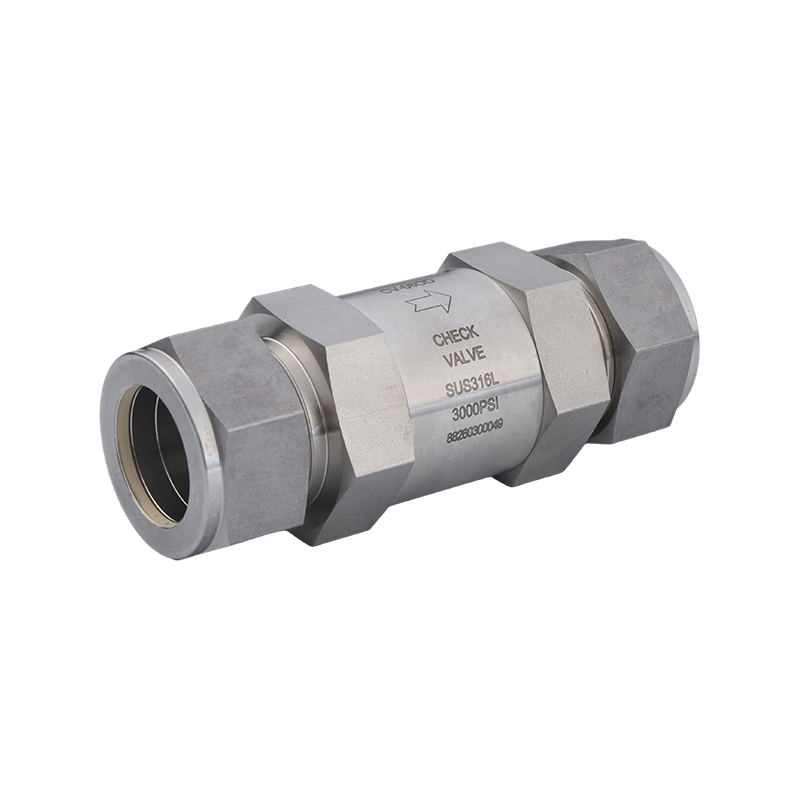
| Full bore check valve | 1/2 inch to 12 inch | Lines with solids or low head loss requirement |
| Wafer butterfly valve (disc in flow path) | DN40 to DN600 | Not full bore in strict sense, but low resistance |
When full bore is the right choice
- Slurries, fibres and viscous fluids: an unrestricted bore reduces blockage and shear.
- Pigging and rodding: cleaning tools and inspection devices can pass through only if the bore is full.
- CIP and hygienic lines: a bore matching the tube prevents steps and dead spaces where product can collect.
- Long or high-flow lines: lower pressure drop saves pumping energy.
- Sampling and instrument lines: a full opening gives representative samples and reduces clogging.
When these points do not apply, reduced bore may be the more economical option, and we are happy to quote both for comparison.
Standards That Define Full Bore and Reduced Bore
Words such as "full bore" and "standard port" are not always defined in the same way. Standards give a clearer description, which is helpful when you compare quotations or write a specification. We work to the following references and state which bore type applies in the data sheet.
| Area | Standard Reference |
|---|---|
| Ball valve design, bore sizes | ISO 17292, API 608 |
| Pipeline ball valves with full opening | API 6D, ISO 14313 |
| Pressure-temperature ratings | ASME B16.34 |
| Threaded and socket weld ball valves | MSS SP-110, MSS SP-72 |
| Gate valve design | API 600 (full bore option), API 602 |
| Pipe dimensions for bore matching | ASME B36.10M, ASME B36.19M, EN 10216, EN 10217 |
| Hygienic tube dimensions | ASME BPE, DIN 11866 |
| Flanges | ASME B16.5, EN 1092-1, JIS B2220 |
| Testing | API 598, ISO 5208, EN 12266-1 |
Check the pipe schedule. A full bore valve is matched to a specific pipe inside diameter. Schedule 10S, 40S and 80S pipes have different inside diameters, so the bore of a valve designed for Schedule 40 will not exactly match Schedule 80 pipe. For critical applications such as pigging, we ask for the pipe specification and confirm the bore.
In API 6D and API 608, the standards describe valve types as full opening or reduced opening, and give minimum bore sizes. Please tell us which standard your project follows.
Reference note: some standards describe a reduced bore valve as one size smaller, others give minimum bore diameters. If your specification names a bore requirement, send it with the inquiry. We will compare it with our actual bore dimensions and state clearly whether the valve meets it, rather than relying on the words full port on the data sheet.
Documents That Confirm the Bore and Flow Performance
For a full bore valve, the bore diameter and the flow coefficient are part of the specification. Buyers sometimes ask for evidence, particularly for pigging, hygienic or high-flow services. We prepare documents that show the true bore and, when needed, the flow data.
- Dimensional drawing: showing the bore diameter, ball hole size, seat inner diameter and body bore.
- Bore inspection report: measured bore diameter from sampled valves with pin or bore gauges.
- Flow coefficient data: Cv or Kv values, calculated or measured, for the valve sizes and types.
- Material certificate: EN 10204 3.1 for body, ball and stem.
- Pressure test report: shell and seat tests per API 598 or EN 12266-1.
- Hygienic documents: surface finish and passivation records for sanitary full bore valves.
- Pigging gauge report: gauge plate pass-through test for valves intended for pigging, on request.
- Quality management: ISO 9001 style system and batch records.
Cv numbers explained. Cv is the amount of water, in US gallons per minute, that passes through the valve with a pressure drop of 1 psi. A higher Cv means less restriction. Manufacturers publish Cv for each size and type, and independent flow tests are available for critical projects.
We can send a sample data sheet with bore dimensions and Cv values before you order.
Audit tip: keep the bore inspection report and the flow data together with the material certificate for each delivery. In hygienic or pigging projects, inspectors often ask to see proof of the bore, and a matched set of documents shows that the valve was checked and that its performance was recorded at the factory.
Traceability of Bore-Critical Parts
In a full bore valve, three parts define the opening: the body bore, the ball hole and the seat rings. If any of them has a smaller bore than specified, the valve is no longer full bore, even if it is labelled so. Our process control therefore focuses on these dimensions and records them.
- Material receiving: bar and castings are received with certificates, heat numbers recorded and PMI checked.
- Ball machining: ball holes are drilled and checked with go and no-go pin gauges, with lot numbers recorded.
- Seat ring machining: seat ring inner diameters are checked on sampled parts in each lot.
- Body bore check: body bores are measured on first article and sampling.
- Assembly sheet: lists ball lot, seat lot and body heat number for each valve lot.
- Marking: valves carry "FB" or "FP" marking, or the bore size, where specified by the buyer.
| Part | What Is Controlled | Why It Matters |
|---|---|---|
| Ball | Hole diameter and polish | Opening size and sealing |
| Seat ring | Inner diameter | No restriction at seat |
| Body | Bore and end connections | Smooth flow and fit with pipe |
| End connection | Inside diameter of weld ends or tube ends | Match to pipe and no step |
| Valve | Serial or lot number | Link to measurement records |
If you want to verify the bore on delivery, we recommend a go gauge of the required diameter passed through the valve in the open position, and we can supply a gauge for large orders.
Why lot records help: if a customer reports that a valve restricts flow, we can go back to the ball and seat lots, check the measured bore values, and see whether the problem came from our production or from installation. This keeps the discussion factual, and speeds up any corrective action if one is needed.
Bore Verification and Performance Testing
Full bore valves are tested for pressure integrity like any other valve, and we add checks that the bore is really full and that the flow performance matches the data sheet. Where required, we also run torque tests, since larger balls and seats generally need more torque to operate.
| Test | Method | Frequency |
|---|---|---|
| Shell test | Hydrostatic at 1.5 x rating | 100% of valves |
| Seat test | Hydrostatic at 1.1 x rating and low-pressure air test | 100% of valves |
| Bore check | Pin gauge or go gauge passed through the valve in open position | First article and sampling |
| Pigging or rodding test | Gauge plate or dummy tool pass-through | On request |
| Flow coefficient test | Water flow test with pressure drop measurement, per IEC 60534-2-3 or manufacturer procedure | On request, type test |
| Operating torque | Torque tester at the stem | Sampling, 100% for actuated valves |
| PMI | XRF analyser | Incoming and sampling |
| Surface roughness | For sanitary valves, portable profilometer | Sampling |
Torque is higher for full bore. A larger ball has more seat contact area, and more pressure acts on it, so the torque required to turn the valve is higher than for a reduced bore valve of the same size. This matters when choosing an actuator or a manual gearbox, and we supply torque values for each valve to help you decide.
Customers can attend testing or request a video of the bore check and pressure test.
Gauge check on site: for pigging or rodding lines, we suggest passing a gauge through each valve before it is installed, and again after commissioning. A simple go gauge made from plate or pipe takes minutes, and avoids the cost of stuck tools or damaged valves during later cleaning of the line.
Frequently Asked Questions about Full Bore Valves
Q: What is the difference between full bore and full port?
In practice the terms are used interchangeably. Both mean that the opening is about the same size as the pipe. Standards use terms such as full opening and reduced opening, so check the actual bore diameter.
Q: Is a full bore valve always better?
No. It gives lower pressure drop and allows pigging, but it is larger, heavier, more costly and needs more torque. For simple on-off service with modest flow, a reduced bore valve can be a sensible choice.
Q: How much flow do I lose with a reduced bore valve?
The flow area of a reduced bore valve is roughly 55 to 75% of the full bore valve, depending on size, and the pressure drop for the same flow is much higher, since it depends on the square of velocity.
Q: Do I need a full bore valve for sanitary lines?
Usually yes, since a bore that matches the tube avoids steps and dead spaces. Sanitary ball valves are normally made in full bore with a smooth finish.
Q: Can pigs pass through any ball valve?
Only through full bore valves, and the bore must match the pipe inside diameter. Pigging also requires smooth transitions and suitable seats, so ask for a pipeline-type design.
Q: Do full bore valves cost more?
Yes, because of the larger body, ball and seats. The difference depends on size and design, and is usually modest in small sizes and larger in big sizes.
Q: How do I check that a valve is full bore?
Measure the bore diameter, or pass a gauge of the required diameter through the open valve. We can supply the bore measurement report with the shipment.
MOQ and Pricing for Full Bore Valves
Full bore designs are part of our standard range, so minimum quantities are the same as for other valves. Price depends mainly on size and material, and we compare full bore and reduced bore prices clearly in the quotation.
| Item | Typical Terms |
|---|---|
| Sample order | 1 to 5 pieces per model |
| Standard MOQ | 50 to 100 pieces per size for small valves; 20 to 50 pieces for larger sizes |
| Mixed full bore and reduced bore | Accepted within the same series |
| Pricing basis | EXW, FOB Ningbo, CFR or CIF in USD |
| Quote validity | 30 days, adjusted for stainless steel price changes |
| Payment | 30% T/T deposit, 70% before shipment; L/C at sight for approved accounts |
Price comparison with reduced bore
As a rough guide, a full bore valve costs about 10 to 30% more than a reduced bore valve of the same nominal size in small sizes, and the difference grows in larger sizes because of the heavier body and ball. Flanged and trunnion designs show the largest gap.
- Material: 316L and duplex cost more than 304.
- Seat: RPTFE and PEEK cost more than virgin PTFE.
- End connection: flanged and weld ends cost more than threaded ends.
- Operator: larger torque requirements may need larger gearboxes or actuators.
- Documents: special bore or flow reports are charged separately.
Where to save. Use full bore on the lines that need it, such as main headers, sampling lines and hygienic lines, and use reduced bore in branches with low flow. We can review your line list and propose a mix that lowers cost without hurting performance.
Lead Time, Customisation, Packaging and Trade Terms
Lead time and stock
Popular sizes of full bore 2-piece and 3-piece ball valves are kept in semi-finished stock, so standard orders usually ship in 10 to 20 days. Flanged, trunnion or sanitary full bore valves usually need 25 to 45 days. Special bore sizes or pigging designs may need longer.
Customisation
We can customise bore diameter, pipe schedule matching, end connections, seat material, handle or operator, polishing grade, marking, packing and documents. For pigging or hygienic projects, we can discuss designs with special seat rings and smooth transitions.
Packaging
- Individual polybag or carton, with end protection on threads and flanges
- Valves packed with the ball in the open or half-open position
- Inner boxes with dividers, export cartons on pallets
- Labels showing size, bore type (FB or FP), material and lot
- Neutral or customer-branded packaging on request
Shipping and trade terms
| Term | Details |
|---|---|
| Incoterms | EXW, FOB Ningbo, CFR, CIF, DAP |
| Port | Ningbo-Zhoushan; Shanghai as an alternative |
| Transport | Sea freight, air freight for urgent items, express courier for samples |
| Documents | Invoice, packing list, bill of lading, origin certificate, material and test certificates |
Full bore valves are heavier than reduced bore, so we plan container loading by weight as well as volume, which helps control freight cost per piece.
Installation advice: match the weld end or tube end to the pipe, so there is no step at the joint, and keep the bore clean during welding. For hygienic lines, use orbital welding with purge gas and inspect the weld inside. These steps preserve the smooth bore that you paid for when you chose full bore.