

 English
 中文简体
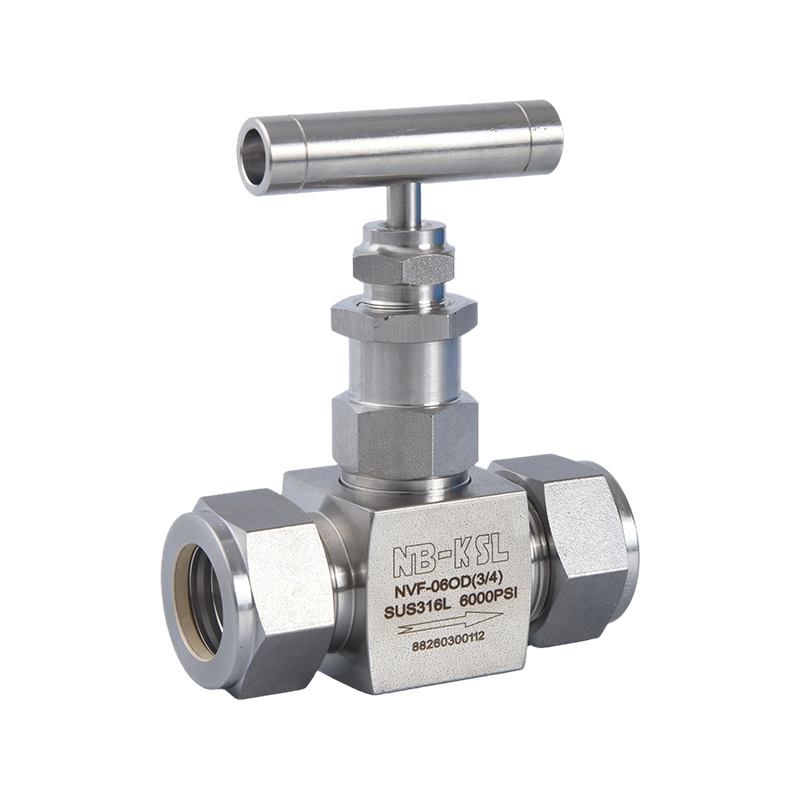


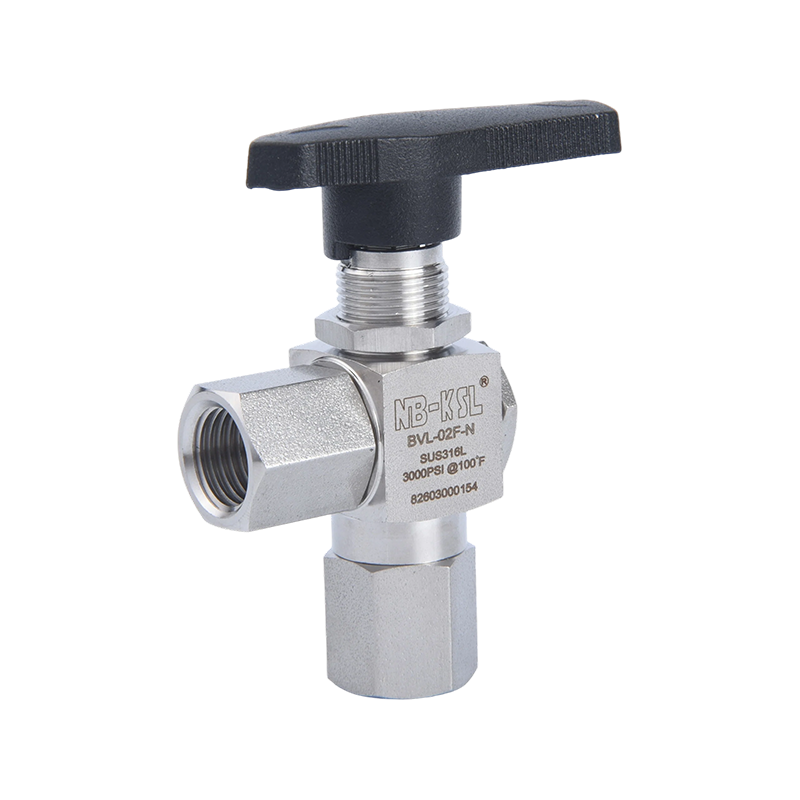
Technical Parameters of Class 150 and Class 300 Valves
| Parameter | Class 150 | Class 300 |
|---|---|---|
| Max working pressure at 38 °C (CF8 / CF8M) | About 19 bar (275 psi) | About 50 bar (720 psi) |
| Typical body wall | Standard | Thicker, heavier body |
| Flange standard | ASME B16.5 | ASME B16.5 |
| Raised face height | 1.6 mm (1/16 inch) | 1.6 mm (1/16 inch) |
| Shell test pressure | About 29 bar | About 75 bar |
| Seat test pressure | About 21 bar | About 55 bar |
| Typical valve types | Ball, gate, globe, check, butterfly, strainer | Ball, gate, globe, check, strainer, double offset butterfly |
| Working temperature | -29 °C to +180 °C soft seat; higher with metal seat | -29 °C to +200 °C soft seat; higher with metal seat |
| Typical use | Water, air, low-pressure steam, general process | Steam, hydrocarbons, higher-pressure chemical duty |
Flange dimensions for common sizes (ASME B16.5)
| Size | Class | Flange OD (mm) | Number of Bolts |
|---|---|---|---|
| 2 inch | 150 | 152.4 | 4 |
| 2 inch | 300 | 165.1 | 8 |
| 4 inch | 150 | 228.6 | 8 |
| 4 inch | 300 | 254.0 | 8 |
Class 150 is not 150 psi. The pressure that a class valve can hold goes down as temperature goes up, and it also depends on the material group. For stainless steel at room temperature, Class 150 is about 275 psi, but at higher temperatures it is much lower. We provide the exact table for your material and temperature on request.
Pressure values above are approximate for CF8 and CF8M at ambient temperature. Final ratings follow ASME B16.34 and the valve design, and we confirm them in the data sheet.
Class 150 and Class 300 Valve Range and Accessories
Projects built to ASME standards typically ask for a broad list of valve types in each class, all with matching materials and documentation. We organise our range so that one supplier can cover most of the list, and so that different classes share a common documentation style.
| Product | Size Range | Class Available |
|---|---|---|
| Flanged ball valves, floating and trunnion | 1/2 inch to 12 inch | 150, 300, 600 |
| Flanged gate valves | 1/2 inch to 24 inch | 150, 300, 600 |
| Flanged globe valves | 1/2 inch to 12 inch | 150, 300, 600 |
| Flanged check valves, swing and dual plate | 1/2 inch to 24 inch | 150, 300, 600 |
| Wafer and lug butterfly valves | 1.5 inch to 24 inch | 150 |
| Double offset butterfly valves | 2 inch to 24 inch | 150, 300 |
| Flanged strainers | 1/2 inch to 12 inch | 150, 300 |
| Flanges, studs, nuts and gaskets | 1/2 inch to 24 inch | 150, 300, 600 |
Choosing between Class 150 and Class 300
- Class 150: suits most water, air, low-pressure steam and general chemical lines.
- Class 300: suits higher-pressure steam, hydrocarbons, thermal oil and lines with pressure surges.
- Temperature matters: at higher temperature, Class 150 stainless may be limited to modest pressure, and Class 300 can be the safer choice.
- Cost: Class 300 valves are heavier and more expensive, so use them only where needed.
When you send a line list with design pressure and temperature, we can suggest the class and material for each line, and group similar items together for easier ordering.
ASME Standards for Class-Rated Valves
Class-rated valves rely on a clear chain of ASME standards: the flange standard, the valve rating standard, the dimension standard and the valve design standard. We follow these in our production, and we list them so your engineers can check against project specifications.
| Area | Standard Reference |
|---|---|
| Flanges and flanged fittings | ASME B16.5 (NPS 1/2 to 24), ASME B16.47 (larger sizes) |
| Pressure-temperature ratings | ASME B16.34 (valves, flanged, threaded and welding end) |
| Face-to-face dimensions | ASME B16.10 |
| Gate valve design | API 600 (bolted bonnet), API 602 (small forged) |
| Globe and check valve design | BS 1873, BS 1868, API 594 (wafer check) |
| Ball valve design | API 6D (pipeline, selected models), ISO 17292, API 608 |
| Butterfly valve design | API 609 |
| Material | ASTM A351 CF8 / CF8M / CF3M, ASTM A182 F304 / F316L |
| Testing | API 598, ISO 5208 |
| Marking | MSS SP-25 |
Material groups in B16.34. Austenitic stainless steels belong to material groups 2.1, 2.2 and 2.3, and each has its own pressure-temperature table. For example, 304 and 316 have slightly different allowable pressures at elevated temperatures, and low-carbon grades such as 304L and 316L have lower values. We use the correct table for each grade.
If your project uses a company standard that adds requirements to API 600, API 608 or API 609, send it to us at the inquiry stage so we can review it line by line.
Reference note: API 600, API 602, API 608, API 609 and API 6D are different design standards with their own rules for wall thickness, testing and marking. Please tell us which API standard your project requires for each valve type, and we will confirm which of our models follow it before you place an order.
Certificates and Documentation for ASME Class Valves
Projects built to ASME standards often have a document list defined by the owner or EPC contractor. We can prepare documents to fit these lists, and follow common vendor data requirements, so your engineering team can approve them without extensive revision.
- Material test certificate: EN 10204 3.1, with chemical and mechanical properties and heat numbers.
- Pressure test report: shell, back seat and seat tests per API 598, with pressure, duration and result.
- Dimensional report: flange outside diameter, drilling, raised face height and face-to-face dimension per ASME B16.5 and B16.10.
- PMI report: alloy check for body and trim.
- Fire safe test report: API 607 or API 6FA, on selected designs.
- Fugitive emission report: ISO 15848-1 or API 624, on selected designs.
- NDE reports: radiographic or dye penetrant tests for castings, when specified.
- Quality management: ISO 9001 style system, with API Q1 type practices on request.
- Third-party inspection: SGS, BV, TUV, DNV, or the owner's inspector.
API monogram: some projects require valves with the API monogram. This is a licence held by specific manufacturers for specific products. Please tell us if the monogram is a mandatory requirement, and we will say honestly whether we can supply it for your valves.
Sample documentation packs can be sent before placing an order.
Audit tip: prepare a document matrix listing every valve, its tag number, its heat number and the matching certificates. We can provide the data in a spreadsheet, so your document controller can complete the vendor data book without retyping information from several sources.
Traceability for ASME Valves
Valves built to ASME standards are normally installed in systems that require traceable materials, because regulations such as ASME B31.3 require that materials be identifiable. Our traceability system ensures that every pressure-containing part can be linked to a heat number and a certificate.
- Heat number marking: body, bonnet, cover and flange carry the heat number, grade and size, in line with MSS SP-25.
- Casting records: foundry chemistry and heat treatment records are kept with the heat number.
- PMI check: alloy composition is verified on incoming parts and sampled on finished valves.
- Trim traceability: stem, ball, wedge, disc and seat rings are recorded in the assembly sheet.
- Bolting identification: studs and nuts are marked with grade, such as B8M and 8M.
- Final documents: certificates, test reports and dimensional reports refer to the valve serial number.
| Component | Marked With | Record Kept |
|---|---|---|
| Body and bonnet | Heat number, grade, size, class | Mill certificate, NDE as required |
| Flanges | Heat number, ASME B16.5 markings | Dimensional report |
| Trim | Lot and grade | PMI report |
| Bolting | Grade stamp | Supplier certificate |
| Valve | Serial number and nameplate | Pressure test report |
If your project needs a material traceability matrix, we can prepare it in table form, listing every part, its material, its heat number and the corresponding certificate.
Why MSS SP-25 marking helps: standard markings let inspectors read class, size, material and manufacturer from the body. When valves are marked consistently, receiving inspection is faster, mix-ups are rarer and plant staff can identify replacement valves years later without searching old drawings.
Testing Capability for Class 150 and Class 300 Valves
We test valves according to API 598 and the relevant API design standard. For each valve, we measure shell strength, seat tightness and, for gate and globe valves, the back seat. We also run dimensional checks, to make sure the valve fits the line.
| Test | Typical Value or Method | Frequency |
|---|---|---|
| Shell test, Class 150 | About 29 bar water (1.5 x rating) | 100% of valves |
| Shell test, Class 300 | About 75 bar water (1.5 x rating) | 100% of valves |
| Seat test, liquid | 1.1 x rating at 38 °C, with allowable leakage per API 598 | 100% of valves |
| Low-pressure air seat test | About 6 bar air under water for soft seats | 100% of soft-seated valves |
| Back seat test | Hydrostatic, stem fully open | 100% of gate and globe valves |
| Flange dimension inspection | Calipers, drilling templates per ASME B16.5 | First article and sampling |
| PMI | XRF analyser | Incoming and sampling |
| NDE on castings | Dye penetrant or radiography per ASME B16.34, when specified | On request |
| Special tests | Fire safe, fugitive emission, cryogenic, cycle tests | Type test reports on request |
Acceptance criteria: API 598 allows different leakage rates for metal-seated and resilient-seated valves. Soft-seated ball valves normally show no visible leakage, and metal-seated gate valves may show a small allowable leakage per size. Specify the rate you need in your inquiry.
You are welcome to witness testing, and we can provide photos or video of pressure gauge and hold time on request.
Reading leakage criteria: API 598 gives allowable leakage for each valve type and size, and some customers set a stricter criterion. If your specification asks for zero visible leakage on metal-seated valves, tell us in advance, since it may need lapping, special seat design or a different valve type.
Frequently Asked Questions about Class 150 and Class 300 Valves
Q: Does Class 150 mean the valve can hold 150 psi?
Not exactly. Class is a rating group. For stainless steel at ambient temperature, Class 150 is about 275 psi, but the allowable pressure falls with temperature, so you must check the table for your material and temperature.
Q: What is the difference between Class 150 and Class 300 flanges?
Class 300 flanges are larger and thicker, with more or larger bolts. For example, at 2 inch, Class 150 has four bolts and Class 300 has eight, so the two cannot be bolted together.
Q: Can I use a Class 300 valve with Class 150 flanges?
Not reliably. Some sizes may share bolt patterns, but face dimensions and bolt counts often differ. Match the valve class to the flange class, or use correctly sized adaptor flanges.
Q: How do Class and PN compare?
Class 150 is roughly equal to PN20 and Class 300 to PN50 for pressure at room temperature, but flange dimensions are different and not interchangeable.
Q: What is a Class 150 valve suitable for?
Water, air, general process and low-pressure steam. For high temperatures or high pressure, Class 300 or higher is advised.
Q: What does the API monogram mean?
It indicates that a manufacturer holds an API licence for a product under its quality program. It is not required for every project. We can tell you whether it is available for your valve.
Q: Do you supply Class 600 and above?
Yes, Class 600 and Class 900 are available in selected sizes and valve types, on request.
MOQ and Pricing for Class-Rated Valves
Class-rated valves are often purchased for projects, so quantities are driven by drawings and line lists. We keep minimum quantities flexible for single-line items, and offer volume pricing for large packages.
| Item | Typical Terms |
|---|---|
| Sample order | 1 to 3 pieces per model |
| Standard MOQ | 20 to 50 pieces per size; project items accepted from 1 piece |
| Mixed Class 150 and 300 | Accepted within the same model series |
| Pricing basis | EXW, FOB Ningbo, CFR or CIF in USD |
| Quote validity | 30 days, adjusted for stainless steel and nickel price changes |
| Payment | 30% T/T deposit, 70% before shipment; L/C at sight for approved accounts |
Price guide between classes
A Class 300 valve is typically 40 to 100% more expensive than the Class 150 equivalent, because of heavier bodies and flanges. Ball valves show a smaller difference, and gate and globe valves a larger one. For large sizes, weight is the main driver.
- Size and weight: costs rise quickly above 6 inch.
- Material: 316L and duplex are above 304.
- Trim and seat: hard facing, metal seats and special seals add cost.
- Testing: radiography, fire safe and fugitive emission tests are priced separately.
- Documentation: additional vendor documents and witnessed tests are extra.
Sending a line list with class, size and material for each line lets us build a single, clear quotation.
Ordering advice: send the whole valve list, with class, size, material and end connection for each line. We will group similar items, suggest where a lower class is enough, and prepare a single quotation, which usually saves time for both sides and results in a better overall price.
Lead Time, Customisation, Packaging and Trade Terms
Lead time and stock
Standard Class 150 flanged ball valves and check valves in popular sizes ship in 20 to 30 days. Class 300 valves, large sizes and orders with special tests need 35 to 60 days. We provide a production schedule at order confirmation, and keep you informed at each milestone.
Customisation
We can customise facing type, face-to-face length, body material, trim, seat, stem extension, gear operator, actuator interface, nameplate and marking. We can also produce valves to company specifications used by EPC contractors and end users.
Packaging
- Flange faces protected by plastic or plywood covers
- Gate and globe valves shipped slightly open or closed, as agreed
- Cartons with dividers for small valves, wooden cases or pallets for large ones
- Heavy valves labelled with weight and lifting points
- Neutral or project-specific marking with tag number
Shipping and trade terms
| Term | Details |
|---|---|
| Incoterms | EXW, FOB Ningbo, CFR, CIF, DAP |
| Port | Ningbo-Zhoushan; Shanghai as an alternative |
| Transport | Sea freight, air freight for urgent items, express courier for samples |
| Documents | Invoice, packing list, bill of lading, origin certificate, material and test certificates |
Because Class 300 valves are heavy, we help plan container loading by weight, which makes freight more efficient.
Handling advice: keep flange face covers in place, avoid dragging valves on concrete, and store them off the ground. For heavy valves, use the lifting points shown on our packing labels. Careful handling protects the raised face and the surface finish, which are the parts most often damaged between delivery and installation.