

 English
 中文简体


Leakage Classes and What Bubble Tight Means
| Standard | Class or Rate | Meaning |
|---|---|---|
| ISO 5208 / EN 12266-1 | Rate A | No visible leakage during the test, liquid or gas, for the required duration |
| ISO 5208 / EN 12266-1 | Rates B to G | Increasing amounts of allowed leakage, scaled by valve size |
| API 598 | Soft seats | No visible leakage in liquid or gas tests |
| API 598 | Metal seats | Small allowed leakage, in drops or bubbles per minute depending on size |
| ANSI/FCI 70-2 (control valves) | Class VI | Bubble tight, only a few bubbles per minute allowed, depending on port size |
| ANSI/FCI 70-2 | Class V | Extremely tight metal seat, liquid test |
How a bubble tight valve achieves tightness
| Valve Type | Sealing Principle |
|---|---|
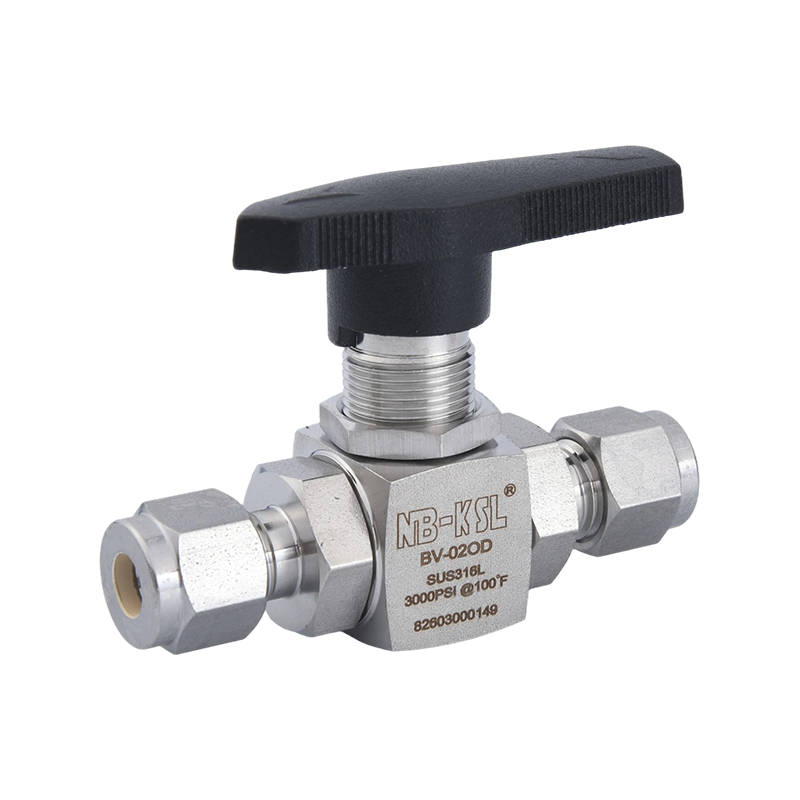
| Floating ball valve | Line pressure pushes the ball against the downstream seat, creating a tight seal |
| Spring-loaded seat ball valve | Springs push seats against the ball, so the valve seals even at low pressure |
| Trunnion ball valve (DPE) | Seats float and are pushed against the ball by pressure; double piston effect gives tight sealing on both sides |
| Resilient butterfly valve | Rubber or PTFE liner is compressed by the disc edge, sealing in both directions |
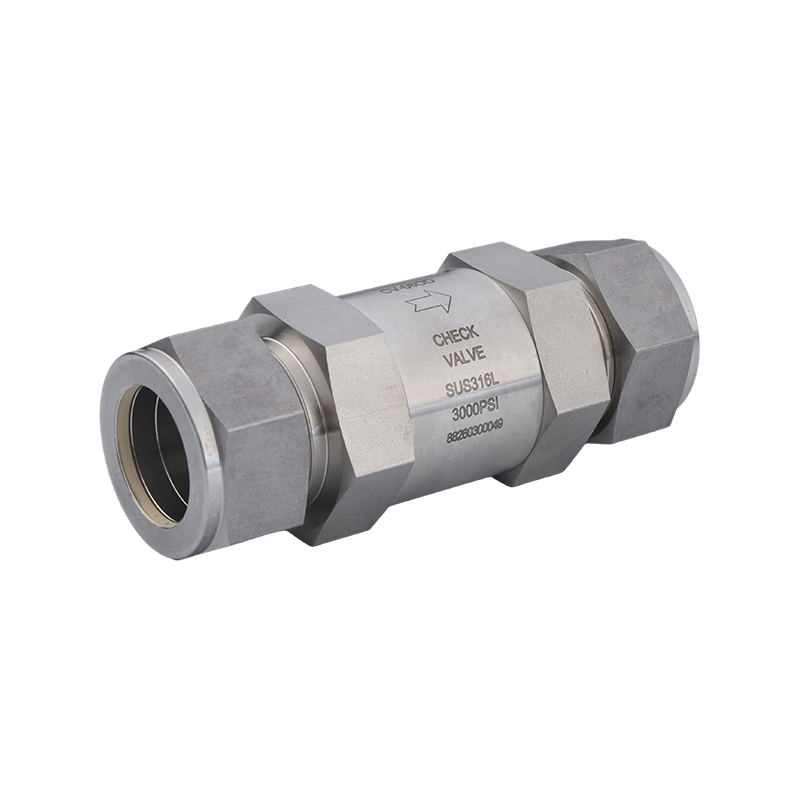
| Soft-seated check valve | Spring pushes an elastomer-seated disc against the seat, giving tight closing at low pressure |
Typical valve parameters are in the table below. Soft seats give excellent tightness, but they have temperature and pressure limits, and they can be damaged by abrasive particles or by operating against a hard deposit.
| Parameter | Typical Specification |
|---|---|
| Seat | PTFE, RPTFE, PEEK, EPDM, NBR, FKM |
| Pressure rating | 1000 WOG, PN16, PN40, Class 150, Class 300 |
| Working temperature | -20 °C to +180 °C, depending on seat |
| Body material | CF8, CF8M, CF3M, F304, F316L |
| Test medium | Air at about 6 bar under water, or hydrostatic test; helium on request |
| Direction of sealing | Bidirectional or unidirectional, as specified |
Bubble Tight Valve Range and Applications
Most soft-seated quarter-turn valves are bubble tight when new, but not all designs hold that tightness over thousands of cycles. We offer designs chosen for long-term tightness, and tell you honestly where limits apply.
| Product | Size Range | Typical Application |
|---|---|---|
| Floating ball valve, RPTFE seat | 1/4 inch to 4 inch | General gas, liquid and chemical isolation |
| Spring-loaded seat ball valve | 1/2 inch to 6 inch | Low-pressure gas, vacuum and light liquids |
| Trunnion ball valve, DPE seats | 2 inch to 12 inch | Larger lines, bidirectional tight shutoff |
| Resilient wafer and lug butterfly valve | DN40 to DN600 | Water, air, mild chemicals |
| Double offset butterfly valve, PTFE or metal seat | DN50 to DN600 | Higher pressure and temperature |
| Soft-seated check valve | 1/4 inch to 4 inch | Prevention of backflow in gas and liquid lines |
| Plug valve with sleeve | 1/2 inch to 8 inch | Chemical lines with sticky media |
| Sanitary ball valve | 1/2 inch to 4 inch | Food, beverage and pharma isolation |
Where bubble tight matters most
- Hazardous gases and chemicals: small leaks create health and safety risks.
- Vacuum and low-pressure gas: leakage affects process performance and equipment.
- Dosing and metering: accurate delivery requires a closed valve to be fully closed.
- Double block and bleed: positive isolation for safe maintenance.
- Valuable media: pharmaceuticals, additives and specialty chemicals.
If your medium contains abrasive solids or sticky deposits, soft seats may not hold. Tell us the application, and we will tell you if another valve type is better.
Buyer tip: when you ask for bubble tight valves, tell us the medium, the minimum and maximum pressure, the temperature, whether the pressure can come from both sides, and how many operations per day are expected. With these answers, we can choose between floating, spring-loaded and trunnion designs, and avoid disappointment later.
Leakage Test Standards and Acceptance Criteria
A claim of bubble tight shutoff has to be linked to a standard, a test medium, a pressure and a duration. Without these four items, the claim has no clear meaning. The following standards define them.
| Area | Standard Reference |
|---|---|
| Pressure testing of metallic valves | ISO 5208 (leakage rates A to G) |
| European valve testing | EN 12266-1 (tests, procedures and acceptance criteria) |
| Valve inspection and testing | API 598 (closure test, shell test) |
| Control valve seat leakage | ANSI/FCI 70-2, IEC 60534-4 |
| Ball valve design | ISO 17292, API 608, MSS SP-110 |
| Butterfly valve design | API 609, EN 593 |
| Check valve design | API 594, EN 12334 |
| Pressure-temperature ratings | ASME B16.34 |
| Fugitive emission (external leakage) | ISO 15848-1, API 624 |
Seat leakage is not external leakage. Bubble tight shutoff refers to leakage through the closed seat, from one side of the valve to the other. External leakage, through the stem seal or body joints, is a separate topic, covered by fugitive emission standards. A valve can be bubble tight at the seat and still leak at the stem if the packing is not good.
When you specify a bubble tight requirement, write the standard, the rate, the medium, the pressure and the direction. For example: "ISO 5208 Rate A, air at 6 bar, both directions". We will then quote and test exactly to that definition.
Reference note: ISO 5208, EN 12266-1 and API 598 describe similar tests with different details, such as hold time and acceptance wording. If your specification names one of them, we follow it exactly, and if it names two, we ask which prevails, so there is no conflict when the test reports are reviewed.
Test Documents for Bubble Tight Valves
A bubble tight valve is proven by its test report. A good report lists the standard, the medium, the pressure, the duration and the observed result for each valve, together with the date and the inspector. We prepare documents in this form, and adapt them to your own report template if needed.
- Seat leakage test report: by valve serial number, showing test standard, rate, medium, pressure, duration, direction and result.
- Low-pressure air test record: valve submerged or coated with leak detection fluid, with bubbles observed or absent.
- Helium leak test report: where a measured leakage rate is requested, with detector type and limit.
- Seat material certificate: PTFE, RPTFE, PEEK or elastomer type, supplier and batch.
- Material certificate: EN 10204 3.1 for body, ball, stem and seat retainers.
- Cycle test report: showing leakage after a number of cycles, for type-tested designs.
- Quality management: ISO 9001 style system and batch records.
- Third-party inspection: SGS, BV, TUV or the buyer's inspector can witness leakage tests.
Ask for the direction. Some valves are bubble tight only when the pressure comes from one side. If your application needs sealing in both directions, say so in the order, and we will test both. A bidirectional test takes longer, but is the only way to know that the valve works in the way you need.
Sample test reports can be sent before the order is confirmed.
Audit tip: keep the seat leakage test report together with the seat material certificate for each delivery. When a leakage complaint arises months later, these two documents help to separate a manufacturing issue from a service issue, and they show that the valve was tight, with defined conditions, when it left our factory.
Control of Sealing Surfaces and Seat Materials
Tightness depends on two surfaces: the ball or disc, and the seat. If either has a scratch, a burr or a defect in material, the valve may leak. Our traceability system covers these parts closely, so that we can link a good or bad result to a specific lot of material, a specific machine or a specific operator.
- Ball and disc material: bar and castings are received with certificates, heat numbers recorded and PMI checked.
- Surface finish: ball polishing batches are recorded, with surface roughness measured on sampled balls.
- Seat material: PTFE, RPTFE and PEEK batches are recorded with supplier lot numbers and certificates.
- Seat machining: seat dimensions are checked on sampled parts, with record of lot and operator.
- Assembly: assembly sheets list ball lot, seat lot and torque of the end cap or body bolts.
- Test record: seat leakage results are linked to the valve serial number or lot.
| Part | Control | Why It Matters |
|---|---|---|
| Ball surface | Roughness, roundness | Seals against the seat |
| Seat | Material batch and dimension | Elasticity and fit |
| Body and end cap | Heat number, bolt torque | Correct seat preload |
| Stem and packing | Dimensions and material | Prevents external leakage |
| Valve | Serial or lot number | Link to test results |
If a lot shows an unusual number of leakage failures at test, we can check the records to find the cause, whether it is a seat batch, a machining problem or a polishing issue, and correct it before shipping.
Why polishing records help: the ball surface decides how well a seat seals, so we record polishing batches and measure roughness on samples. If a lot shows a rise in leakage at test, the polishing record is one of the first places we look to find a cause and correct it quickly.
How We Test for Bubble Tight Shutoff
The test is simple in principle, but depends on careful execution. The valve is closed, pressure is applied on one side, and the other side is observed for leakage. For gas, the open side is submerged in water or coated with a leak detection fluid, and bubbles are looked for during the hold time. For liquid, drops are looked for.
| Test | Method | Frequency |
|---|---|---|
| Low-pressure air seat test | Air at about 6 bar, hold time per standard, observed under water | 100% of soft-seated valves |
| High-pressure liquid seat test | Water at 1.1 x rating, per API 598 or ISO 5208 | 100% of valves |
| Bidirectional test | Test repeated with pressure on each side | On request, 100% when specified |
| Helium leak test | Detector measuring leak rate to a specified limit | On request |
| Vacuum leak test | Valve in vacuum chamber or with vacuum on one side | On request |
| Shell test | Hydrostatic at 1.5 x rating | 100% of valves |
| Cycle test | Repeated operation, then retest for leakage | Type test |
| Temperature cycle test | Heating and cooling, then retest | Type test or on request |
Factors that affect tightness in service
- Debris: particles can scratch the ball or lodge on the seat, causing leakage.
- Temperature: soft seats expand and relax with temperature, and may need re-tightening of end caps.
- Cycling: thousands of cycles wear the seat, especially in dirty media.
- Pressure differential: floating ball designs seal better with higher pressure, and may leak slightly at very low pressure.
- Operation habits: half-open use, throttling or slow operation can damage seats.
We welcome witnessed tests and can supply photos or video of the test setup and result.
Frequently Asked Questions about Bubble Tight Shutoff Valves
Q: What does bubble tight mean?
It means that during a leakage test, no bubbles are observed on the downstream side for the specified time. It is commonly linked to a test with air under water and to Rate A of ISO 5208 or EN 12266-1.
Q: Is every soft-seated valve bubble tight?
New soft-seated valves normally are, but tightness depends on design, material and condition. Damage, debris and wear can cause leakage later.
Q: Can metal-seated valves be bubble tight?
Some can, with lapped surfaces and precise manufacturing, but most metal-seated valves allow a small leakage. Bubble tight metal-seated valves are more expensive and need special design.
Q: What is Class VI?
It is a very tight leakage class from ANSI/FCI 70-2, used for control valves with soft seats. It allows only a very small number of bubbles per minute, depending on port size.
Q: Why does my valve leak at low pressure?
Floating ball valves rely on pressure to push the ball against the seat. At very low pressure, a spring-loaded seat design gives better sealing.
Q: How do I keep a valve bubble tight over time?
Use filtered media, avoid throttling with ball valves, operate fully open or fully closed, and choose a seat material suited to the temperature and chemical. Periodic seat replacement may be needed.
Q: Can you test with helium?
Yes, on request, with a detector and agreed limit. Helium finds leaks that a bubble test cannot see, and is used for vacuum and analytical systems.
MOQ and Pricing for Bubble Tight Valves
Most of our soft-seated valves are bubble tight at delivery, so the base price is the same as for ordinary valves. Extra cost arises when you ask for bidirectional tests, helium tests, special seats or type-tested designs.
| Item | Typical Terms |
|---|---|
| Standard soft-seated valves | Standard MOQ, 50 to 100 pieces per size |
| Bidirectional or helium tested valves | MOQ 20 to 50 pieces; testing charged per valve or lot |
| Spring-loaded or trunnion designs | MOQ 10 to 30 pieces per size |
| Sample order | 1 to 5 pieces per model |
| Pricing basis | EXW, FOB Ningbo, CFR or CIF in USD |
| Quote validity | 30 days, adjusted for stainless steel price changes |
| Payment | 30% T/T deposit, 70% before shipment; L/C at sight for approved accounts |
What affects the price
- Valve design: spring-loaded and trunnion designs cost more than floating ball valves.
- Seat material: PEEK and special elastomers cost more than PTFE.
- Testing: bidirectional, helium and vacuum tests add cost.
- Size and material: main drivers for base price.
- Documents: individual test reports and third-party witness are charged separately.
Specify the leakage need precisely. Asking for "zero leakage" in general terms invites vague answers. Giving the standard, the rate, the medium, the pressure and the direction allows suppliers to quote accurately, and avoids paying for tighter tests than your process requires.
Ordering advice: for critical isolation, buy a small number of spare seats and seals together with the valves. Soft seats are consumable parts, and having spares on site allows a quick change at the next shutdown, instead of waiting for a shipment while a leaking valve stays in service.
Lead Time, Customisation, Packaging and Trade Terms
Lead time and stock
Standard bubble tight ball valves in popular sizes ship in 10 to 20 days. Spring-loaded, trunnion, or specially tested valves need 25 to 45 days. Helium test and vacuum test lots may need a few extra days for scheduling.
Customisation
We can customise seat material, seat design, test pressure, test medium, direction of testing, handle, end connections, cleaning level and documentation. For special leakage requirements, we can run trial tests on sample valves and share results before the bulk order.
Packaging
- Valves packed with the ball in the open or half-open position, to avoid seat deformation
- End protection on threads and flanges
- Individual bag or foam sleeve to prevent scratches
- Cartons with dividers, and export cartons on pallets
- Labels with size, seat material, leakage test standard and lot
Shipping and trade terms
| Term | Details |
|---|---|
| Incoterms | EXW, FOB Ningbo, CFR, CIF, DAP |
| Port | Ningbo-Zhoushan; Shanghai as an alternative |
| Transport | Sea freight, air freight for urgent items, express courier for samples |
| Documents | Invoice, packing list, bill of lading, origin certificate, material and test certificates |
We recommend storing bubble tight valves in a dry place, in their original packing, and installing them within a reasonable time, since long storage under compression can affect soft seats.
Operating advice: operate bubble tight ball valves fully open or fully closed, avoid throttling, flush the line before commissioning to remove welding debris, and cycle the valve gently several times after installation. These habits protect soft seats and keep valves tight for far longer than neglect and rough use.