Content
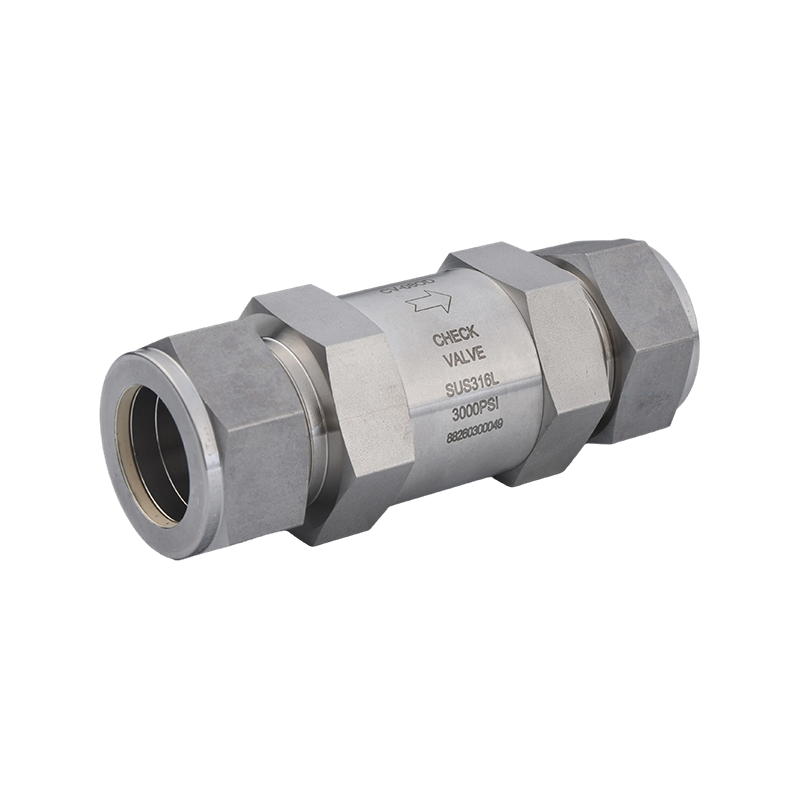
The right stainless steel check valve is determined by three core factors: correct pipe sizing (matching nominal diameter to flow rate), an appropriate pressure rating (typically Class 150, 300, or 600 for industrial systems), and a valve type suited to your fluid and installation orientation. Undersizing a valve creates excessive pressure drop and premature wear, while oversizing can cause valve chatter and incomplete closure. Getting these three variables right before purchase prevents the majority of check valve failures in the field.
Below, we break down exactly how to size a valve correctly, how to interpret pressure ratings, and what to check before finalizing a purchase.
The most common mistake in valve selection is assuming pipe diameter alone determines the correct valve size. While most check valves are sized to match the nominal pipe size (NPS) of the system, actual flow velocity should also be checked against the valve's minimum cracking pressure—the pressure needed to open the valve and allow flow.
As a general guideline, liquid systems should maintain flow velocities between 3 and 10 feet per second, while gas systems typically run higher, between 30 and 100 feet per second depending on the application. If actual flow velocity falls outside this range, either the valve or the pipe segment may be improperly sized.
| Valve Size (NPS) | Typical Application | Common Valve Type |
|---|---|---|
| 1/4" - 1" | Instrumentation, small pump lines | Ball, spring-loaded lift |
| 1.5" - 4" | HVAC, general plumbing, water systems | Swing, wafer |
| 6" - 12" | Municipal water, industrial process lines | Swing, tilting disc |
| 14"+ | Large-scale water treatment, power plants | Tilting disc, dual plate |
Sizing also depends on whether the valve will be installed horizontally or vertically. Swing check valves generally require horizontal installation to function correctly under gravity, while spring-loaded lift and ball check valves can typically be installed in any orientation, including vertical lines with upward flow. Confirming orientation compatibility before purchase avoids costly reinstallation.
Stainless steel check valves are typically rated using the ANSI (American National Standards Institute) class system, which indicates the maximum pressure the valve can safely handle at a given temperature. The most common ratings for industrial applications are Class 150, Class 300, and Class 600, with higher numbers indicating higher pressure tolerance.
| ANSI Class | Max Pressure (approx.) | Typical Use |
|---|---|---|
| Class 150 | 285 PSI | Low-pressure water, HVAC systems |
| Class 300 | 740 PSI | Chemical processing, steam lines |
| Class 600 | 1,480 PSI | High-pressure oil & gas, power generation |
Pressure ratings are not fixed values—they decrease as temperature increases. For example, a Class 150 valve rated for 285 PSI at ambient temperature may only handle around 150 PSI at 500°F. Always check the manufacturer's pressure-temperature rating chart rather than relying on the class number alone, especially for steam or high-temperature chemical applications.
Cracking pressure refers to the minimum upstream pressure required to open the valve. Standard check valves typically have a cracking pressure of around 0.5 to 1 PSI, but spring-loaded models can range from 1 PSI up to 25 PSI or higher depending on spring tension. Selecting too high a cracking pressure for a low-pressure system can prevent the valve from opening properly, restricting flow and reducing system efficiency.
Beyond size and pressure, the mechanical design of the valve should match your specific fluid handling needs.
For systems prone to water hammer—such as pump discharge lines with frequent start-stop cycles—spring-loaded check valves are generally the preferred choice, as they close faster than gravity-operated swing valves, reducing the shock load on piping.
Not all stainless steel check valves are made from the same alloy, and the grade significantly affects both cost and corrosion resistance.
| Grade | Corrosion Resistance | Best For |
|---|---|---|
| 304 | Good | Fresh water, food processing, general industrial use |
| 316 | Excellent, includes chloride resistance | Seawater, chemical processing, marine environments |
316 stainless steel contains molybdenum, which significantly improves resistance to chloride-induced pitting corrosion—making it the preferred choice for marine, offshore, and saline environments. While 316-grade valves typically cost 15-25% more than 304, the extended service life often justifies the premium in corrosive settings.
The connection type affects both installation method and long-term maintenance access.
For systems requiring frequent inspection or valve replacement, flanged or threaded connections are generally more practical than welded ones, since they allow the valve to be removed without cutting into the pipeline.
Before finalizing a purchase, confirm the following specifications against your system requirements:
Buying from a supplier who provides third-party testing certification and material traceability documentation is especially important for regulated industries like food processing, pharmaceuticals, and oil and gas, where compliance audits often require proof of material origin and quality testing.
Quick Answer: Key Specs to Check Before Buying For most instrumentation and process applications, a 316 stainless steel needle valve rated for 6,000 psi with a 1/4 in. to 1/2 in. NPT or tube-fitting connection covers the majority of genera...
What Stainless Steel Needle Valves Are and How They Work A needle valve controls flow through a small-bore orifice by advancing or retracting a tapered needle-shaped stem into and out of a precision-machined seat. As the handwheel or actua...
// The answer, upfront For the majority of industrial, chemical processing, hygienic, and high-pressure gas applications, a stainless steel pressure regulator delivers superior corrosion resistance, a wider operating range, and a lower ...
Quick Answer: Which Valve Should You Choose Choose a stainless steel ball check valve for small pipe sizes (typically under 3 in.), vertical installations, or systems needing fast response and tight sealing. Choose a swing check valve for ...
 1 Zhongxin Yungu Zone D Building 1, Jiangkou Street, Fenghua District, Ningbo City, Zhejiang Province, China
 +86-574-88561893 / +86-15057497901
 Copyright © Ningbo Keshengli Stainless Steel Valve Co., Ltd. Rights Reserved.
Wholesale Stainless Steel Fittings & Valves Manufacturers
Copyright © Ningbo Keshengli Stainless Steel Valve Co., Ltd. Rights Reserved.
Wholesale Stainless Steel Fittings & Valves Manufacturers



 English
 中文简体
中文简体