

 English
 中文简体
中文简体
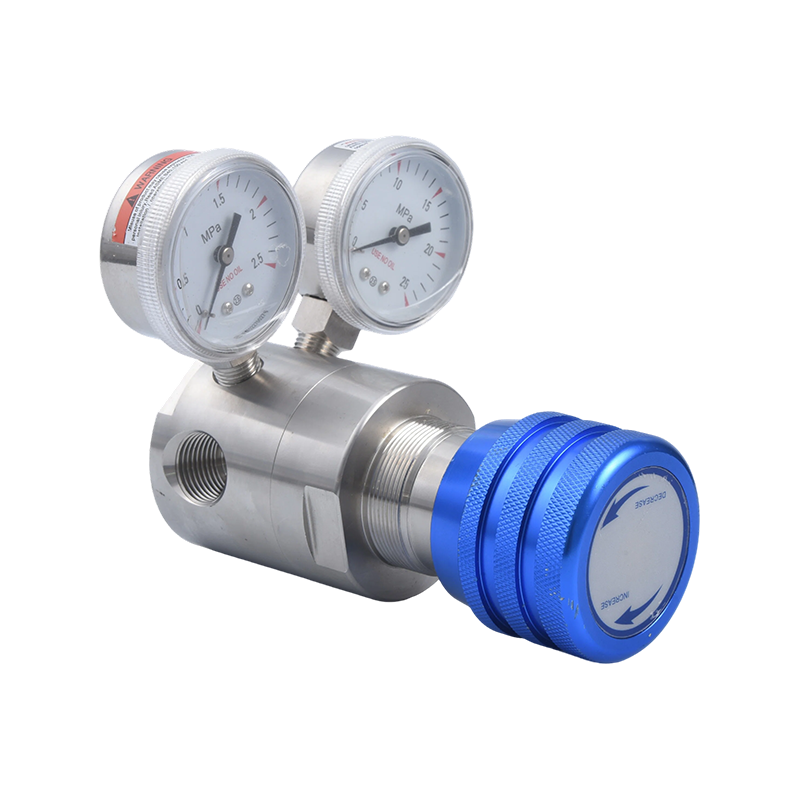
For the majority of industrial, chemical processing, hygienic, and high-pressure gas applications, a stainless steel pressure regulator delivers superior corrosion resistance, a wider operating range, and a lower total cost of ownership than brass, aluminum, or polymer alternatives. The best-fit grade — 304, 316, 316L, or duplex — depends on your fluid chemistry, temperature envelope, and certification requirements. This article works through every dimension of that decision.
(high-pressure SS bodies)
temperature range
in corrosive applications
The Role of a Pressure Regulator and Why Material Dominates Every Other Variable
A pressure regulator performs a single, critical function: it accepts a fluctuating or high inlet pressure and maintains a consistent, controlled outlet pressure regardless of changes in flow demand downstream. Every other attribute — accuracy, response time, flow capacity — is secondary to whether the regulator survives long enough in its specific environment to perform that function reliably.
The body material determines that survivability. It governs which fluids the regulator can contact, the temperature range it can endure, the pressures it can contain without creep or fatigue, and whether it meets the hygiene, emissions, or safety certifications required by the application. A regulator specified correctly on every parameter except material will still fail — sometimes catastrophically, sometimes slowly through pitting and leakage — if the body cannot withstand what flows through it.
This is why material selection is the first decision in any pressure regulator specification process, and why the comparison between stainless steel and its alternatives deserves more than a cost-per-unit glance at a distributor catalog.
Stainless Steel vs. Brass: The Most Common Comparison
Brass remains the most widely deployed pressure regulator body material globally, holding dominant market share in HVAC, natural gas distribution, plumbing, and general utilities. It is easier to machine to close tolerances than stainless, cost less per unit, and is entirely adequate when the process fluid is clean, non-corrosive, and within a moderate temperature range. The problem is that many real-world applications deviate from those conditions — and brass fails unpredictably when they do.
Dezincification: Brass's Fundamental Vulnerability
The most documented failure mode for brass in water service is dezincification — the selective leaching of zinc from the copper-zinc alloy. Soft water, acidic groundwater, warm water above 60°C, and chlorinated water all accelerate the process. What remains is a porous, weak copper matrix that loses structural integrity without giving obvious external warning. Regulators made from standard brass (CW617N or equivalent) installed in municipal water systems with chloramine treatment have shown dezincification failure within 36 months in controlled studies. Many water utilities in Northern Europe and Australia now mandate dezincification-resistant (DZR) brass or stainless steel for all pressure regulation points as a result.
Temperature and Pressure Ceilings
Brass regulators are typically rated to 250°F (121°C) maximum fluid temperature. Above this threshold, zinc migration accelerates and the zinc-copper microstructure becomes unstable. Stainless steel bodies, by contrast, maintain structural integrity and corrosion resistance to 450°F (232°C) in standard austenitic grades, and higher in duplex or precipitation-hardened variants. For steam service, heat tracing, or high-temperature process applications, stainless is not a premium option — it is often the only viable one.
On pressure, the gap is similarly decisive. Standard brass regulators peak around 600 PSI working pressure. High-pressure stainless bodies are routinely rated to 3,000–6,000 PSI, making them the default for compressed gas cylinders, high-pressure nitrogen supply, hydraulic pilot circuits, and supercritical fluid applications.
- Excellent resistance to acids, chlorides, and caustic media
- Operating range −65°F to +450°F (standard austenitic)
- Working pressure up to 6,000+ PSI in high-pressure bodies
- Suitable for hygienic, pharmaceutical, and high-purity gas service
- No dezincification or galvanic corrosion risk
- Compatible with oxygen, aggressive industrial gases, and steam
- Broad certification pathway (3-A, ATEX, FDA, TA-Luft)
- Higher initial purchase cost; longer service life offsets this
- Good resistance in neutral water, dry air, and clean gas
- Typical operating range −40°F to +250°F
- Working pressure typically ≤600 PSI
- Not suitable for chlorinated water, acids, ammonia, or amines
- Dezincification risk in soft, acidic, or warm water
- Cannot meet 3-A sanitary or pharmaceutical hygienic standards
- Lower upfront cost; replacement frequency erodes this advantage
- Widely available from local distributors
Stainless Steel vs. Aluminum and Polymer Bodies
Beyond brass, engineers also encounter aluminum and polymer body regulators. Each occupies a specific niche, and each has hard boundaries that stainless steel does not share.
Aluminum: Light but Chemically Limited
Aluminum alloy regulators — typically 6061-T6 or similar — are valued where weight matters: portable breathing-air equipment, pneumatic tool supply, aerospace ground support, and mobile nitrogen systems. Aluminum is roughly one-third the weight of equivalent stainless steel, and its thermal conductivity makes it useful in temperature-sensitive pneumatic actuator circuits. In clean, dry gas service it performs well and costs significantly less than stainless.
The limitation is chemical. Aluminum dissolves in both acidic (pH < 4) and strongly alkaline (pH > 9) media. Hydrochloric acid, nitric acid, sodium hydroxide, and many amines attack aluminum rapidly even at very low concentrations. Chloride-containing media — including seawater, many cooling tower waters, and process fluids in chemical plants — cause pitting corrosion that penetrates the oxide layer aluminum depends on for protection. An aluminum regulator inadvertently routed into chemical service can fail within weeks, with no visual warning until leakage begins.
Polymer (PTFE, PVDF, PP): Chemical Immunity with Mechanical Limits
Fully fluorinated polymer bodies — PTFE, PVDF — offer the broadest chemical compatibility of any regulator material. They resist virtually all acids, bases, solvents, and oxidizers at low-to-moderate concentrations. This makes them the natural choice for semiconductor wet bench chemistry delivery, laboratory acid dispensing, and ultra-pure water distribution where even stainless steel's trace metal ion leaching is unacceptable.
The mechanical constraints are significant. Polymer regulators are limited to approximately 150 PSI maximum working pressure in most designs, and temperature resistance tops out around 200°F (93°C) for PTFE and lower for PP. They are also vulnerable to physical shock and vibration. Stainless steel handles 40× the pressure, 250°F more temperature, and tolerates mechanical abuse that would crack or distort a polymer body.
| Property | Stainless Steel | Brass | Aluminum | PTFE / Polymer |
| Max working pressure | 6,000+ PSI | ≤600 PSI | ~1,500 PSI | ~150 PSI |
| Max fluid temperature | 450°F (232°C) | 250°F (121°C) | 300°F (149°C) | 200°F (93°C) |
| Chloride resistance | Excellent (316/duplex) | Poor–Moderate | Poor | Excellent |
| Acid resistance | Good (most acids) | Poor | Poor | Excellent |
| Hygienic certification | Yes (3-A, EHEDG) | No | No | Limited |
| Cryogenic service | Yes (austenitic) | No | Marginal | No |
| Body weight (relative) | Heavy | Medium | Light | Very light |
| Unit purchase cost (relative) | High | Low | Low–Medium | Medium |
| 10-year TCO in corrosive service | Lowest | Highest | High | Low (if within limits) |
* TCO estimate assumes equivalent service conditions and excludes specialty applications where polymer is the only viable choice.
Choosing the Right Stainless Grade: 304, 316, 316L, and Duplex
Specifying "stainless steel" is not sufficient — the grade determines the regulator's actual chemical resistance, weldability, and mechanical performance. Four grades dominate pressure regulator manufacturing:
18% Cr, 8% Ni. General-purpose workhorse. Excellent for dry gases, food-grade water, moderate chemicals. Not for chloride-rich environments or marine service.
16% Cr, 10% Ni, 2% Mo. Molybdenum addition raises chloride resistance substantially. Standard for marine, offshore, chemical, and pharmaceutical applications.
316 with <0.03% carbon. Prevents carbide precipitation in heat-affected zones during welding. Required when weld integrity matters — sanitary tri-clamp assemblies, for example.
22% Cr, 5% Ni, 3% Mo. Dual austenite-ferrite microstructure. Twice the yield strength of 316, superior resistance to stress-corrosion cracking in chloride and H₂S service.
| Grade | Chloride Resistance | Tensile Strength | Ideal Applications | Cost vs. 304 Baseline |
| 304 SS | Moderate | 515 MPa min | Dry gas, food/bev water, general industrial | Baseline |
| 316 SS | High | 515 MPa min | Marine, chemical processing, offshore | +15–25% |
| 316L SS | High | 485 MPa min | Welded sanitary assemblies, pharma | +20–30% |
| Duplex 2205 | Very High | 620 MPa min | Seawater, sour gas (H₂S), desalination | +50–80% |
Tensile strengths per ASTM A276/A479. Cost premiums are approximate and vary by supplier and market conditions.
For most engineers encountering stainless steel pressure regulators for the first time, 316 is the correct default. The premium over 304 is modest — typically 15–25% at the unit level — and the broader chemical compatibility it delivers is almost always worth it. Duplex grades become necessary when hydrogen sulfide is present (sour service per NACE MR0175), when stress-corrosion cracking in chloride service is a documented risk, or when high mechanical loads combine with corrosive media. In these scenarios, duplex's yield strength advantage — roughly double that of austenitic grades — becomes a structural safety factor, not merely a materials preference.
In offshore oil and gas topside equipment, 316 stainless regulators serving seawater cooling circuits showed pitting corrosion failure within 3–5 years in high-chloride environments exceeding 1,000 ppm Cl⁻. Switching to duplex 2205 bodies extended service intervals to >15 years in the same service — a documented outcome from North Sea platform maintenance records.
Regulator Design Types: Diaphragm, Piston, and Dome-Loaded
Material selection narrows the field; internal design determines performance within that field. Three sensing mechanisms dominate stainless pressure regulator design, each optimized for different accuracy, pressure, and application profiles.
Diaphragm-Sensing Regulators
The diaphragm regulator is the most widely deployed design across industrial applications. A flexible membrane — PTFE, EPDM, 316L stainless, or elastomeric composite — senses downstream pressure changes and acts as the actuating element, moving the valve seat through a direct mechanical linkage. Stainless diaphragm regulators cover working pressures from vacuum to approximately 300 PSI in standard designs, with high-pressure models extending to 1,500 PSI.
Diaphragm types offer the highest sensitivity of the three designs and the tightest accuracy under steady-state conditions. The diaphragm material must be independently specified for chemical compatibility with the process fluid — the stainless body alone does not guarantee compatibility if EPDM seals are in contact with a hydrocarbon stream, for example.
Piston-Sensing Regulators
Piston regulators replace the diaphragm with a sliding cylinder that responds to downstream pressure through a ported pilot passage. The design is more compact for a given flow rating, tolerates higher inlet pressures (to 6,000+ PSI in stainless bodies), and is mechanically more robust — it resists vibration, mechanical shock, and hydraulic hammer better than diaphragm types. Accuracy is typically ±1–2% of set point versus ±0.5–1% for diaphragm designs, a gap that is acceptable in high-pressure gas cylinder supply, nitrogen purge systems, and hydraulic pilot circuits.
Dome-Loaded Regulators
Dome-loaded designs use a separate reference gas pressure — typically nitrogen — applied to an upper chamber to set the outlet pressure rather than a mechanical spring. This eliminates "droop" — the decrease in outlet pressure under increasing flow — which is the primary accuracy limitation of spring-loaded designs. Dome-loaded stainless regulators maintain outlet pressure accuracy within ±0.1% of set point across the full flow range, making them the specification of choice for semiconductor process gas delivery, laboratory analytical systems, precision calibration gas supply, and any application where outlet pressure stability directly affects process outcome.
Stainless steel — specifically electropolished 316L — is essentially universal in dome-loaded regulators for high-purity service, because the Ra <0.4 μm internal surface finish minimizes particle generation and process gas adsorption. In semiconductor fabs, a pressure droop of 0.5 PSI in an etch gas supply regulator is sufficient to affect critical dimension uniformity across a 300mm wafer — the material and design specification are therefore inseparable from the process outcome.
Critical Specifications: What to Compare Before Purchasing
A stainless regulator correctly specified on material and design still requires validation across a full parameter matrix before procurement. The following specifications generate the most field failures when under-specified or ignored:
- Inlet pressure range: Must exceed maximum supply pressure with a safety margin of at least 10%. High-pressure stainless bodies typically handle 3,000–6,000 PSI; standard designs run 250–3,000 PSI. Never select a regulator whose rated inlet equals your line maximum.
- Outlet pressure range and set-point location: Best accuracy is achieved when the working set point falls in the middle third of the regulator's adjustment range. Operating near the upper or lower limit of the range degrades droop performance and spring linearity.
- Cv (flow coefficient): Defines volumetric flow capacity at a given pressure differential. Undersizing Cv starves downstream equipment and creates false "pressure drop" symptoms. Always calculate required Cv from maximum design flow and acceptable pressure loss before selecting body size. Formula: Cv = Q × √(SG / ΔP), where Q is flow in GPM, SG is specific gravity, and ΔP is the pressure differential in PSI.
- Diaphragm and seal material: Chemically independent from the body material — must be validated separately for the process fluid. PTFE and FFKM (Kalrez equivalent) cover the widest chemical range. EPDM is standard for water and steam. Buna-N (NBR) suits petroleum oils and fuels. Viton (FKM) handles a broad range of hydrocarbon and chemical service.
- End connections: NPT, BSP, FNPT, compression, or sanitary (tri-clamp / SMS). Hygienic stainless regulators require tri-clamp or SMS connections for full drainability and cleanability. Select connection type based on pipe standard, not solely on thread size.
- Internal surface finish: Ra <0.8 μm (32 μin) electropolished is required for pharmaceutical and semiconductor high-purity gas. Ra 1.6–3.2 μm mill finish is adequate for general industrial and food-grade water. Specify Ra value explicitly when surface finish is process-critical.
- Certifications and compliance: 3-A Sanitary (dairy and food processing), EHEDG (European hygienic engineering), ATEX/IECEx (hazardous area), FDA 21 CFR (food contact), TA-Luft VDI 2440 (fugitive emissions), SIL rating per IEC 61511 (functional safety), NACE MR0175 (sour service).
- Ambient temperature rating: Distinct from fluid temperature. A regulator in an outdoor desert installation or adjacent to a furnace may see ambient conditions that affect spring calibration, seat materials, and elastomeric seals. Verify both fluid and ambient temperature limits.
Total Cost of Ownership: The 10-Year Financial Reality
The unit cost premium of stainless steel over brass or aluminum regulators ranges from 40% to 120% depending on grade and pressure rating. This premium dominates short-horizon purchasing decisions, which is why brass remains prevalent in applications where stainless is the better technical choice. A 10-year total cost of ownership (TCO) analysis consistently reverses this conclusion.
Consider a representative chemical dosing system: a regulator controlling sodium hypochlorite (chlorinated bleach solution) at 120 PSI, 90°F ambient, with a target service life of 10 years. A brass regulator in this service typically requires replacement every 12–18 months due to dezincification and chloride corrosion. A 316 SS regulator with PTFE diaphragm and seat, properly specified, routinely runs 8–10 years between rebuilds in identical service. Over the 10-year horizon:
* Illustrative estimates for a ½″ regulator in sodium hypochlorite service. Costs include unit price, labour at $85/hr for 2hr installation, and 4hr planned downtime per replacement at $800/hr process cost.
The stainless option costs more on day one. It costs substantially less by year three, and continues to accumulate savings thereafter. Add the risk of an unplanned failure — which carries the full $15,000–$50,000/hour production loss cited earlier, plus potential safety and environmental liability — and the financial case for stainless steel becomes essentially unanswerable in any corrosive or demanding service.
Application-Specific Selection: Which Configuration for Which Industry
The practical intersection of material, grade, design type, and finish produces specific configuration profiles that dominate in each major industry vertical. The following table maps the most common application categories to their typical stainless regulator specification:
| Industry / Application | Recommended Grade | Design Type | Key Seal Material | Critical Certification |
| Chemical processing (general) | 316 SS | Diaphragm or piston | PTFE or FFKM | TA-Luft VDI 2440 |
| Offshore / marine | Duplex 2205 | Piston | FFKM | NACE MR0175, ATEX |
| Pharmaceutical / biotech | 316L SS (electropolished) | Diaphragm | PTFE or EPDM (USP Class VI) | 3-A Sanitary, EHEDG, FDA |
| Semiconductor / high-purity gas | 316L SS (EP, Ra <0.4 μm) | Dome-loaded | PCTFE or PTFE | SEMI F20, internal fab spec |
| Food & beverage (CIP) | 316L SS | Diaphragm, tri-clamp | EPDM or PTFE | 3-A Sanitary, EC 1935/2004 |
| High-pressure gas cylinders | 316 or 304 SS | Piston | Buna-N or PTFE | DOT, EN ISO 2503 |
| Sour gas / oil & gas | Duplex 2205 or 316 | Piston | FFKM | NACE MR0175, API 6A |
| Cryogenic gas service | 304 SS or 316 SS | Diaphragm | PCTFE | CGA standards, EN 13648 |
Installation, Passivation, and Maintenance Practices
Stainless steel pressure regulators require installation practices that differ from brass in several meaningful ways. Following them correctly preserves the performance and lifespan that justify the material choice.
Thread Connections and Galling Prevention
Stainless steel work-hardens under frictional contact — a property that makes it prone to thread galling (cold welding) if NPT or BSP connections are assembled dry or over-torqued. Always use PTFE thread tape (not pipe dope compounds, which can contaminate downstream systems) and verify torque against the manufacturer's recommendation for the specific thread size. Galled stainless threads require thread repair or complete fitting removal — it is not recoverable in the field. Anti-galling grades such as 303 are sometimes used for threaded components within assemblies for this reason.
Passivation After Installation
Machining, welding, and assembly operations introduce free iron onto stainless surfaces — from tooling, handling, and fixturing. Free iron, if left in place, can initiate rust spots and reduce the passive chromium oxide layer's effectiveness. All wetted stainless surfaces in pharmaceutical, semiconductor, and high-purity service should be chemically passivated after installation using citric acid or nitric acid per ASTM A967 or ASTM A380. This step restores the passive layer and is often a mandatory component of process validation protocols and system commissioning documentation in regulated industries.
Diaphragm and Seat Maintenance Intervals
The diaphragm and valve seat are the primary wear items in any pressure regulator regardless of body material. Stainless regulators designed for serviceability accept field-replaceable diaphragm and seat kits, which cost a fraction of a new regulator and can be installed without removing the body from the pipeline (in most designs). Proactive replacement intervals based on operating hours or calendar time — rather than reactive replacement on failure — are the correct strategy for any critical service point:
- Moderate-duty service (clean gas, neutral fluids, ambient temperature): diaphragm replacement every 4–6 years or 20,000 operating hours, whichever comes first.
- Aggressive chemical service (acids, caustics, chlorinated media): diaphragm inspection at 12 months; replacement at 18–24 months regardless of apparent condition.
- High-cycle applications (frequent flow on/off, rapid pressure cycling): piston-type preferred; diaphragm inspection at 500,000 cycles or 18 months.
- High-purity and pharmaceutical service: diaphragm replacement aligned with product campaign changes or annual system revalidation, whichever is shorter.
The Decision Framework: A Step-by-Step Specification Path
Condensing the foregoing comparison into a practical specification workflow, the following sequence catches most mis-specifications before they reach procurement or installation:
- Step 1 — Define the fluid: Identify the exact process fluid, concentration range, and any contaminants. This determines body material grade (304 / 316 / duplex) and seal chemistry independently. A stainless body with an incompatible EPDM seal in hydrocarbon service will fail at the seal, not the body.
- Step 2 — Set the temperature envelope: Capture both fluid temperature and ambient temperature extremes. Cryogenic service (<−65°F / −54°C) requires austenitic stainless — it remains ductile where carbon steel and some aluminum alloys embrittle. High-temperature service (>300°F / 149°C) eliminates most polymer seal options and all brass bodies.
- Step 3 — Define the pressure operating window: Document maximum inlet, normal inlet, target outlet, minimum outlet, and maximum allowable outlet. The gap between target and maximum outlet determines whether a standard spring or a dome-loaded design is needed. The maximum inlet determines body pressure class.
- Step 4 — Calculate Cv: Size the regulator body from the required flow rate, not from the pipe nominal bore. A ½″ pipe does not require a ½″ body regulator — Cv governs, not thread size. Undersized Cv is the single most common cause of downstream starvation complaints.
- Step 5 — Map certification requirements: Identify applicable standards before selecting a design — 3-A, ATEX, NACE, FDA, SIL — as these constrain materials and designs independently of the process requirements. A regulator that meets process chemistry requirements but lacks the required certification cannot be installed in a regulated facility.
- Step 6 — Define the maintenance strategy: If the installation point is accessible and maintainable, a rebuildable design with available spare kits minimizes lifetime cost. If the location is remote, offshore, or difficult to access, a higher-spec non-rebuildable body with longer predicted MTBF is justified on risk grounds.
// References
- ASTM A276/A479 — Standard Specification for Stainless Steel Bars and Shapes. ASTM International.
- ASTM A967 / A380 — Standard Practice for Chemical Passivation Treatments for Stainless Steel Parts. ASTM International.
- NACE MR0175 / ISO 15156 — Petroleum and Natural Gas Industries — Materials for Use in H₂S-Containing Environments. NACE International.
- 3-A Sanitary Standards Inc. — 3-A SSI Standards for Pressure Regulating Valves Used in Dairy Systems.
- CGA (Compressed Gas Association) — CGA E-4: Standard for Pressure Regulators and Pressure Relief Devices. Compressed Gas Association.
- European Hygienic Engineering and Design Group (EHEDG) — Hygienic Design Principles for Pressure Control Devices. EHEDG Guideline Document 32.
- API Standard 6A — Wellhead and Christmas Tree Equipment. American Petroleum Institute.
- ISO 2503 — Gas Welding Equipment — Pressure Regulators for Gas Cylinders Used in Welding, Cutting and Allied Processes. International Organization for Standardization.
- Shreir, L.L., Jarman, R.A., Burstein, G.T. — Corrosion: Metal/Environment Reactions, 3rd ed. Butterworth-Heinemann, 1994.
- Davis, J.R. (ed.) — Stainless Steels. ASM International, 1994. Chapters 4–6: Austenitic Stainless Steels, Duplex Stainless Steels.