

 English
 中文简体


How a Fire Safe Valve Is Built and What the Fire Test Involves
| Feature | Normal Soft-Seated Valve | Fire Safe Design |
|---|---|---|
| Seat | PTFE or RPTFE only | PTFE or RPTFE plus a secondary metal seat or fire-resistant seat insert |
| Stem packing | PTFE packing | Graphite packing, or PTFE with graphite backup rings |
| Body seals | PTFE or elastomer gaskets | Graphite or spiral wound gaskets, or metal-to-metal joint |
| Stem | Standard design | Blow-out proof, with metal-to-metal shoulder |
| Static control | Not always | Anti-static spring or pin that provides electrical continuity |
| Body material | Stainless steel | Stainless steel; melting point far above flame temperature |
| After a fire | May leak heavily | Leakage limited to the standard's allowance, and valve can still be operated |
What the fire test does (simplified)
| Stage | Description |
|---|---|
| 1. Preparation | The valve is pressurised and checked for leakage at the start of the test |
| 2. Burn period | The valve is enveloped in flames at about 750 to 1000 °C for 30 minutes, with water or other test medium inside |
| 3. Measurement during the burn | Leakage through the seat and to the outside is measured, and must stay within limits per size |
| 4. Cool-down | The valve is cooled with water or air, as the standard requires |
| 5. After the burn | The valve is pressure tested again, and must be operable by hand or actuator, with leakage within limits |
Temperature perspective. PTFE melts at around 327 °C, and rubber seals burn far below that. A hydrocarbon fire can reach 1000 °C or more, so a valve that relies only on soft parts will leak almost at once. The metal secondary seat and graphite parts are what allow the valve to keep sealing in a fire.
Leakage limits are given in the standard per nominal size, and the numbers depend on the edition. We state the edition on the test report.
Fire Safe Valve Range and What Is Covered
Fire safe design is most common in ball valves, but it also applies to butterfly valves and plug valves, and to gate and globe valves with soft parts. We can supply the range below, and we will tell you for each model whether it has a type test report, or whether it follows the design principles only.
| Product | Size Range | Fire Safe Features |
|---|---|---|
| Floating ball valve, 2-piece and 3-piece | 1/2 inch to 4 inch | Secondary metal seat, graphite packing, anti-static, blow-out proof stem |
| Trunnion mounted ball valve | 2 inch to 12 inch | Spring-loaded seats, fire safe seat insert, graphite seals |
| Flanged ball valve, Class 150 and 300 | 1/2 inch to 12 inch | As above, with flanges per ASME B16.5 |
| Double offset butterfly valve | 2 inch to 24 inch | Metal seat or fire-resistant seat, graphite packing |
| Plug valve | 1/2 inch to 8 inch | Metal-to-metal sealing, graphite packing |
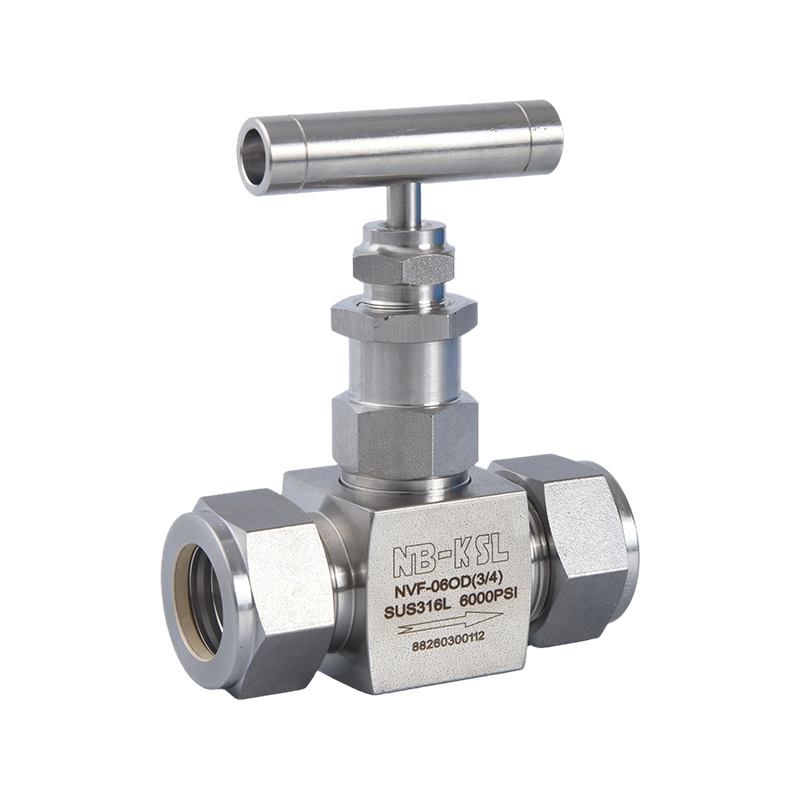
| Needle and instrument valves | 1/4 inch to 1/2 inch | Graphite packing, metal seat |
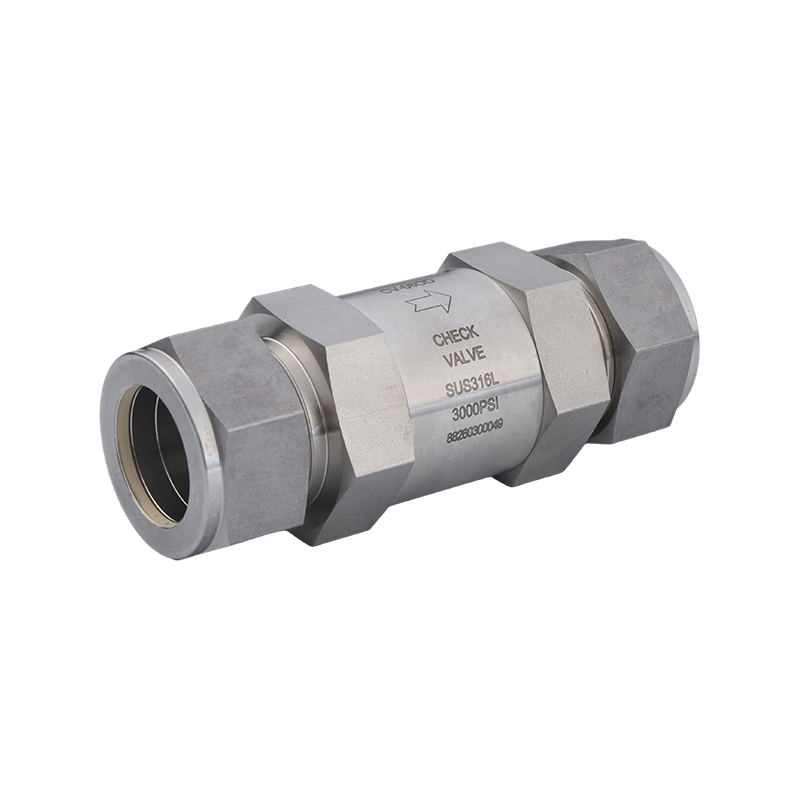
| Check valves | 1/2 inch to 12 inch | Metal seat, graphite gasket |
| Actuated fire safe valves | As above | Fire safe valve with pneumatic or electric actuator; actuator protection by customer or special design |
Where fire safe valves are normally required
- Oil and gas: wellheads, pipelines, refineries, tank farms and loading terminals.
- Chemical and petrochemical: flammable solvents, hydrocarbons and hydrogen.
- LNG and fuel gas: cryogenic lines, bunkering, gas supply to engines.
- Marine and offshore: fuel oil, hydraulic oil and engine room lines.
- Power: fuel oil and gas supply.
Actuators and cables are also at risk in a fire. If the project requires the whole assembly to survive, tell us, and we will discuss fire protection options with the actuator supplier.
Fire Test Standards and How They Relate
Several fire test standards exist, with similar goals but different details. Specifications often name one of them, and some accept equivalents. Knowing the differences helps avoid delays when certificates are reviewed.
| Standard | Scope and Note |
|---|---|
| API 607 | Fire test for quarter-turn valves and valves equipped with nonmetallic seats; widely referenced in API 608 and API 6D |
| ISO 10497 | International fire test standard for valves, closely related to API 607 |
| API 6FA | Fire test for valves, used in wellhead and pipeline contexts |
| BS 6755-2 | Older British fire test standard, still named in some specifications |
| API 608 | Metal ball valves, flanged, threaded and welding ends; refers to fire safe design |
| API 6D | Pipeline valves, refers to fire test for soft-seated designs |
| ISO 7121 | Flanged steel ball valves, including anti-static requirements |
| ASME B16.34 | Pressure-temperature ratings, wall thickness and marking |
| API 598 / ISO 5208 | Pressure testing for production valves |
| ISO 15848-1 | Fugitive emission type test, often requested together with fire safe |
Edition and equivalence. API 607 and ISO 10497 have been revised several times, and a test done to an older edition may not be accepted for a new project. If your project demands a particular edition, tell us in advance, and we will check whether we hold a matching test report.
Scope of a type test. The standard defines how far a test result can be extended to other sizes and classes. A valve tested in one size can qualify other sizes of the same design within a range, and the exact range is given in the standard. We list it on the certificate summary.
Fire Test Certificates and Supporting Documents
For fire safe valves, the key document is the fire test report, usually issued by a laboratory and witnessed by an independent body. The report must refer to the same design as the valve being supplied. We provide documents that let the buyer check this link.
- Fire test report or certificate: showing the standard and edition, test laboratory, date, valve size, class, type and test results.
- Design drawing: showing the tested design features, including seat, packing and seals, and referencing the part numbers.
- Qualification range statement: listing which sizes and classes the report covers.
- Anti-static test report: electrical continuity between the stem, the ball and the body, measured in accordance with API 608 or ISO 7121.
- Material certificate: EN 10204 3.1 for body, ball, stem, seat retainers and bolting.
- Production pressure test report: shell and seat test per API 598 or ISO 5208.
- Quality management: ISO 9001 style system, with documented control of design features that make the valve fire safe.
- Third-party inspection: SGS, BV, TUV, DNV or the buyer's inspector can check conformity of production valves with the tested design.
Ask these questions of any supplier. Which standard and edition? Which lab? Which size and class were tested? Does the valve I receive have the same seat, packing and gaskets as the tested sample? A responsible supplier answers clearly, and we do.
If a type test report is not available for a requested size or class, we will say so, and we can discuss the cost and time for a new test.
Keeping the Production Valve Identical to the Tested One
A fire safe certificate is valid only if the valves delivered match the tested design. A change of packing supplier, a different seat insert or a modified gasket can invalidate the report. Traceability for fire safe valves therefore focuses on controlling the parts that make the valve fire safe.
- Design freeze: the tested design is frozen in a drawing set with part numbers, and any change is reviewed before release.
- Critical parts list: secondary seat, graphite packing, graphite gaskets, anti-static device and stem are marked as fire-critical items.
- Supplier control: graphite and seat material suppliers are qualified, and batch certificates are retained.
- Assembly sheet: lists the part numbers and batch numbers of fire-critical parts used in each valve lot.
- Marking: valve carries marking such as the fire test standard on the nameplate, only if the design is qualified.
- Records: test certificates, drawings and assembly records are kept together for each model.
| Fire-Critical Part | Control Applied |
|---|---|
| Secondary metal seat or seat insert | Drawing control, hardness and dimension check |
| Graphite packing and gaskets | Supplier certificate, batch number, density check |
| Anti-static device | Electrical continuity test on production valves |
| Blow-out proof stem | Dimensional check on stem shoulder |
| Body and bonnet | Material certificate and heat number |
Any change to one of these parts is treated as a design change, and we tell the customer if a change could affect the validity of the fire test report.
Why change control matters: a supplier may be tempted to switch to a cheaper graphite or a different seat insert during a long production run. For fire safe valves this is dangerous, because the fire test report no longer matches the product. We lock the design and notify customers of any proposed change in writing.
Production Tests and Type Test Arrangements
A fire test is destructive and expensive, so it is done once for each design family and not on every valve. Production valves are covered by routine tests that confirm their sealing and by checks that the fire-critical parts are present and correct. Together, they give confidence that the delivered valve matches the tested one.
| Test | Method | Frequency |
|---|---|---|
| Fire type test | API 607 or ISO 10497 at an accredited laboratory, with third-party witness | Once per design and size group |
| Shell test | Hydrostatic at 1.5 x rating per API 598 | 100% of valves |
| Seat test | Hydrostatic at 1.1 x rating, plus low-pressure air test | 100% of valves |
| Anti-static test | Electrical continuity measurement, typically 10 ohms or less, with low DC voltage | 100% of valves with anti-static device |
| Fire-critical part inspection | Visual and dimensional check of secondary seat, packing and gaskets | 100% at assembly |
| PMI | XRF analyser on body and ball | Incoming and sampling |
| Torque test | Torque measurement of operating torque | Sampling |
| Cycle test | Repeated operation under pressure | Type test |
Anti-static is often forgotten. Soft-seated ball valves can build up static electricity when fluids flow, and a spark may ignite flammable vapours. An anti-static device keeps the ball and stem electrically connected to the body. We test every valve with this feature, and record the measured resistance.
Customers or inspectors may attend the production tests. Attendance at a fire test depends on the laboratory schedule, and needs notice many weeks in advance.
Reading a test summary: a good fire test summary lists the flame temperature, burn time, test pressure, leakage during the burn and after cooling, and whether the valve could be operated. If any of these items is missing from a supplier summary, ask for the full report before you accept the valve for fire safe duty.
Frequently Asked Questions about Fire Safe API 607 Valves
Q: What does fire safe mean?
It means that after the soft parts of a valve are destroyed in a fire, the valve still limits leakage and can be operated. It does not mean that the valve is fireproof or can work normally.
Q: Is every stainless steel ball valve fire safe?
No. A valve with PTFE seats and PTFE packing will leak heavily in a fire, even though the body is stainless. Fire safe valves need a metal secondary seat and graphite parts, and ideally a type test report.
Q: What is the difference between API 607 and ISO 10497?
They are very similar fire test standards, with some differences in details and test conditions. Many specifications accept either, but some name one. Please tell us which one you need.
Q: Does a fire safe valve need an actuator that survives fire?
Not necessarily, but the actuator is a weak point. If the valve must close or stay closed in a fire, ask for a fire-protected actuator or a fail-safe design.
Q: Why is graphite used for packing?
Graphite survives temperatures far above those of PTFE, and keeps its shape, so the stem stays sealed in a fire. It is also good for high-temperature service in normal operation.
Q: What is an anti-static device?
It is a small spring or pin that connects the ball and stem electrically to the body, so static charge flows away safely. It is required for fire safe soft-seated ball valves in flammable service.
Q: Can you provide the fire test report?
Yes, for the designs that have been tested. We will send the report summary and the qualification range before you confirm the order.
MOQ and Pricing for Fire Safe Valves
Fire safe valves cost more than standard soft-seated valves, because of the extra parts, tighter machining and test cost. Many are bought for projects, so quantities are often small.
| Item | Typical Terms |
|---|---|
| Sample order | 1 to 3 pieces per model |
| Standard MOQ | 10 to 30 pieces per size for tested designs; project orders from 1 piece |
| Fire test for a new design | Quoted separately; includes laboratory fee, test valves and witness |
| Pricing basis | EXW, FOB Ningbo, CFR or CIF in USD |
| Quote validity | 30 days, adjusted for stainless steel and nickel price changes |
| Payment | 30% T/T deposit, 70% before shipment; L/C at sight for approved accounts |
What affects the price
- Fire safe design features: secondary seats, graphite packing and gaskets, and anti-static devices add cost.
- Size and class: larger and higher-class valves cost much more.
- Material: 316L and duplex cost more than 304.
- Documents: fire test certificates, witness inspection and extended dossiers add cost.
- Actuation: actuators, fire protection and accessories are priced separately.
Be wary of very low prices. A price far below others may mean that the valve is not truly fire safe, or that the certificate belongs to another design. Compare offers on the basis of the test standard, edition, tested size range and the actual parts used.
Ordering advice: state clearly in your inquiry whether you need a type tested design with a report, or only fire safe design features. The price difference can be significant, and the wrong choice either wastes money or fails an audit. We will help you read the specification and choose accordingly.
Lead Time, Customisation, Packaging and Trade Terms
Lead time and stock
Fire safe ball valves of tested designs in common sizes typically ship in 25 to 40 days. Larger sizes, trunnion valves, actuated packages and orders with extra documents or witness inspection need 45 to 75 days. A new fire test needs several months for preparation, testing and reporting.
Customisation
We can customise size and class, body material, seat and packing, end connections, lockable handles, stem extension, actuator interface, nameplate and documentation. If your specification calls for particular fire safe features, send it for review.
Packaging
- Individual protective wrapping, with end caps on flanges and threads
- Valve packed in the open or half-open position for ball valves
- Cartons with dividers, wooden cases or pallets for heavy items
- Labels with size, class, material, fire test standard and batch
- Documents in a waterproof envelope, with scanned copies by email
Shipping and trade terms
| Term | Details |
|---|---|
| Incoterms | EXW, FOB Ningbo, CFR, CIF, DAP |
| Port | Ningbo-Zhoushan; Shanghai as an alternative |
| Transport | Sea freight, air freight for urgent items, express courier for samples |
| Documents | Invoice, packing list, bill of lading, origin certificate, material and test certificates |
We can consolidate fire safe valves with other stainless valves and fittings in one container, which keeps the freight cost per piece low.
Installation advice: fit the valve with the flow direction arrow in the right orientation where one exists, connect the anti-static device if the project requires earthing of piping, and avoid painting over the nameplate. After installation, operate the valve once to confirm free movement, and record the torque if the project asks for it.